Interview

David Cameron interview: ‘I feel I have worked my socks off’

From our UK edition

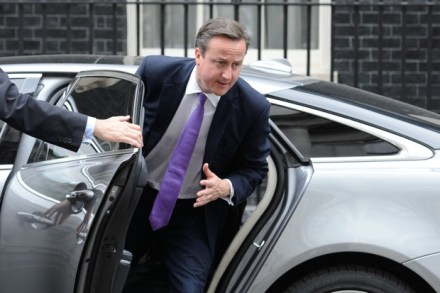
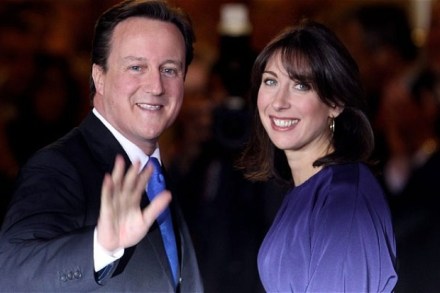
In this week's Spectator, out tomorrow, James Forsyth and Fraser Nelson have interviewed the Prime Minister David Cameron. He discusses why even his closest colleagues think he needs to show more passion and warns that Nicola Sturgeon wants the next government to be a 'car crash'. Here is an extended preview...  David Cameron is sitting underneath a sign that reads quiet carriage, speaking loudly enough to be heard in the next carriage. He knows that even his closest allies are worried he may lose the election if he doesn’t show more passion, so he has been trying to compensate in recent days. He chops the air with his hands as he speaks, furrows his brow, and sounds a little more angry. He has no end of passion, he says.
Evan Davies is SO not Jeremy Paxman (thank God)

From our UK edition

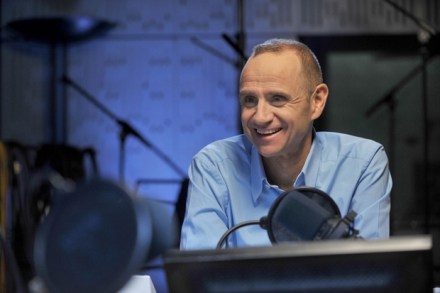
It’s unusual for somebody promoting his own television programme to tell you not to watch it, but that’s what Evan Davis has been doing. At least, he has asked us not to watch Newsnight during his first week as its chief presenter — the week that is now drawing to its close — because it probably wouldn’t be any good until he’d had a bit more experience. And even then it might turn out to be no good, he’s said: we probably would know by Christmas if it was a disaster. As it happens, I am writing this just before his first appearance on the late-night news programme, but I wonder whether he will have cried on air. In interviews, he has talked a lot about his crying. ‘I cry a lot. All the time,’ he told the Times.

John Bishop interview: ‘My dream was to be Steven Gerrard, but he got there first’

From our UK edition

John Bishop doesn’t just tell funny stories. He also tells the sort of life story that makes you sit up and listen. He grew up on a council estate outside Liverpool and, at the age of six, visited his father in prison. By the time he was in his mid-thirties he was working in middle management at a pharmaceutical company, had three children and was going through a divorce. Today he sells out 15,000-seat arenas, is still married to his wife and no longer works in middle management. It was a Monday night and Bishop was looking for something to do. His friends were tired of him ‘crying into his beer’ about his divorce. So, aged 34, he decided to visit a comedy club for only the third time in his life.

The yes-no-maybe world of Harrison Birtwistle

From our UK edition

For better or worse, we live in the age of the talking composer. Some talk well, some badly, a few — the strong, silent types — keep their mouths shut, or have to have them prised open. Harrison Birtwistle belongs, by nature, to this last category. I once, a very long time ago, interviewed him for a radio programme, mercifully pre-recorded. Each tedious enquiry would be greeted by a long silence ending with a yes or a no or an ‘I don’t understand the question.’ Nothing would persuade him to contribute to my attempts at fitting him into some preconceived image of British music in the late 1960s. Fitting them in is of course precisely what talking to composers is supposed to do. Harry quietly — very quietly — declined to cooperate.

Tony Benn 1925 – 2014: a politician who actually believed in people

From our UK edition

The former Labour Cabinet Minister, author and long-serving MP Tony Benn has passed away today, aged 88. In 2009, our deputy editor Mary Wakefield interviewed Benn about the financial crisis and the basic decency at the heart of all human beings. Here is the article in full. I’m standing in Tony Benn’s front garden, on my way out but dawdling, reluctant to leave. Once I’m back on my bike I’ll be in Broken Britain again, snarling at the buses. But right now I’m still in Benn-land, where all people are kindly and the future is bright with mutual concern. Even the outside of Benn’s house reflects the decency within.

I always defended Michael Gove. Then I met him

From our UK edition

[audioplayer src="http://traffic.libsyn.com/spectator/TheViewFrom22_13_March_2014_v4.mp3" title="Toby Young and Fraser Nelson discuss Michael Gove's personality and the attacks from all sides"] Listen [/audioplayer]A few weeks ago, I was a guest at a huge tea party for children’s authors, publishers and commentators at the South Bank, but the atmosphere, over the cupcakes and finger sandwiches, was decidedly frosty. There were three keynote speakers and their speeches all targeted a man so vile and destructive that the audience visibly recoiled every time his name was mentioned. He was, of course, Michael Gove — and I wasn’t sure I should tell anyone that I had always rather admired him and, moreover, was about to interview him for this magazine.

David Cameron interview: tax, ‘green crap’ and #TeamNigella

From our UK edition

A sneak preview from The Spectator's bumper Christmas issue, out this Thursday... It’s 9.30 a.m. on a Friday and David Cameron is about to head for his Oxfordshire constituency and work from home. This is precisely the habit that his Cabinet Office minister, Francis Maude, is trying to beat out of the civil service, but the Prime Minister has a reasonable claim to some downtime. In the past five days he has met 150 businessmen and toured Chinese cities. This morning, he has paid a visit to Tech City, London’s answer to Silicon Valley, and travelled to South Africa House to pass on his condolences following Nelson Mandela’s death. His last appointment, which will last for as long as it takes to drive to Beaconsfield service station, is an interview with The Spectator.

Roddy Doyle: I’m a middle class person commenting on working class life

From our UK edition

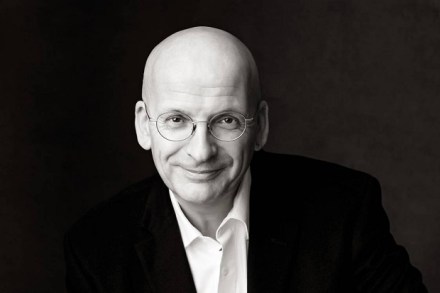
Roddy Doyle was born in Dublin in 1958. He first came to prominence with his debut novel The Commitments, which he self-published in Ireland in 1987. The book was then published in the UK in 1988 by William Heinemann. The two books which followed, The Snapper (1990) and The Van (1991), completed his Barrytown Trilogy. All three books were subsequently made into extremely successful films. In 1993 Doyle won the Booker Prize for his novel Paddy Clarke Ha Ha Ha. The book was praised for Doyle’s ability to write convincingly in the idiom of his main protagonist, Paddy Clarke: a ten-year-old boy residing in Dublin in the 1960s. Doyle’s popularity has continued to soar.

Nicolas Roeg interview: ‘I hate the term “sex scene”’

From our UK edition

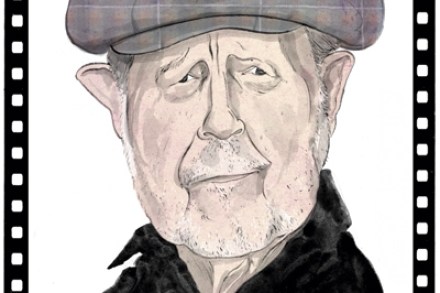
‘Oh, some of my films have been attacked with absolute vitriol!’ said Nicolas Roeg, 85, and still one of the darkest and most innovative of post-war British directors. We were sitting in his study in Notting Hill; nearby in Powis Square is the house Roeg used for his 1968 debut, Performance, starring Mick Jagger as the rock star who entices a gangster (James Fox) into a drug-induced identity crisis. The film was shelved for a year before Warner Brothers dared to release it. ‘The critics didn’t always get it then — but they do seem to now,’ said Roeg. Roeg was born in 1928 in St John’s Wood into a vaguely bohemian background.

Daniel Radcliffe: why are the leaders of our political parties so uninspiring?

From our UK edition

Daniel Radcliffe is wearing the standard rehearsal outfit of T-shirt, black jeans and trainers. ‘Ah, this is for The Spectator. I probably shouldn’t have worn my fake Che Guevara T-shirt.’ It’s the classic Guevara image with a cartoon smiley face substituted. ‘I bought it because I’m so sick of people using him as a fashion icon.’ Radcliffe is 5ft 5in and his head looks slightly big on his body. But it’s the big pale blue eyes that you notice. Under dark, chaotic eyebrows, they give him an air of innocent frankness before he’s said anything. Being cast as Harry Potter aged 11 and spending his teenage years as the lead in the highest-grossing film franchise of all time could have turned his head, but Radcliffe is modest.

Interview with a writer: John Gray

From our UK edition

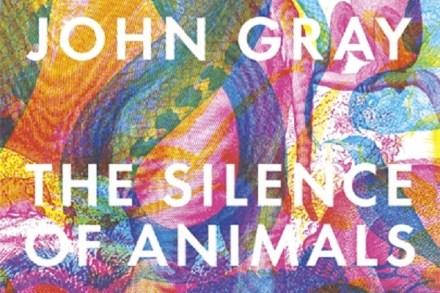
In his new book The Silence of Animals, the philosopher John Gray explores why human beings continue to use myth to give purpose to their lives. Drawing from the material of writers such as J.G. Ballard, Joseph Conrad, Ford Madox Ford, John Ashbery, Wallace Stevens and others, Gray looks at how we can reinvent meaning in our lives through a variety of myths and different moments in history. Gray refutes that humanity is marching forward to progress, where utopian ideals of civilisation and enlightenment are the end goals. He sees human beings as incapable of moving beyond their primordial, animalistic, selfish instincts, particularly when factors beyond their control make them more fearful.

Interview with a writer: David Mitchell

From our UK edition

David Mitchell slaps a big hand on his head. ‘I look back at that kid and think, what were you thinking! How dare you, idiot!’ He is talking about his recklessness as a young writer. ‘Yeah I’ll stop it halfway, five times, and start it again. I’ll pretend I’m a Chinese woman living up a mountain.’ He compares it to being a teenager ‘leaping off a 12-foot wall’ without fear. As writers get older, he says, the recklessness subsides, and ‘it needs to be replaced by technique. If you can do that, you’re still in business.’ One of his most madly structured books, Cloud Atlas, has just been made into a film. That’s why we are meeting.

Interview with a writer: John Burnside

From our UK edition

It’s Friday at 10am in a remote field in Fife. John Burnside is taking his morning walk, whilst simultaneously attempting to conduct a conversation with me down a dodgy telephone line. Within seconds he’s speaking about a concept of happiness— or lack of it— that goes back to philosophers such as Nietzsche and Schopenhauer. ‘I’m in the middle of a remote country hill in Scotland, so the reception is not really that good, especially in bad weather like this,’ he tells me, fading in and out of coherence.

Governing the world – an interview with Mark Mazower

From our UK edition

‘People begin to feel that… there are bonds of international duty binding all the nations of the earth together.’ This quotation, which resonates so clearly as yet more blood is shed in Syria, belongs to Guiseppe Mazzini, the 19th century Italian nationalist whose vision of a ‘Holy Alliance of peoples’ underscores much of Professor Mark Mazower’s Governing the World: The History of an Idea. Mazower’s book is an account of the ideas and institutions of international relations from the Concert of Vienna in 1814 to the present day United Nations. It is, then, the story of how Western hegemony has shaped the international sphere; this period of hegemony is soon to end and perhaps Mazzini’s international ambitions will die with it.

Howard Jacobson interview

From our UK edition

While Howard Jacobson’s prose works are renowned for their wit, energy, and self-deprecating, priapic jokes, his latest book, Zoo Time, is perhaps his most light-hearted to date. The protagonist is a struggling novelist, Guy Ableman: a red-blooded male with a penchant for the filth-merchants of English literature. Ableman has two predicaments: the first is his inability to sell any books. The second is his wish to sleep with Poppy, his alluring and sophisticated mother-in-law. Although the book is meant to be read with the smarmy, tongue and cheek tone that Jacobson has become famous for, the novel also passes judgment on a more serious matter: the crisis that has befallen the world of literary fiction.

Shelf Life: Nell Freudenberger

From our UK edition

Nell Freudenberger is one of the brightest young novelists in America, and she takes the Shelf Life hot seat this week. She suggests that Michael Gove should introduce English Literature GSCE students to international authors, and confides that she needs to read the self-help book she would like to write. Her latest novel, The Newlyweds, is published by Penguin (£12.99). 1). What are you reading at the moment? The Good Muslim by Tahmima Anam 2). As a child, what did you read under the covers? Mysteries by Zilpha Keatley Snyder, Paula Fox’s  YA novels, Noel Streatfeild’s ‘Shoes’ series. 3) Has a book ever made you cry, and if so which one?

Being Blunt

From our UK edition

Emily Blunt is jolly busy. This year, she’s in three movies – Salmon Fishing in the Yemen, with Ewan McGregor; The Five-Year Engagement, with Jason Segel; and the offbeat My Sister’s Sister. Her fans, I tell her, must be really excited. Emily seems unsure: ‘D’you think so?’ she says, wrinkling her nose. ‘It might be just incredibly boring. I can imagine people’s faces when the next film comes out. “Ugh, not her again!”’ We are having coffee in the Four Seasons Hotel in Beverly Hills, Emily and I. Emily looks every inch the movie star in a white pencil skirt and a vintage top. But as it turns out, she isn’t a diva at all. She spends much of the interview sending herself up — not the usual form in filmland.

Interview: Jonathan Haidt on left vs right

From our UK edition

Why are Dennis Skinner and George Osborne locked in enmity? The answer, according to Jonathan Haidt, lies beyond the obvious partisan explanation, and reaches back into humanity’s first nature. Haidt is a professor of moral and social psychology at the University of West of West Virginia, who has written a compelling book, The Righteous Mind, which argues that politics is determined by evolutionary biology and what he terms ‘Moral Foundations Theory’. In a little over 300 pages of incisive prose, Haidt presents a theory that explains why politics is always personal. His research shows that our high-minded ideals are mere spontaneous gut-reactions, a primeval hangover from our less evolved forebears.

A Bigger Message: Conversations with David Hockney by Martin Gayford

From our UK edition

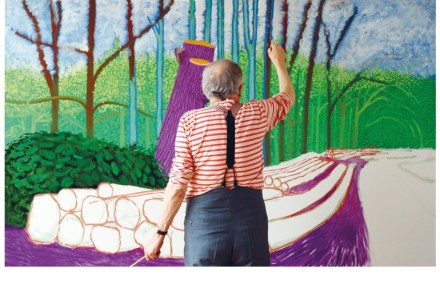
Like his contemporary and fellow Yorkshireman, Alan Bennett, whom he slightly resembles physically, David Hockney has been loved and admired throughout his lifetime. He painted one of his greatest works, ‘A Grand Procession of Dignitaries in the Semi-Egyptian Style’ in 1961 while still at the Royal College of Art. He has dazzled, surprised and often upset the world of art ever since. Picasso aside, he is the wittiest modern painter, in the sense not just of being funny, but intelligent; a whole history of Western art is both contained and extended by his originality. For example, it was both funny, and in the 1960s brave, to apply Boucher’s soft pornography to bums as well as bosoms.

Switching off the spotlight

From our UK edition

Having tea with Gillian Anderson is a thoroughly pleasant business — a splash of muted glamour in a fairly drab London autumn. I thoroughly recommend it, as a more engaging companion it would be a challenge to find. We meet in the studiously bijou surroundings of the Zetter Townhouse in St John’s Square, chosen, I suspect, because no one there has the slightest clue who she is. She is wearing the no-make-up disguise, and glides serenely under London’s radar, something she clearly enjoys. She is a tad jetlagged, she says, having just arrived home from a three-week stint ‘doing press’ in LA. We are talking in the Games Room downstairs when there is an unexpected rattling at the window. We are momentarily flustered – is it a stalker?