Internet

Taylor Lorenz is a crybully

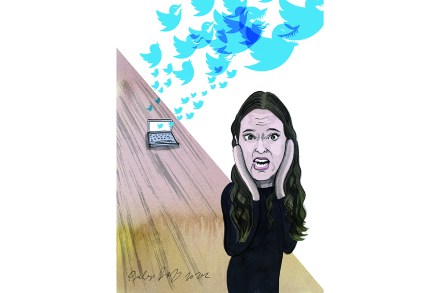
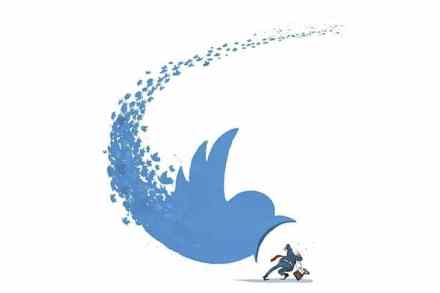
The Washington Post is one of America’s most revered news organizations. Once led by Katharine Graham, an era-defining media CEO, and edited by news legend Ben Bradlee, the Post is famous for the Watergate-era journalism of Bob Woodward and Carl Bernstein, which made it the nation’s political paper of record. Today, one of the Post’s most high-profile employees is an internet-culture reporter named Taylor Lorenz. Her involvement in numerous scandals involving reporting errors, frequent falsehoods, violations of journalistic norms and troubling online interactions call into question whether outlets like the Post can continue to function effectively as the Fourth Estate in the age of online clout-chasing and click-based news.

Lorenz

The top five things Paul Krugman has gotten wrong

Every two years or so, the Spectator World issues a takedown of New York Times columnist and “expert” economist Paul Krugman, who has a notable history of being wrong about absolutely everything. Well, it seems it's that time of year again. The Australians are getting in on the Krugman-dunking game so why shouldn't we? Here’s Cockburn's authoritative ranking of Paul Krugman's Greatest Hits. Krugman denies the recession Fresh from his New York Times opinion piece titled “I Was Wrong About Inflation,” Paul Krugman decided it was time to be wrong about the recession. On Brian Stelter's CNN show Reliable Sources, Krugman said, “I think that what's happening now is that there's been a kind of a negativity bias in coverage.

paul krugman

Sinking into the pixels

More than two decades into internet ubiquity, we’re finally seeing the rise of a generation raised by screens as much as by their parents and peers. Smartphones and social media may not have reared their ugly heads completely until the 2010s, but even in the lead-up to the millennium, computers and the “World Wide Web” were a frequent topic of pop cultural conversation. Within those conversations was always an enormous amount of anxiety. Chatroom “stranger danger” and scammers posing as Nigerian princes seem quaint now compared to the overflowing sewers on display daily in the most craven corners of the web. Digital anxiety is done.

world's fair

The problem with being anti-woke

From our UK edition

I'm going to do something that will likely annoy you, dear reader: I am going to make an argument about a certain class of people without naming names. If I do name names, any response will devolve into a debate over whether I am unfairly tarring the individuals in question. That’s beside the point, because the phenomenon in question is undoubtedly real. That phenomenon is anti-wokeness curdling into reactionary crankery. Don’t get me wrong: as I’ve previously written, I think there’s a moral panic afoot in many liberal institutions. Whether you want to call it 'wokeness' or something else, it seems undeniably the case that a culture of illiberalism has corroded these spaces.

The nihilistic rise of ‘loss porn’

From our UK edition

It’s been a terrible few weeks for that guy you know. Bitcoin dropped to a ten-month low (apparently thanks to something called ‘stablecoins’), while $1 trillion has been wiped off the largest tech companies on the stock markets. ‘Retail investors’ – non-professionals with little more than an internet connection – are struggling. You might expect many of them to put their heads in their hands and log off. But that would be to misunderstand the nihilism of online culture. Losing is the same as winning, only better. The thing to do is to post evidence of your catastrophic losses.

Blackpill: inside the incel death cult

Young men are giving up. They are the losers of the endless beauty pageant that is online life, dating in particular. Their failure to attract women or find rewarding employment is the stuff of jokes: they are “incels” (involuntary celibates), basement-dwellers, forty-year-old virgins. Meanwhile, they sink into a digital swamp of gloom and isolation that leads to resentment, radicalization, murder and suicide. In their internet forums, they call this “taking the blackpill.” The blackpill had yet to be named in 2014, when twenty-two-year-old Elliot Rodger rampaged through Isla Vista, California, killing six people and injuring fourteen more before his suicide, but he was fueled by its spirit of nihilism.

blackpill

Big tech wants us to empathize with robots

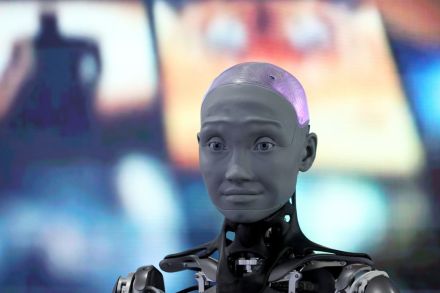
It seems like we can’t help getting attached to robots. It also seems like the people making the robots are counting on that. In the 2015 video game Fallout 4, one of the factions with which the player can align him- or herself is “the Railroad,” an organization that helps seemingly sentient androids escape from the lab in which they’re created. A friend of mine mocked me mercilessly for aligning myself with the “SJWs” of the Railroad and insisted that the androids — who spoke eloquently of their emotions, friendships, and aspirations — actually had the same moral worth as a toaster. I laughed, but secretly still felt I’d made the right choice. Surely it was always better to err on the side of greater empathy.

Is Twitter about to step up its censorship?

From our UK edition

Farewell then @jack. Jack Dorsey’s departure from Twitter on Monday came as no surprise given that the firm Elliott Management, one of Twitter’s activist investors, almost ousted him last year. Only the coronavirus may have prolonged the inevitable. Twitter’s stock keeps dropping. It may not reach the revenue and daily user projections for 2023 that it set last February. It also has the smallest ‘Big Tech’ user base, behind Facebook, YouTube and TikTok. The prevailing theory is that Dorsey’s departure involves Elliott Management, which controls two board seats and over $1 billion in stock shares, and which flexed enough muscle to boot Dorsey out.

Internet users are the new surrealists, and they keep changing the world

From our UK edition

As 2021 continues to progress at a dizzying rate, one of the recurring social phenomenon we’re seeing is the surreal eruption of online activism in the real world. From the recent explosion of GameStop share prices – hiked up by amateur investors co-ordinating online – to the large-scale protests and riots in Washington following the 2020 Presidential election, the communities in cyberspace continue to spill out into the real world. The question is: why are these kinds of actions becoming an increasingly unsettling occurrence in the usual running of society? In the lexicon of web-design, the term UX, user experience, is often used to describe how an individual may interact with a product, specifically a webpage.

Memes vs Wall Street: how Reddit took on US hedge funds

From our UK edition

What did you do this week? I spent it drenched in sweat, launching a vicious assault on Wall Street hedge funds which cost them $5 billion (£3.7 billion). And I didn’t even have to put my trousers on. Along with thousands of other degenerates, I bought shares in GameStop, a struggling US video game store whose value has soared by 2,000 per cent in the last four weeks. Behind the surge is a wild Reddit community called WallStreetBets, where bored young men gamble on barely researched stock tips and crack tasteless jokes. The community, whose tagline is ‘like 4chan found a Bloomberg terminal’, has a long and hilarious history of aggressive stock market bets leading to eye-watering gains and losses.

The toxic side-effect of the Trump Twitter ban

From our UK edition

Almost two weeks on from the storming of the US Capitol it’s becoming plainer that the most substantive changes to our political and public spheres are brewing not in Congress but on the internet. First, let’s be clear: Twitter had to act against Trump. By deleting his account, it shut down a large part of his ability to provoke civil unrest. Trump has not been unfairly ‘censored’ and free speech does not give someone the right to stoke violence and insurrection: either in principle or in law. The wider ethical and even philosophical ramifications of gagging the leader of the free world are a different story.

Meme warfare on the convention stage

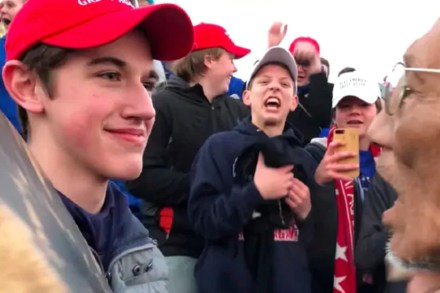
Who’s on the roster of speakers for the Republican National Convention is just as revealing as who’s not. Nowhere in sight are former GOP standard-bearers like George W. Bush and Mitt Romney. Included, on the other hand, are several anonymous civilians turned into internet celebrities by viral videos. Among them is Nick Sandmann, the teenager at the center of the Covington Catholic confrontation captured on film at the National Mall last year. Also featured will be Patricia and Mark McCloskey, the couple whose armed confrontation with protesters outside their St Louis home in June also circulated widely online. Their inclusion clearly signals that the party is leaning into the meme warfare strategy that helped propel Trump to victory in 2016.

meme warfare

Trump vs Twitter: the battle begins

From our UK edition

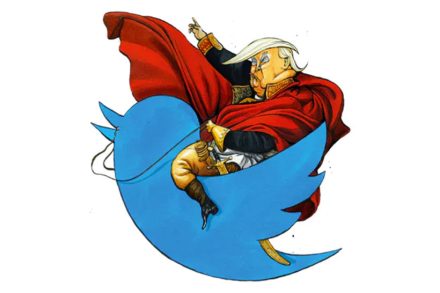
When Tony Wang, general manager of Twitter in the UK, described the company as the ‘free speech wing of the free speech party’ he was expressing an ideal that would soon collapse. This was in 2012, long before the prospect of a Donald Trump presidency was anything other than a flippant punchline in The Simpsons. Six months after the 2016 election, Twitter’s co-founder Evan Williams expressed his regret for the part they played in securing Trump’s victory. The implication – that the decisions of the general public are shaped by bad actors who prey on their malleability, and it is the responsibility of technocrats to do something about it – is one that has since become depressingly familiar.

I survived a 20-minute internet outage during lockdown

It’s 1 am. I finally finish preparing my sourdough to go in the fridge. Time for some Netflix. What? No connection. Hulu doesn’t connect either. Dear God, no. Amazon Prime? Nope. It’s worse than I thought. Please just be my router, please just be my router. I unplug the router and wait 30 seconds. Plug it back in. Nope. Where did I put that damn manual? Now I need to find something small enough to stick in the reset hole button. I get a toothpick. I say a prayer. It’s not the router. The internet is down. God has abandoned us. I feel a great disturbance in the force. As if millions of gamers suddenly cried out in terror — and were suddenly silenced. I feel something terrible has happened.

internet

Are there ways in which virtual exhibitions are better than real ones?

From our UK edition

Six months ago I published a book about travelling to look at works of art. One such journey involved a round trip of about 6,000 miles to contemplate minimalist sculptures in the Texan desert. But the point wasn’t so much the distance as the importance of standing physically in front of the works themselves. Seeing the actual thing, I argued, was fundamentally different from looking at it in a book or on a screen. Nowadays, of course, unless you live within walking distance of a notable sculpture, that’s really all there is. A week ago my inbox was flooded with messages announcing that the art institutions of the world were closing until further notice. A few days later there was another deluge of announcements, but this time it was online exhibitions.

How to beat Twitter cellar-dwellers at their own game

For an ordinary girl from Florida whose Twitter presence is largely focused on her rescue pets (shout out to Jolene, Dixie Belle and Mean Cat) and her love of pop culture, I get trolled a lot. Perhaps people don’t enjoy my hot takes on J.Lo’s Oscar snub as much as I’d hoped. Or maybe the internet has lost its appetite for cute pictures of dogs — a sign of the apocalypse if ever there was one. But it’s probably because this Florida Man is my older brother. For the record, I wouldn’t have it any other way. Though, like most siblings, we don’t agree on everything, I love him and am deeply proud of him.

twitter internet

Washington’s war on internet free speech

The United States is apparently angling to outpace its European counterparts when it comes to silly, censorious, and sometimes dangerous internet policies. The latest batch of bad proposals in Congress and the White House would, if enacted, kill social media, search engines, and so much other online life as we know it. While conservative politicians here grumble about ‘hate speech’ and ‘data protection’ laws abroad, the alternatives they keep proposing here are just as speech-squelching and business-burdening. And while Republican party leaders have historically hated US plans like the ‘Fairness Doctrine’ and ‘net neutrality’, they keep pushing their own versions of these for social media.

internet

The bizarre, normal death of Bianca Devins

Twenty years ago, the death of Bianca Devins would have been a small town horror story. Tragic. Brutal. Stomach-turning. Essentially local. A jealous man stabbed her to death in a fit of outrage before trying, and failing, to kill himself. Something of this kind happens too often for anyone to hear about them all. Bianca Devins's killer did something different, though: he took pictures of the 17-year-old’s dead body and posted them online, to a private forum on the app Discord. He also took pictures of himself after his suicide attempt and uploaded them as well. Little information on the murder is reliable. Rumors spread that Devins's killer was an 'incel' and a 'stalker'. Other rumors spread that he was in fact her boyfriend.

bianca devins

Deepfakes could be good news

Are you scared of deepfakes? Perhaps you should be. A few years old and continually growing more sophisticated, deepfakes are digital simulacra generated through machine learning that are barely distinguishable from the real thing. They’ve been used to fake celebrity porn videos, make Barack Obama seem to call Donald Trump a ‘dipshit,’ and most recently, superimpose Steve Buscemi’s face on to Jennifer Lawrence’s body in a video that was at once mesmerizing and scary (Buscemi/Lawrence bore a strange resemblance to Tilda Swinton).

deepfakes jennifer buscemi

How digital media killed itself

As a young digital journalist in the late 2000s, my industry peers and I often reminisced about the era we felt we’d just missed: the glamorous, fin-de-siècle age of New York media, the time of seven-figure budgets for magazine launches and outsize editorial personalities that commanded celebrity attention in New York. We were the ones scrambling to keep our jobs afloat in the aftermath of the 2008 recession. As it turns out, we still had it pretty good. The other evening, right after the brutal layoffs at digital publications such as BuzzFeed and HuffPost were announced, I found myself in a dive bar (of course) with a handful of the aforementioned elder millennials of digital media.

buzzfeed digital media