International

Landlord Trump, the tenants’ best bet

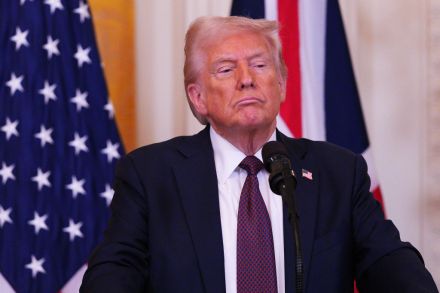
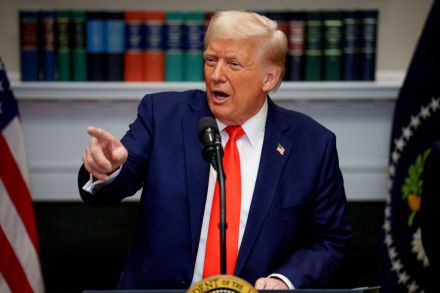
Donald Trump is the world’s largest landlord — not in his own capacity, perhaps, but in his role as leader of the most powerful nation on earth. He’s the CEO of America, and his development corporation owns the Western hemisphere. It also owns property in Europe, where the tenants are troublesome and are always behind on their rent. There are just a few other landlords on the planet, notably Vladimir Putin, who isn’t a rival, and Xi Jinping, who is. This might sound like a perspective on world politics for someone who rose to prominence in the cutthroat environs of New York real estate. Yet the truth is that government is always about who’s the landlord and who’s the tenant.
landlord

China’s response to Trump’s tariffs marks a dramatic escalation

Might peace in Ukraine be prelude to an even more serious conflict between the United States of America and China? Is that a hysterical question? The deal-or-no-deal drama starring Donald Trump, Volodymyr Zelensky and European leaders has dominated the news in recent days, so much so that the latest clash between Washington and Beijing has gone all but unnoticed. Yet China’s official response to the Trump administration’s move to raise its tariffs on Chinese imports to 20 percent does appear to mark a dramatic escalation. "Exerting extreme pressure on China is the wrong target and the wrong calculation,’’ said China’s foreign ministry spokesperson Lin Jian. "If the US has other intentions and insists on a tariff war, trade war or any other war, China will fight to the end.

South Africa’s international decline

South Africa’s recent foreign policy has both surprised and dismayed Western diplomats and strategists. Many of these entered their careers during the era of the “end of history” when the Soviet Union had collapsed and with it, or so the thinking went, the last serious threat to the Western liberal order. Western democracy had triumphed, and policy doctrines of hard power and deterrence could give way to strategies of acquiescence and engagement. In South Africa, the African National Congress Party of Nelson Mandela was coming to power. Given that its key ally the Soviet Union had collapsed, the ANC took a sufficiently circumspect view of the new unipolar global order for Western diplomats to conclude that it had become their ally.

South Africa

Inside the handover of Hong Kong

During the negotiations between the UK Foreign Office and the Chinese government that led to the 1997 handover of Hong Kong to China, I was engaged in the fruitless search for oil in the South China and Yellow Seas, in partnership with the China National Offshore Oil Corporation, or CNOOC (“Snook”). These arrangements were the first to be concluded with western companies since the Cultural Revolution. They were conducted with a chilly civility in Beijing — then still a spartan city to say the least, with only two hotels available to western visitors. We were installed in the north of the city in a hotel designed allegedly by I.M. Pei, about an hour’s drive from the CNOOC offices.

Hong Kong
xi jinping wang huning wargame militarizing IP china

Explaining China’s IP problem

Since man’s early origins, the desire to possess gold has been a universal obsession. Gold was once viewed as the ultimate symbol of power and wealth. Governments amassed vast quantities of gold to finance their economies and political ambitions. Until the mid-twentieth century, leading national currencies were directly tied to how much physical gold was housed in national treasuries. But 500 years ago, Sir Thomas More got it right when he described gold as something “which in itself is so useless.” Today, rather than gold, what truly represents a nation’s strength is its ability to innovate and control technologies.

Israel and the making of nations

A little more than five years ago the Israeli intellectual Yoram Hazony published The Virtue of Nationalism. Its final chapter was particularly poignant. After World War Two and the Holocaust, Hazony explained, two opposing views arose as to how such evils could be prevented from happening again. One side pointed toward the creation of the European Union and held that nationalism must be repudiated and condemned. The other endorsed the creation of Israel as a nation-state for the Jewish people, with a nationalism of its own. Israel is a test case for the survival of nationalism everywhere. That may sound like an exaggeration — surely nationalism has demonstrated ample staying power.

Israel
invasion

Why do neoliberals get let off the Iraq War hook?

Given the worldwide climate of political intolerance, I often try to deflect hostility by prefacing my comments with the old saw that “reasonable people can disagree.” As a strong believer in intellectual freedom and Socratic dialogue, I do in fact feel duty-bound to listen to the other side, or sides, of an argument. Yet there’s one subject about which I’m as close-minded as the wokest opponent of liberal debate — a topic about which I won’t brook any disagreement because there simply isn’t any reasonable form it can take: that is, George W. Bush’s and British prime minister Tony Blair’s disastrous decision to invade Iraq in 2003 and its deadly, still hugely malignant consequences in the Middle East.

Mauritania

Modern-day slavery in Mauritania

In April 1864, the US Senate passed a bill that set in motion what would become the Thirteenth Amendment to the Constitution. Slavery was to be abolished. Seven months later, Union forces would burn Atlanta to the ground, a year after Lincoln’s address at Gettysburg marked the battle that began the South’s collapse and the April 1865 surrender of General Robert E. Lee and his Confederate army. The Civil War remains the bloodiest and most divisive conflict in American history with at least a million dead, including soldiers and civilians from both sides. You might think that given American history, if slavery had an in-your-face visibility anywhere on the planet, Congress would call for intervention by the UN, perhaps threaten to send in the Marines. Think again.

Who’s really behind the Biden administration’s foreign policy?

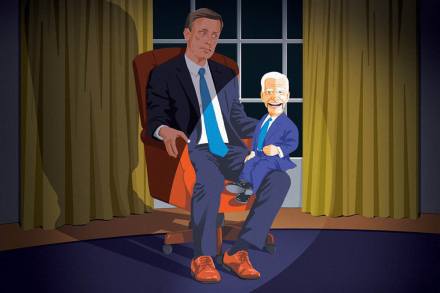
If you’re one of the many people worried that US foreign policy is in the hands of a visibly declining eighty-one year-old president, Alexander Ward’s account of the Biden administration’s first two years in office may — or may not — make you feel better, for he leaves readers with little doubt as to who is actually the executive branch’s most influential decision-maker: forty-seven year-old national security advisor Jake Sullivan. Ward might deny any such authorial intent, but time and again he shows his hand, as when he invokes “Sullivan’s first two years at the helm alongside Biden.

biden ward

Fear and complacency in Taiwan

On a recent trip to Taiwan as a guest of its Ministry of Foreign Affairs, I knew that war with an increasingly belligerent China is a daily possibility. Chinese ships are in constant circulation in the Taiwan Strait. Chinese aircraft unceasingly fly near the island, getting close to Taiwanese air space. Beijing’s increasingly threatening language about forced “unification” seems to bring a catastrophic attack closer. Genuine fear fluttered in the wake of Nancy Pelosi’s visit in August last year when China launched three days of drills that paid no regard to what they called the “imaginary” median line, which divides Chinese from Taiwanese territory.

Taiwan

America’s undersea lifelines

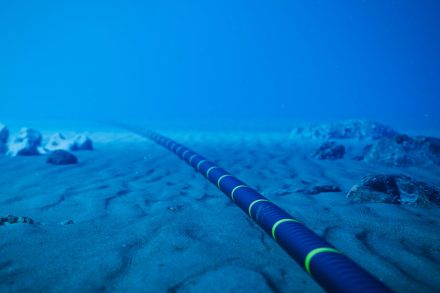
It is out of sight and usually out of mind, but recent events are forcing Americans to focus on the security of a vast network of undersea cables that the nation depends upon. In early February 2022, cables connecting Taiwan to its Matsu Islands off the coast of China were cut in what appears to be an act of sabotage that Taipei later ascribed to Chinese vessels. It took nearly two months for the internet to be up and running again, highlighting the importance of a largely ignored element of a country’s critical infrastructure.  According to TeleGeography, a telecommunications research and consulting firm, there are around 552 undersea cables, connecting almost every inhabited landmass. Most are fiberoptic, utilizing light to transmit massive quantities of data.

cables