Insomnia

Sleepless in Shangri-La

“You are suffering from what we call an ‘Alice in Wonderland’ effect,” Dr. Sankar informed me as I climbed out of a rabbit hole. I was late for a very important date to discuss my sleep (or lack thereof). “When you fall asleep,” he continued, “your thoughts race, and you think: What should I be doing? What do I need to do? Where am I? Where am I going?” I had fallen head-first into another wonderland: Ananda in the Himalayas. Located in the foothills of the Himalayas in northern India, Ananda – which translates to “happiness” in Sanskrit – is a world-renowned holistic retreat that towers above the bustling city of Rishikesh and the sacred Ganges River.
An insomniac’s guide to sleep

From our UK edition

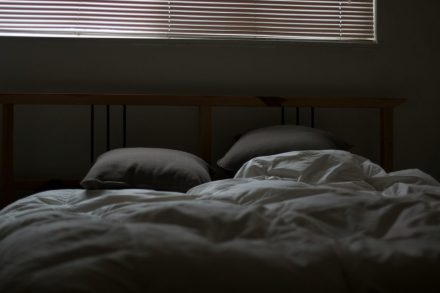
One of my favourite dad jokes – and, since I became a father, I have many – is to respond to the question ‘How did you sleep?’ with ‘I lay horizontally in a darkened room with my eyes closed’. But it has never been that simple for me. All my life I have suffered from insomnia. Something that should be easy – newborn babies can just about manage it, after all – has become the hardest thing in my life. I’ve lost jobs because of it, and relationships: you feel like you are cut off from society. That’s one of the most annoying parts – most people’s response to the word ‘insomnia’ is to feel an obligation to say: ‘Really? I always fall asleep the moment my head hits the pillow!

Have we all become more paranoid since the pandemic?

From our UK edition

As anyone who has ever been lucky enough to spend time in a psychiatric hospital knows, you don’t have to be completely mad to be there. A lot of us end up in the care of mental health professionals and jacked up on all sorts of crazy-person meds because something’s just not right: you know it, I know it, the dog in the street knows it. Those people are looking at us funny; those voices just won’t quieten down; it really isn’t safe out on the streets, so it must be better to draw the curtains, triple-lock the door and sit quietly in the dark eating only tinned fruit and bottled water.

The sleepless lives of great writers

From our UK edition

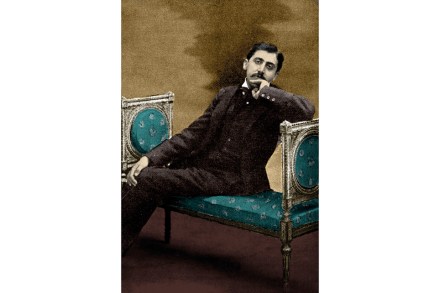
To sleep or not to sleep – that is the question the French writer Marie Darrieussecq asks in her latest book, which explores the insomnia that has haunted her for 20 years since the birth of her first child. From that date, she writes, it ‘has attached itself to me like a small ghost’. Darrieussecq is best known for her surreal novel Pig Tales (1996), but Sleepless is an account of her search for a cure to insomnia and the solace she finds in discovering writers such as Franz Kafka (‘the patron saint of insomnia’), Marcel Proust, Georges Perec, Sylvia Plath, Susan Sontag, Fyodor Dostoevsky, Mahmoud Darwish, Haruki Murakami, Aimé Césaire, Jorge Luis Borges and Tchicaya U Tam’si have all suffered from sans sommeil.

The best podcasts to be enjoyed at 4 a.m.

From our UK edition

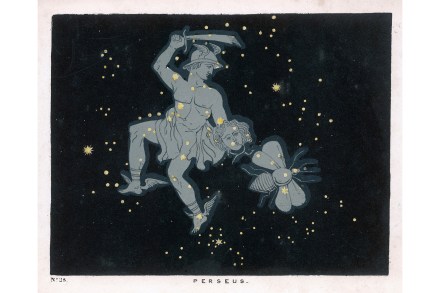
Now that all of the billionaires are going into space, the night sky holds a special new kind of allure. We see a little twinkle in the distance and we can think to ourselves, there they are, out there, far away, away from us. It’s not clear whether Jeff Bezos and Elon Musk spent their childhoods looking up at the stars, fantasising fervently about joining them at some future date, or if they are now just bored. But perhaps their sense of identification and belonging in the vast night sky can be understood in another way. Humans have always told stories about the stars, and many of these myths could be relevant to the ambitions of these very wealthy men. Think of Prometheus, too smart and powerful for his own good.