Influencers

Why is Generation Z so undersexed?

There is a girl on TikTok, a bleached-blonde New York transplant who just passed a million followers, whose videos I cannot stop watching. The secret to her rise was “Get Ready with Me” storytimes in which she sat in front of the camera applying mascara and retelling — in painstaking detail — her lurid misadventures. Some highlights: throwing up on a guy’s bed after a wine-fueled hook-up and then realizing he had a girlfriend of two years, battling Montezuma’s revenge at a restaurant in Cabo, getting a UTI so bad she thought it was a kidney infection, inadvertently shipping a ton of “hot girl summer whore clothes” to a guy whose white sheets she bled all over after acquiring a polyp.

mystique
tradwife women

How the tradwife killed the girlboss age

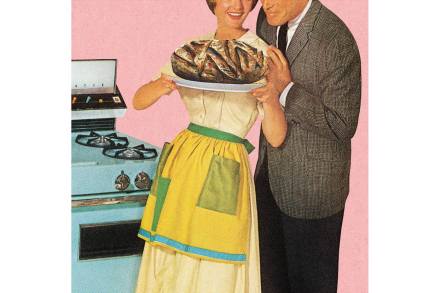
The tradwife smiles as she feeds her sourdough starter, wearing a long dress and a baby and wrangling the occasional toddler underfoot. She beams at her husband as he comes in from a long day on the ranch, or from the hedge-fund trenches. She makes salt-dough modeling clay for the little ones, whether her stove is from Lowe’s or La Cornue. The Cut describes her Instagram account as both “dangerous” and “stupid.” CNN experts lament that too many girls are turning to her as a “Band-Aid with ideological cover,” and fret about the sourdough-starter-to-White-Supremacy pipeline. Tradwives, both self-identified and smacked with admiring or hostile labels, are the latest cultural phenomenon in media crosshairs.

George Santos is demanding $20,000 from Jimmy Kimmel for Cameos

Jimmy Kimmel announced a new segment on his show last Friday, titled, “Will George Santos Say It?,” in which he "pranked" the former congressman by paying for Cameo videos under anonymous names, requesting that Santos read out absurd messages. The first video in the series, “Jimmy Kimmel Pranks George Santos on Cameo,” brought in 1.4 million views in just three days on YouTube; but Santos may have the final laugh. Having been booted from Congress on December 1, the self-described “People's Princess” has continued to serve the public through Cameo, a site where fans can pay celebrities for short, personalized messages.

george santos

The rise of the multilevel marketing mom

T​​he hottest new influencer isn't the gym bro or food guru. It’s the affiliate marketing mom of two working from her pool deck. If you’ve stumbled upon her Instagram, she’s most likely bragging about her two-hour workday and the new house she just bought with her six-figure income stream. And you know she's got a link in her bio directing you to the class she took to learn it all.   These new "entrepreneurs" are flooding social media. Some have just a dozen followers, others hundreds of thousands. But they are all part of a new scheme that promises to make you millions working from home as a freelance marketer. The catch — the course they're selling is how they're making their money; they're not actually using it to build a business. And their advice for you?

multilevel marketing mom

Taylor Lorenz is optimistic about the internet

“People,” wrote Dwight Macdonald, “feel a need to be related to other people.” Not a happy sentiment, not intentionally. This was how mass culture — “masscult,” he called it — created diversion out of artless entertainment. His example was John Barrymore, an icon of a great acting dynasty whose alcoholic decline brought out raucous crowds, “because it showed them he was no better than they were.” Macdonald’s old pessimism came back to me toward the end of Extremely Online, which is more than a history of the internet creator “revolution.” Taylor Lorenz, a Washington Post columnist with a vivid online life, is its John Reed, chronicling the influencers’ victories while cheering them on.

taylor lorenz

Meet Tony P, the hottest influencer in DC

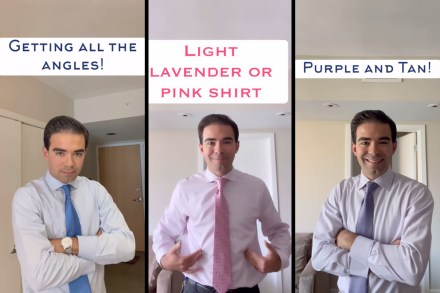
In a spacious, eighth floor apartment on Pennsylvania Avenue, just a few blocks from Capitol Hill, you will find a consultant. Of course you will; Washington, DC is a town filled with and built for consultants. This particular one, in a checked shirt and tweed jacket and charged with a genuine enthusiasm for life rarely seen among people in their twenties, is named Anthony Polcari. A Bostonian that loves his mother and makes a mean salmon dish would usually slip under the radar. But Anthony, better known as Tony P thanks to his Instagram handle @_tonypindc, has been in the capital for just under twelve months and is already the talk of the town. When I walked around downtown DC with him, we were periodically stopped for selfies by adoring fans.

Tony P shows off his fits (Instagram screenshot)

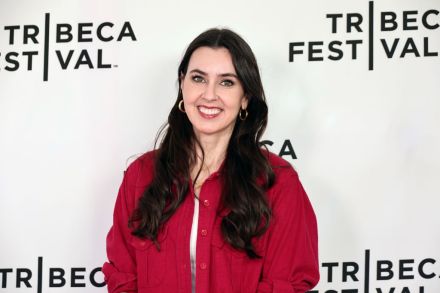
Caroline Calloway sets the record straight

As I was on FaceTime with Caroline Calloway, the Washington Post published a review of her memoir, Scammer, alongside one of a book written by her archnemesis, ex-best friend and former love interest, Natalie Beach. From her squealing — and the way her phone was blowing up with calls from friends who’d read the piece — I could make an educated guess about its contents. “Beach is a talented essayist with a promising career ahead of her. Calloway is a lunatic who has already written a masterpiece,” Calloway read, with an emphasis on “lunatic” and a twinkle in her eye. “At one point they call Natalie quote unquote, good enough. And honestly, that is so brutal in its own fucking way,” she told me. The Post was right.

caroline calloway

Is my favorite dress company the new Bud Light?

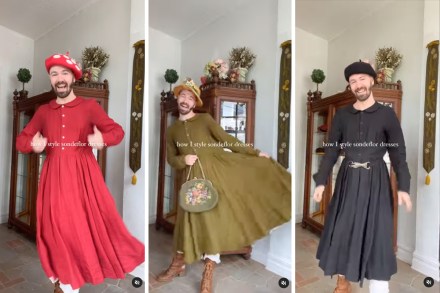
I’ve been pregnant for the better part of the last decade; fifty-four months to be precise. I recently started investing in refreshing my non-maternity or postpartum wardrobe. Everything I have from that stage of life is from when I was twenty-seven; and I’m definitely no longer able to pull off the same look from when I was in my twenties and childless. Now I’m a mom of six and inching uncomfortably close to forty.   In my research, I found the aesthetic I was shooting for, from a company called Son de Flor. Every time another conservative homeschool mom appeared in a dress I loved, it was one of theirs.   https://www.instagram.com/reel/CsJDbisgeC6/?igshid=Y2I2MzMwZWM3ZA== I was ready to pull the trigger on their summer sale...

David Ross Lawn poses in Son de Flor dresses (Instagram screenshot)

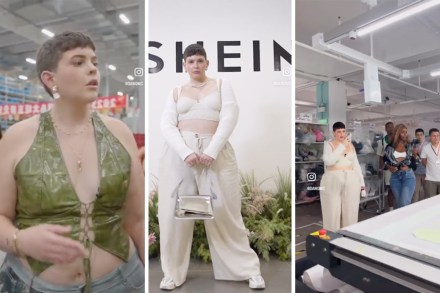
The useful influencers of Shein

The Soviets had a problem. On March 5, 1940, Stalin had given the order to massacre 14,700 Polish officers, which his vicious secret police NKVD happily did. Job well done; until they lost Poland to the Nazis, who discovered some mass graves in the Katyn forest. Goebbels began using this to paint Britain’s ally as monsters (which, in hindsight, was fair).  This was a disastrous public relations problem! And so, they turned to the press, and those like Ralph Parker of the Times of London, who traveled by caviar-supplied trains to Katyn, bedded Soviet honeypots and came back repeating the Soviet line.

shein

Yevgeny Prigozhin, the world’s strangest influencer

How did Yevgeny Prigozhin, the hot dog vendor-cum-leader of the Wagner private military company, become addicted to the allure of likes, retweets and digital validation? From the outside looking in, the warlord posts like a rich kid splayed over his dad’s Porsche — except rather than a swanky car, Prigozhin brags of the travails of the world’s deadliest private military, replete with tanks and artillery.   The early war days of PMC Wagner’s social media presence could be compared to that of ISIS or other paramilitary groups: the posts had a clear agenda, including intimidation, like the “hammer of revenge” video they circulated over Telegram, which documented the brutal murder of Yevgeny Nuzhin, a former Wagner Group member.

Yevgeny Prigozhin influencer

Taylor Lorenz was right all along

Journalists are OUT, influencers are IN. That’s the chief finding from a new report by the Reuters Institute at the University of Oxford, which discovered that 55 percent of TikTok and Snapchat users, and 52 percent of Instagram users, get their news from “personalities,” compared to 33-42 percent who get it from mainstream media outlets or journalists on the same platforms. “This Reuters study once again validates what I have been saying for over a decade,” Taylor Lorenz told Cockburn, “content creators are the new media and it’s been that way for a while.” The Washington Post columnist has long banged the drum about the importance of emerging social media platforms and the importance of members of the media cultivating brands on them.

taylor lorenz

Has the influencer bubble burst?

If you ask anybody under twenty about their life plan, social media will likely play some part in the answer. A friend’s nine-year-old son has just launched his own YouTube channel. My prepubescent cousins are telling their parents that TikTok is “the key to financial freedom.” When I was their age, my entrepreneurial skills went as far as selling single cigarettes to my classmates for loose change. The appeal of the influencer life isn’t hard to understand. Over the last decade, it’s been touted as the sexy, well-paid, democratic career of the future. A 2019 Morning Consult survey found that one in ten young people consider themselves “influencers.” But now these micro-celebrities are trading in their tripods and ring-lights for real jobs.

influencer

The new age of the con man

In the precarious world economy of 2023, everyone is selling you something — and much of that something doesn’t amount to anything. Companies, of course, sell you products and services; much of their junk amounts to solutions for problems that didn’t previously exist, though at least there’s still some sort of deliverable. Meanwhile, in worlds as essential to human flourishing as personal finance and bodily fitness, an ever-expanding class of so-called “influencers” are selling a whole lot of nothing dressed up as something. Their underlying success, ostensibly tied to their ability to help people become richer or fitter, depends in actuality on their ability to sell advice or investment opportunities that are likely only to enrich themselves. How did this happen?

con

Thirst trap: how ‘vinfluencers’ took over the wine world

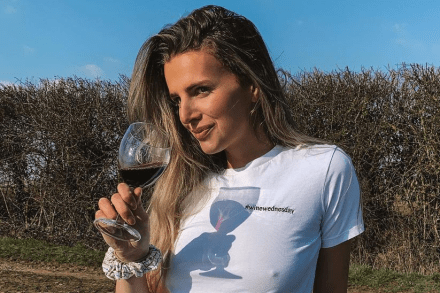
The first time I saw the Instagram feed of Georgie Fenn I thought she was a model stooge. Utterly gorgeous, Fenn regularly poses in carefully picked diaphanous clothing, ‘nipple poke’ a specialty. Paid brand collaborations offer excellent returns. Her artfully shot images tagged with maxims as trite as ‘It doesn’t matter what you’re drinking as long as you’re enjoying it’ are a marketeer’s wet dream. Miss Fenn is an up-and-coming ‘vinfluencer’ — that is, she uses her considerable social media presence (31k and rising @winingawaytheweekend) to sell wine.

vinfluencers