Incas

Inside the Inca ritual of child sacrifice

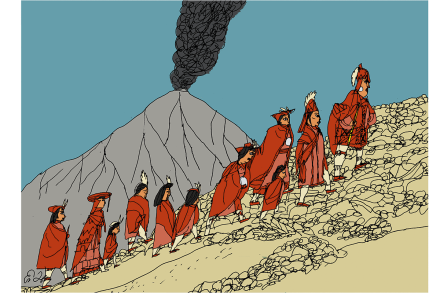
The children of Llullaillaco don’t look too different from the living children I’ve seen around Salta. They’ve got the same diamond-shaped faces, pecan-colored skin and straight, pitch-dark hair. Of course, the children of Llullaillaco are smaller, as people five centuries ago were wont to be – and dead. I’m talking about three Incan child-sacrifice mummies, estimated ages five, six and 15. As of about 25 years ago, they’re permanent residents of Salta, Argentina, the capital of a province of the same name in the country’s northwest. As the crow flies, the city isn’t that much closer to Buenos Aires than to Lima. Due west of Salta, in the Andes, is the peak of the volcano Llullaillaco.
inca Llullaillaco

Freedom fighters of the ‘forgotten continent’

From our UK edition

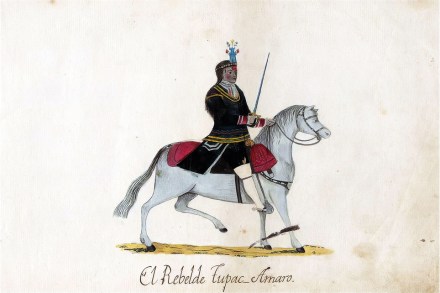
On 18 May 1781, Tupac Amaru II’s rebellion came to an abrupt and grisly end. Seized by Spanish forces, the Peruvian muleteer-turned-popular-revolutionary knew the game was up. Still, he refused to go quietly. After Tupac’s captors’ horses failed to wrench off his limbs, the executioner reached for his axe. ‘You kill only me,’ legend has Tupac shouting as the blade descended. ‘But tomorrow I will return as millions.’ As Laurence Blair’s Patria assiduously demonstrates, death rarely has the last word in the ‘forgotten continent’ of South America. In the case of Tupac, his narrative of a ‘Peru for Peruvians’, free from colonial oppression, would later be resurrected in radical leftist movements from Uruguay to Venezuela.

A show of ample and eerie majesty: British Museum’s Peru: A Journey in Time reviewed

From our UK edition

Growing up on a farm outside Lima, I was aware that indigenous Peruvians did not understand time in the same way that their white countrymen did. On our visits to the highlands, we would encounter a very different mode of thinking. Ask an Andean villager where the next settlement was and you’d be told, ‘aquisito no más’ — just over here. Whether ‘aquisito’ meant around the next bend or four days’ schlep across the mountains was, for aboriginal people, a meaningless question. They were not ruled, as their European-descended neighbours were, by clocks. You’d sometimes see Quechua-speaking herdsmen sitting motionless for so long that they seemed to have switched off and become part of the landscape.