Immigration

The message from Michigan

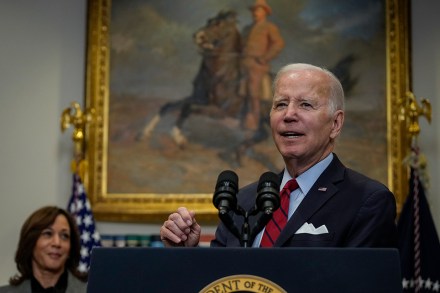
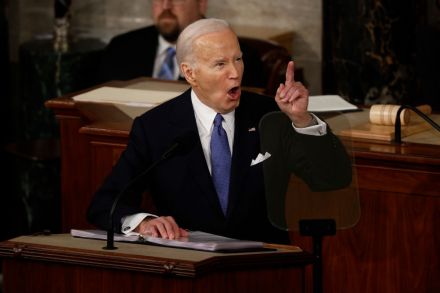
Both Joe Biden and Donald Trump won overwhelming victories in Tuesday’s Michigan primary, but their undeniable success doesn’t answer the hard questions facing each candidate in the general election. They won’t get the answers next week on Super Tuesday, either, even though both candidates are expected to win easily. What are those questions, on which victory in November depends? Oddly, some are the same for Biden and Trump. Can they recapture the reluctant wings of their party, the factions that have refused to vote for them so far? Can they move beyond consolidating support within their parties to win over independent voters, who outnumber both Republicans and Democrats? Despite that similarity, there is a fundamental difference between the refusenik wings of each party.

michigan
tren de aragua venezuela

Behind the Venezuelan migrant crime wave

Jose Antonio Ibarra, a twenty-six-year-old Venezuelan illegal immigrant, was charged in connection with the gruesome murder of Laken Riley, a nursing student at the University of Georgia last week. Another Venezuelan, thirty-two-year-old Renzo Mendoza, was arrested last week on two felony charges for sexually assaulting an underage child in Virginia.  These cases, along with a series of others connected to Venezuelan migrants, have become central to the debate on immigration policy. Tuesday morning, for instance, Republican members of the House Judiciary Committee sent a letter to the Department of Homeland Security asking for more information about Ibarra.

How foreign policy will impact the 2024 election

Donald Trump’s long march through the Republican primaries leaves little doubt about the inevitability of a Biden-Trump rematch in November — court cases and old age notwithstanding, of course. Unlike previous contests, foreign policy looks set to be at top of mind for many voters. Which, if you’re a Biden supporter, isn’t great news. In a recent AP poll, four in ten American adults named foreign policy as issues the government should work on in 2024. The president’s decisions abroad broadcast weakness, lack of direction and myopia, traits that have come to define his first term. The deadly and chaotic withdrawal from Afghanistan was only a sign of things to come, as more conflicts and crises sprang up around the world.

policy
border

2024 and the invasion at the southern border

Donald Trump crushed the New Hampshire primary, as every poll in Alpha Centauri predicted he would. Nevertheless, his sole remaining opponent for the GOP nomination, Nikki Haley, “vowed to fight on.” Why? A cynical person might suggest the interaction of two volatile liquids: cash, on the one hand, and consultants, on the other. Haley is swimming in both. The cash is coming from two sources: brittle, establishment faux conservatives like the Kochs and wily Dem operatives like the billionaire Reid Hoffman who, in addition to shoveling gobs of money to Nikki Haley, is also funding such entrepreneurial activities as E. Jean Carroll’s bizarre lawsuit against Donald Trump. In a sane world, the support of a malignant figure like Hoffman would be disqualifying for Haley.

Who’s afraid of population growth?

From our UK edition

In ten years’ time, there’s a good chance that the main concern in the western world will be the threat of population collapse. Fertility rates are falling everywhere and no government has found a way of reversing the trend. Plenty have tried. South Korea has so far spent $200 billion on tax breaks and lowering childcare costs and has succeeded only in beating its own record for the world’s lowest birth rate, year after year. In Italy, the situation is close to a crisis, and in France it’s not much better. If this continues, the welfare state model, which depends on a decent worker-to-pensioner ratio, will collapse. There will not be enough tax revenue to finance pensions.

Senator Lankford defends his immigration deal

Senate Republicans who are negotiating an immigration reform bill with Democrats are defending their efforts after conservatives reacted angrily to leaked details for the deal. The lead negotiator, Senator James Lankford, said on Fox News Sunday that his detractors are relying on “internet rumors” to fuel their opposition to the bill.“This bill focuses on getting us to zero illegal crossings a day,” Lankford said. “There’s no amnesty, it increases the number of border patrol agents, it increases asylum officers, it increases detention beds so we can quickly detain and then deport individuals.

james lankford

Both parties are fumbling the border debate

Given just how unpopular illegal immigration is, it is stunning to see both the likely nominees for president fumbling the issue. That’s political malpractice.  For Biden, the malpractice consists not only in keeping the border open, which is already killing him in the polls, but in resisting the strongest Republican proposals to close it. Every time Republican congressional leaders visit the White House to negotiate, they come away empty handed.   In stiff-arming the Republican proposals, the White House has put itself in the awkward position of saying it will grudgingly accept their efforts but only if Republicans make concessions on other issues.

border

Has Germany finally shaken off its dark past?

From our UK edition

In 1982, a board game appeared in West Germany. If you landed on square B9 you were sent to a refugee camp in Hesse where you became ill from loneliness, unfamiliar food and not being allowed to work. Worse still, you had to miss a go and spend the free time thinking about ‘how you would feel in such a situation’. Even if, like me, your childhood was spent crying over lost games of Monopoly, nothing could quite prepare you for the cheerless experience of playing ‘Flight and Expulsion Across the World’. It’s unlikely an updated version has been commissioned for our home secretary, with players assigned counters representing the Bibby Stockholm, inflatable life rafts and Rwanda-bound jets, but you never know.

Do the Tories have a death wish?

From our UK edition

13 min listen

Nick Robinson asked Suella Braverman on the Today programme this week whether the Tories had a death wish. She said no. But why is the party, when it's doing so badly in the polls, fighting among itself? James Heale speaks to Katy Balls ands Craig Oliver, former director of communications in No. 10.

How progressivism locks the left into a suicide pact

For decades the American left has attempted to build a winning political coalition by convincing as many factions as possible that they have somehow been victimized by a white power structure — more particularly, by an American and European white male power structure. The goal has been to provide the Democratic Party with a large base of aggrieved voters while simultaneously giving its traditional allies in the media, academia and government a persuasive social justice (or more recently “anti-colonial”) narrative. But ever since Joe Biden’s inauguration as America’s forty-sixth president, when his promise to be the country’s conciliator quickly disappeared behind a sharp left turn, progressivism’s self-defeating internal contradictions have become increasingly apparent.

progressivism ledft

Vivek is right: America is devolving into tyranny

Many commentators (including yours truly) have pointed out that America is divided more now than it has been since the late 1850s and the run up to the Civil War. But as usual, I may have understated the case.  That, anyway, is what Vivek Ramaswamy would say. In a remarkable, just-published interview with Tom Klingenstein, Ramaswamy several time insists that we are not in a pre-war situation. It’s worse than that. “We are,” he insists, “absolutely in a war with the fate of the country at stake.” Hyperbolic? I don’t think so. The war, he acknowledges, could and likely will get worse. But we can already see the troops deployed and the battle lines drawn.

vivek ramaswamy

Carbon capture: how China cornered the green market

From our UK edition

30 min listen

On the podcast: In her cover piece for the magazine, The Spectator's assistant editor Cindy Yu – writing ahead of the COP28 summit this weekend – describes how China has cornered the renewables market. She joins the podcast alongside Akshat Rathi, senior climate reporter for Bloomberg and author of Climate Capitalism: Winning the Global Race to Zero Emissions, to investigate China's green agenda. (01:22) Also this week: Margaret Mitchell writes in The Spectator about the uncertainty she is facing around her graduate visa. This is after last week's statistics from the ONS showed that net migration remains unsustainably high, leaving the government under pressure to curb legal migration.

Has Robert Jenrick gone rogue?

From our UK edition

12 min listen

Immigration Minister Robert Jenrick, long thought of as one of Rishi Sunak's closest allies in Parliament, hinted yesterday at a row with the Prime Minister. He had a plan to reduce immigration ready ‘last Christmas’, he said. Why didn’t Sunak take it anywhere? Max Jeffery speaks to Katy Balls and Paul Goodman.

Enemy of the Disaster: Selected Political Writings of Renaud Camus, reviewed

From our UK edition

Everybody who knows nothing else about the French writer Renaud Camus knows that – as Wikipedia immediately asserts and as therefore is repeated every time he is mentioned in the press – he is ‘the inventor of the Great Replacement, a far-right conspiracy theory’. Until now, actually reading Camus has not been possible in English, so thoroughly has he been shunned by the mainstream media. Here, at last, are some of his core political essays in translation, published by a small press in America, that will make such dishonesty blatant in future. It is in that way, for good or ill, an essential publication, as few can genuinely be said to be. These are not the writings of Camus that I myself enjoy the most.

The misery of the Kindertransport children

From our UK edition

On the night of 9 November 1938, across Germany and Austria, Jews were attacked and their synagogues and businesses set on fire. In the days that followed Kristallnacht, a scheme was put in place to save children from Nazi persecution. Known as the Kindertransport, it would, over the following ten months, bring 10,000 children to the UK.  The Kindertransport – the word refers both to the means of transport and to the overarching programme – has always been regarded as a symbol of British generosity towards those in peril and seeking asylum. But it was all rather more complicated, as Andrea Hammel sets out to show.

‘We must defend our territory’: on the frontline of Europe’s migrant woes

Lampedusa, Italy The motorcade carrying Italy’s prime minister is being held up by a wild-eyed pirate. With a bushy black beard, sun-blasted face, tattooed forearms and a single earring, he stands in front of the convoy of a dozen police cars, extending a flattened palm. Blue lights flash, engines idle and somewhere behind blacked-out windows sit Giorgia Meloni, the prime minister, and her important guest, Ursula von der Leyen, president of the European Commission. The pirate is Giacomo Sferlazzo, leader of the protests that began on the island of Lampedusa after around 100 small boats carrying migrants arrived there on a single day in September. Really he’s a local musician, professional puppeteer and, as he describes himself, a Marxist-Leninist follower of Antonio Gramsci.

lampedusa
border migrants abbott

Migrant mania comes to sanctuary cities

The first thing you see when you climb out of the Rio Grande into Eagle Pass, Texas, is the homely site of the municipal golf course. Nine holes along the river expanded to eighteen via different tees, the pruned grass of the course is scuffed and torn from the hundreds of thousands of footsteps that have crossed it just this year, rubber soles that trekked from Central and South America to get to this godforsaken patch of green that signifies the US of A and everything it holds for the migrant who dreams of a new life. As welcomes go, it’s no sparkling torch of Lady Liberty.

Are whole life orders becoming more common?

From our UK edition

Bank on it Does the August bank holiday actually celebrate anything? – When bank holidays were first established in 1871, the August bank holiday fell at the beginning of the month, allegedly because it was an important week for cricket in Yorkshire, the home county of MP Sir John Lubbock, who introduced the parliamentary act creating bank holidays. – It was moved to the Monday after the last Saturday in August as an experiment in 1965, largely because early August coincided with the annual factory closure, and many workers were on holiday then anyway. – In 1968 and 1969 the holiday fell in September, so in 1971 it was fixed as the last Monday in August. Except, that is, in Scotland, where it remains in early August.

Europe is not a museum

The temperature, at last, is starting to drop — and for Europeans that only means one thing: peak season is over. The crowds in the piazzas and on the beaches are starting to thin. And in the tavernas that were TikTokked you can finally think about getting a table. It’s time. Like the clockwork of migrating swallows — the Americans are going home. And knowing you can finally count on a breeze and far fewer strong-dollar spenders than a few weeks earlier, a stingier tipping class of European grande bourgeoisie in West London or the 8ème arrondissement — that has long since given up on July and August for the Mediterranean — is now contemplating a holiday. It’s still, however, at least conversationally, Europe season in the United States for a few more weeks.

europe museum america
sin

The liberal idea of sin

The Western world, once so firmly grounded in Christianity and its Gospels, dogma and teachings, retains in the twenty-first century virtually nothing of them, the almost sole exception being the notion of sin and thus of guilt — not the Christian concept of them, but rather the modern liberal one. To begin with, the liberal idea of sin is collective; it is also highly selective, being limited to the West in general and the Caucasian race in particular. And it is obsessive, as much so as was the Christian version among the Calvinists of Geneva, or the neurotic anticommunism prevalent among the more single-minded and hysterical outliers on the American right during the 1940s and 1950s.