Immigration

Today’s migration figures show why Cameron should drop his ‘tens of thousands’ target

From our UK edition

The inconveniently-timed net migration figures are out this morning, and they're not good for the Prime Minister's pledge to get immigration into the 'tens of thousands' by the general election. The Office for National Statistics estimates that net long-term migration to the UK was 212,000 in 2013. This is a rise—one the ONS says is 'not a statistically significant increase'—from 177,000 the previous year. But what is 'significant' is the increase in the number of EU migrants – 201,000 EU citizens came to the UK in 2013, up from 158,000 the previous year. [datawrapper chart="http://static.spectator.co.uk/ZtESo/index.

Matthew d’Ancona has unwittingly shown why people want to vote Ukip

From our UK edition

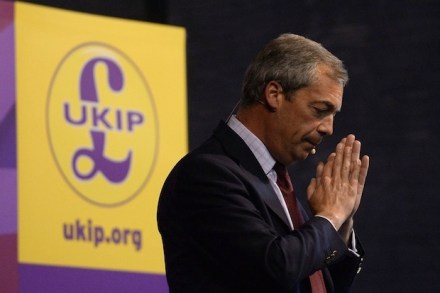
Well it’s polling day, and if anybody wants a spur to vote Ukip they have two options: Peter Oborne’s stirring cover piece in the new issue of The Spectator and Matthew d’Ancona’s column in yesterday’s Evening Standard. If the sight of white activists pretending to be Romanians so that they could accuse black UKIP members of ‘racism’ did not push you over the edge, then d’Ancona’s column probably will. His article was headlined: ‘We must expose UKIP as the racist party it is.’ This is some promise: for years, Ukip's enemies have been trying to suggest that the party is racist. D'Ancona's evidence? Ukip seemed to be racist because it - like the vast majority of the British public – is opposed to mass immigration.

Scotching a myth: Scotland is not as left-wing as you think it is

From our UK edition

Alex Salmond and David Cameron have more in common than a shared appreciation for Andy Murray's tennis. Not, of course, that you would ever persuade either of them to admit that. At the very least, their supporters are more alike than either man would like you to believe. A new survey commissioned by Dundee University's Five Million Questions project confirms as much. On a range of issues SNP supporters are as close, or closer, to Tory voters as they are to Labour voters: [datawrapper chart="http://static.spectator.co.uk/M9xAk/index.html"] This will not surprise diehard leftists, of course. If the First Minister was ever a socialist he ceased to be a comrade long ago and if SNP voters think* like Tories that may be because a good number of them used to be Tories.

Abu Hamza embodies Britain’s self-destructive madness

From our UK edition

A jury in the US has taken less than two days to find Abu Hamza guilty on multiple terrorism charges. He can now expect to spend the rest of his life in prison. During the 1990s and later, Abu Hamza was one of a number of extremist clerics given apparent free-reign to operate in the UK. The effects of that teaching are still being felt. One of the killers of Lee Rigby asked in court to be called ‘Mujaahid Abu Hamza’. But even if we can now ignore the man himself, the Abu Hamza story deserves to be remembered because of what it tells us about our society. If anyone is still in any doubt about our recent madness, I would urge them to watch this 5-minute clip from a Channel 4 Dispatches documentary aired in 1999.

Why people will be voting for Ukip this Thursday

From our UK edition

Despite levels of media scrutiny and hostility unseen in recent political history, this Thursday up to 30 per cent of British voters will opt for Ukip. The odd thing is that the more outrageous the slurs made against them, and the wackier the members unveiled in the press, the more their popularity surges, perhaps out of bloody-mindedness; if a Ukip candidate was caught committing autoerotic asphyxiation dressed in a Gestapo uniform tomorrow the party would probably be on 50 per cent by the end of the week. One of the reasons is that Ukip is a product of lowered trust; the party’s supporters have noticeably less trust in politicians than voters in general, and I would hazard a guess that they have far less trust in the media.

Exclusive: Leading Tory eurosceptic calls for Cameron to ditch net migration target

From our UK edition

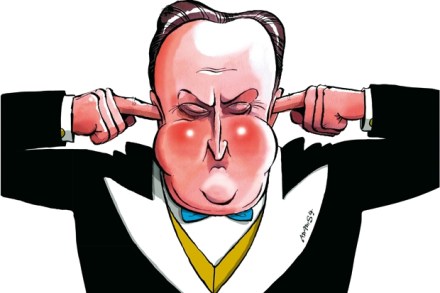
The next set of net migration figures are, conveniently, released on the day of the European and local elections. Some wonder whether this will add grist to the mill of those on the Tory Right who want to cause trouble for Cameron as they can demand that he crack down further on immigration. But I've discovered that if there is one demand eurosceptics will make, it will be for the Prime Minister to scrap the target, rather than try harder to meet it. The reasoning behind this is that the Prime Minister could argue that freedom of movement in the European Union makes it impossible for the Conservatives to have any real chance of meeting this target, save by introducing ever-tougher restrictions on non-EU immigration.

The smears against Nigel Farage and Ukip have reached spectacular depths

From our UK edition

Inevitably the lowest attacks have been saved until the week of the election. For months now the neat drip-feeding of anti-UKIP stories from Conservative Campaign Headquarters direct to the UK press has done everything possible to depict UKIP as a racist, xenophobic, bigoted party. This has been significantly ratcheted up ahead of Thursday’s vote. Today’s pages include the Times repeating a story from last year in the hope of successful guilt-by-association. The story is that Geert Wilders (the ‘Dutch Xenophobe’ as the Times headlines him) would like Nigel Farage to join him and Marine Le Pen in an anti-EU Brussels voting bloc.

What’s the difference between German and Romanian immigrants?

From our UK edition

Nigel Farage is in the papers again today – unbelievably! – this time with a full-page advert in the Telegraph responding to his remarks about Romanians on LBC radio. Such was the universal media condemnation over his interview with James O’Brien that on Saturday even the Sun had an editorial on anti-Romanian racism. You couldn’t make it up. Farage was stereotyping, and his tone of ‘you know what the difference is’ hit the wrong note, which lost him the argument over a fairly reasonable point; that is, the typical profile of a German migrant is very different to that of a Romanian migrant.

Ed Miliband – as clear as mud on immigration

From our UK edition

Ed Miliband visited Airbus this morning, where he gave a clear headline message on immigration: never again will Labour abandon people who are concerned about immigration.  Alas, he became less clear the more he spoke. At various points in an interview with The World at One earlier this afternoon, Miliband described immigration as a “class issue”; a concern of those people who are not getting a fair chance or those who are being undercut by cheap foreign labour exploited by predatory bosses. This fits neatly into his pre-packaged narrative about the evils of the modern market economy.

We need better migration data for an effective immigration policy

From our UK edition

Britain has a long and proud history of opening its doors to the vulnerable and oppressed; of welcoming workers, students and tourists from across the world. I believe that Britain is a tolerant and welcoming country. But, right now, we have a big problem with immigration data. UK migration statistics are worryingly inadequate. Between 2001 and 2011, 'official' records were off by 350,000. Without sound evidence it is difficult – if not impossible – to build a full picture of the scale and nature of inward migration to the UK. Policy suffers as a result. How can we plan for the future of schools and hospitals if we don't know how many people might need to use them?

Should London leave the union?

From our UK edition

We're four months away from Scotland's day of destiny, with the London-Scottish media fraternity becoming increasingly alarmed, and ironically (considering their total unionism) far more noticeably Scottish. At the Telegraph Graeme Archer made a characteristically elegant appeal to Sir Malcolm Rikfind to step forward, and there would indeed be something touching and rather beautiful about the grandson of Jewish immigrants being the man who saves Britain. The film script would write itself, if someone were to make a film about the Scottish referendum (which I admit is pretty unlikely).

Spectator letters: How schools fail boys, Jonathan Croall answers Keith Baxter, and why atheists should love the C of E

From our UK edition

Why girls do better Sir: Isabel Hardman notes that girls now outperform boys at every level in education (‘The descent of man’, 3 May), implying that this is a symptom of a wider cultural malaise. In fact, boys lost their edge in 16+ exams in 1970, long before their advantages in other areas began to disappear. ‘Child-centred’ reforms were already well advanced when the infamous Plowden report was published in 1967, and informal practices such as ‘discovery learning’ and ‘whole language’ gave girls a decided edge. This was conclusively demonstrated in trials conducted between 1997 and 2005 by the Scottish Office.

Tories and ethnic minorities: lessons from George W Bush

From our UK edition

Dan Hannan makes many good points in today's Telegraph as he considers the Conservatives' grim failure to attract support from black and ethnic minority voters. This isn't merely a problem for the Tories, it is a crisis. As I pointed out yesterday, the Tory share of the BME vote in 2010 was exactly the same as their share of the vote in Scotland: 16%. True, this was an improvement on 2005 when only 11% of BME voters endorsed Conservative candidates but that's a matter of only modest solace for Tory modernisers. Naturally (this being British politics) there is a thirst to look elsewhere for examples or lessons that might point towards a solution to this particular Tory problem. Like Paul Goodman, Dan Hannan looks to Canada and not without reason.

Will the Union be a victim of multiculturalism?

From our UK edition

One of the more striking statistics in yesterday’s Policy Exchange report on multi-ethnic Britain is the revelation that only 25 per cent of white Britons identify as British. This low figure may reflect people not wishing to fill out two boxes (that’s what Alex Massie says, anyway), but it certainly follows a noticeable trend of recent years – the decline of British identity in England. In contrast 64 per cent of white Britons in this report called themselves ‘English only’. With the arrival of post-war migrants a great deal of effort was made to make the British identity less racial, more welcoming, and rightly so.

Why does the Tory party have a problem with ethnic minority voters? Because it deserves to.

From our UK edition

Why do the Tories have a problem with black and ethnic minority voters, daddy? It is, with all due respect to Isabel and Paul Goodman, the British political question that is easiest to answer. We all know the answer too, even those of us on the right. Race might not be the Conservative party's original sin; it's still a pretty high-ranking sin. And, look, it's not ancient history either. It's not a Different times, different attitudes but, please, can we move on now? kind of thing. Nor did it die with Enoch either. (Poor old Enoch, so brilliant but a touch troubled too, don't you think?

Modern England: a triumph of immigration and integration.

From our UK edition

In a better, more sensible, world David Cameron would make a virtue of the opportunity UKIP has given him. He would appreciate that defending his party's record is actually an opportunity for a counter-attack. UKIP complain - loudly - that 4,000 people arrive in the United Kingdom from the EU each and every week. This, they suggest, is awful and Something Must Be Done to limit the number of people coming to the United Kingdom. The Conservative party appears, in its dark heart, to share this concern. It suspects the Kippers might have at least half a point. There's something nauseous about all this immigration, isn't there? No wonder the party is hemmed-in, unable to find a response to UKIP that is both sensible and persuasive. Better, then, to attack.

David Cameron must tackle the optimism deficit

From our UK edition

[audioplayer src="http://traffic.libsyn.com/spectator/TheViewFrom22_24_April_2014_v4.mp3" title="James Forsyth and Alex Massie explain why we need more optimism in Scotland and Westminster" startat=1538] Listen [/audioplayer]There is an optimism deficit in British politics. Politicians seem incapable of making a positive argument for anything, including the country itself. The British government’s case in the Scottish independence referendum has been almost entirely negative. Those looking for an uplifting defence of the United Kingdom have been left sorely disappointed as the government has instead stuck to technocratic arguments about why Scotland would be worse off on its own.

The Ukip posters will offend more Londoners than eastern Europeans

From our UK edition

Globalisation is like a rising tide; we’re all living in our separate ponds with their own little social ecosystems until the floodwater starts to rise and turns them into one big lake. Many fish, especially, the big ones, are going to benefit but many will suffer in this frightening new world. It is that fear which Ukip’s new posters are aimed at addressing (or exploiting, depending on your view). Sure, Europe is about free movement of labour, but that movement is highly imbalanced and has been for a number of years. Far more people are seeking to come from southern and eastern Europe to work in Britain than vice versa, and therefore that puts pressure on some British workers (let alone the question of infrastructure).

Ukip is already winning the immigration debate without controversial posters

From our UK edition

Another day, another bad-tempered debate between two diametrically opposed politicians on immigration. This morning's ding-dong on Radio 4 between Ukip's Paul Nuttall and Labour's Mike Gapes fell into the category of Debates That Won't Change Anyone's Mind But Will Make Them Grumpy Before 9am - a modern-day Sisyphean punishment. listen to ‘Mike Gapes and Paul Nuttall discuss Ukip's new poster campaign’ on Audioboo The pair were discussing Ukip's European elections, which in case you decided to take Easter off from being habitually outraged, are below: Nuttall was arguing that his party was on the side of the British people on this issue and that the posters were simply presenting the facts.