Hyde park

How to tour London like a royal

The next time you arrive at London’s Heathrow Airport, you might be forgiven for wanting a welcome fit for a king. Yet under the now nearly three-month-old reign of King Charles III, there is a persistent rumor that Buckingham Palace, that symbol of the British monarchy since its acquisition by America’s favorite monarch George III in 1763, is going to pass out of private hands and into public ones. There has been talk of its being turned into a giant permanent art gallery and museum, showing off treasures from the Royal Collection Trust. There's even chatter of — and I can hear the gasps from here — its being transformed into a five-star hotel. You, too, can pay an exorbitant amount of money to sleep where kings and queens have trod.

Cold water swimming

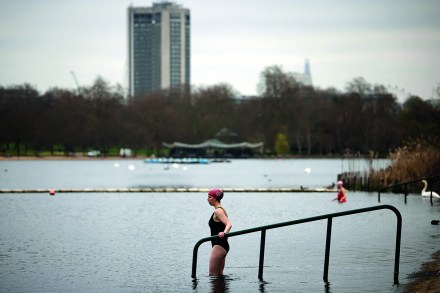
The woman on the path has come to a dead stop. She’d been shuffling along in that bunched-up posture we all developed when we bought smartphones, a two-fingered salute to the millennia of evolution that managed to pull humans into an upright position. Now she’s staring, open-mouthed, at her surroundings. I rather enjoy the shocked faces of passersby who catch sight of us swimmers at the Serpentine Pond in Hyde Park in our flimsy suits as we lower ourselves into the cold water each morning. I look still more shocking when I get out. My skin turns from its normal skimmed-milk color to bright neon, as though it has been slapped. And it has in a way: when you first enter water thats barely above freezing, you do get a shock.

swimmers

Paul Simon says farewell with a daring and inventive show

Early in 1987, a middle-aged woman approached me on the record counter of the Slough branch of Boots. ‘What do you have by Ladysmith Black Mambazo?’ she demanded. Nothing. Boots in Slough wasn’t big on South African isicathamiya choral music. ‘Well,’ she suggested, ‘you really ought to get their records in. They’re going to be huge.’ She was wrong, but I knew why she was so sure. Ladysmith Black Mambazo had been among the standout guests on Paul Simon’s Graceland, released a few months before. Graceland made Simon, by my reckoning, the first pop star who had emerged from the rock’n’roll era to make a major cultural impact across three decades. By the 1980s, the Stones had become just a touring machine.