Hunting

The madcap effort to ban farming, fishing and hunting in Oregon

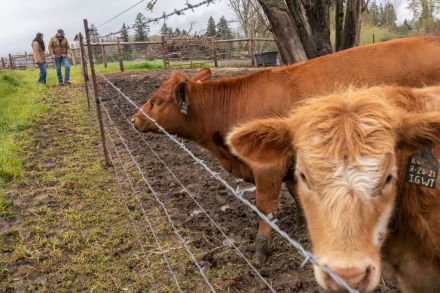
What happens when something you do every day becomes illegal? If animal rights activists in Oregon have their way, the state’s hunters, fishers and farmers may be about to find out. A sweeping new initiative potentially headed for the November ballot targets the legality of farming, hunting, fishing, ranching, animal sciences, or even killing a mouse that has scurried in your house. Initiative Petition 28 (IP28) would make Oregon the first state in the US to ban such practices. Initiative Petition 28 proposes the enforcement of the PEACE Act, or the People for the Elimination of Animal Cruelty Exemptions. The act states animals should be cared for “in ways that minimize their pain, stress, fear, and suffering.
oregon

The killer in your backyard

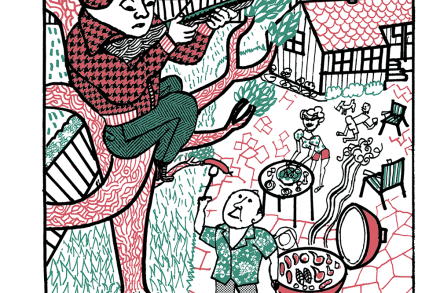
A perch some 20 feet up a backyard tree offers a peek into every manner of activity in the neighborhood. One guy in a uniform sets down his running leaf-blower, backs into a bush, squats and relieves himself. Another guy wearing pastel and khaki rides tight circles on his mower; his facial contortions suggest he’s singing his ass off. A woman washes dishes at her kitchen sink. A man grills on his deck and searches for me in the treeline. This is urban hunting. And it sucks. All the way around. But here’s the truth: it’s necessary – for hunters, for homeowners, for the community and our economy. New York City infamously invested $6 million in taxpayer funds to give bucks vasectomies As a hunter, the suck starts when you pull into a stranger’s driveway.

hunting killing

I’m losing the will to hunt

From our UK edition

Laikipia, Kenya When I was eight I used to go fishing in the Indian Ocean beyond Vasco da Gama’s pillar with Mohamed. Once we pulled out a fish with a domed forehead and a sailfin – a filusi. In Spanish it’s known as the dorado, referring to its iridescent golden flanks. As we watched the fish suffocate in the tropical air, its pigment, sheathed with a patina of stippled green, was transfigured for a brief instant like a beam of sunshine on a church mosaic. Then the dorado’s brilliance faded, and by the time Mohamed picked up his knife and sliced open her belly, removed the guts and tossed the body to the bottom of the canoe, it had turned to tarnished lead. As a boy, my hunter’s remorse was as strong as my urge to kill.

Muzzleloader season

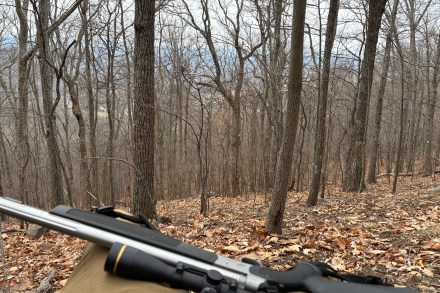
Climbing into the Blue Ridge Mountains in Virginia with a muzzleloader slung over my shoulder was a journey back in time. This was the gun that the colony's first settlers used when they too trod the same ground 400 years ago to hunt deer and bear. It helped tame the state and then the entire country. As I pushed my way through undergrowth at the base of the mountain range by the light of the moon at 5 a.m. on a bitingly cold and bitter January morning, unseen branches and briars clawed at my face in the dark. This was the last day of the hunting season that had been extended – as hunting seasons across the US often are – for muzzleloaders. To keep this heritage weapon alive and to give the animals a sporting chance.

muzzleloader

Letters: How to clear the courts backlog – without scrapping juries

From our UK edition

Tried and tested Sir: Your otherwise excellent leading article opposing proposed restrictions on jury trials (‘Judge not’, 29 November) misses two important points against the proposals. First, one can go much further than pointing to 3,000 days of unused capacity. The capacity itself can be expanded quite readily. It was once normal for courts to sit on Saturdays. Moreover, the court day once started at 9 a.m. and, after a break for supper, could go on well into the late evening – the ‘black cap at midnight’ is not a myth. The modern court day is 10.30 to 4.30, with an hour for lunch. A 9.30 to 5.30 day would add another 40 per cent capacity. Including Saturdays would increase capacity by 68 per cent.

The rudeness of Reform

From our UK edition

Critics see Rachel Reeves as betraying her election manifesto tax promises; but she may well be trying ‘The Lady’s Not for Turning’ gambit. Her speech from Downing Street delivered before the markets opened on Tuesday, resembled – in content, if not in style – Margaret Thatcher’s 1980 party conference speech. In both cases, the incoming government had failed to get public spending and borrowing under control. (Indeed, government borrowing costs then were 6 per cent of GDP, compared with a mere 5.1 per cent today.) Also in both cases, the government sought simultaneously to go against earlier promises not to raise taxes, yet to do so in the name of long-term consistency. Both faced what was then called ‘a funding crisis’ in the bond market.

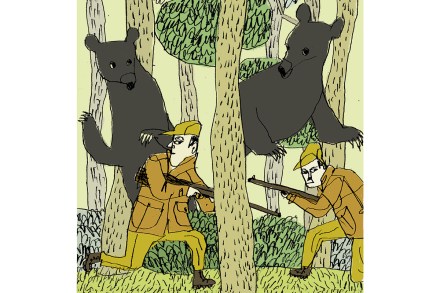
Confessions of a bear hunter

Southwest Virginia, October. Gravel groaned under my creek-numbed feet. I looked up at a mountain laid out like a fist and I climbed toward the most violent knuckle. But before I got there, the world turned on its side. I don’t know for sure why I collapsed. Maybe it was food poisoning, maybe a heart attack. I felt my face resting on cold stone and gripped the dark walnut of my rifle stock as I passed out. Eleven hours later, a new day started. A distant pickup truck with glass-pack mufflers fired up, then idled in a deep rumble. I stood – before the sun came up – and did squats for warmth, surprised I felt as good as I did, but I had a decision to make: walk off the mountain or hunt my way out. May as well hunt.

bear

How John Egan has stayed in the saddle

From our UK edition

Pop stars rock on nowadays into their seventies. And jockeys too – despite the physical dexterity and instant-decision-making required – are lasting longer. Jimmy Quinn and Franny Norton only quit the saddle in their mid-fifties; Joe Fanning is still going strong at 55. On a sweltering Ascot day recently I enjoyed a chat with John Egan, who was handling the heat better than much younger rivals and is still in demand at 56. Remembering past successes, including the Irish 2000 Guineas on Indian Haven, July Cups on Les Arcs and Passive Pursuit and an Ebor Handicap on 100-1 shot Mudawin, I asked if there was a particular race he still hankered after winning. Egan smiles easily but the answer was a pistol shot: ‘I want to win them all.

Labour is risking the future of racing

From our UK edition

The only political party with a serious chance of winning office I will ever vote for again is the one which acknowledges that in all probability and at least for a while it will increase taxes. Every party piles up promises that they will be the ones to get Britain working again. But building power stations, reservoirs and schools costs money. So does hiring doctors and nurses, filling potholes and getting trains to run on time. Some claim they will finance their plans by creating growth, some by taxing the rich. Then voters discover that the growth fairy remains elusive and the rich have been re-defined to include them: public regard for politicians takes another dive.

Franken-Wildlife: will cloned game destroy hunting?

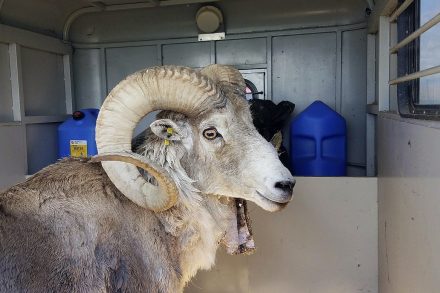
In October 2024, a Montana rancher was sentenced to federal prison time and charged a hefty fine for illegally cloning a giant hybrid sheep, afterwards referred to as the “Montana Mountain King.” Using testicles and other tissues illegally imported to the United States from an argali Marco Polo (Ovis ammon polii) sheep hunted in Kyrgyzstan, the rancher contracted a laboratory to create cloned embryos which he then implanted to ewes on his ranch, eventually resulting in an impressive male specimen tailored for the captive trophy hunting industry. He then worked with co-conspirators to use semen from the cloned animal to impregnate various other sheep and create hybrid specimens of large body and horn size for illegal sale to captive hunting facilities in various other states.

Cloning

I tensed my bow as the bull elk stared at me

Some 500 lbs of testosterone and pissed-off muscle and bone busted through the fog and the aspens. I drew my bow. The beast stopped broadside not twenty yards away. Perfect. I moved to settle my sights. There was his head and his rump. But a copse of three aspens covered everything vital. Not perfect. The bull stared at me. And I begged and willed and made unholy promises to God almighty if that bull would just take one fecking step forward. This was the first daybreak on a five-day guided public land archery hunt. Before this moment, I had been on two elk hunts. Each a weeklong. Each do-it-yourself. Each elkless. And neither had taught me a thing about how to hunt elk. A Western elk hunt costs us what we have: time and money. And, I had just about determined it wasn’t worth either.

Bow hunting

Remembering the horror of Rwanda’s genocide 

From our UK edition

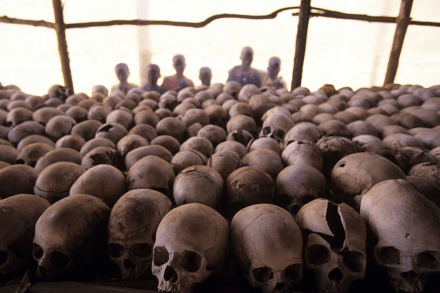
Rwanda It had been more than 30 years, yet I recognised the church and its surroundings instantly. Superimposed on the tidy green sward of today, I recalled the rags, shoes and corpses I saw here in May 1994. There are gaps in my memories of Rwanda. But the parts I do recall are explosively vivid, as if branded on my retina, like those people outside the church. They’d lost heads and limbs and every-body was dead, but the scene was alive. I could see and hear their last moments. A woman lay in my path, on her back with her gingham skirt hitched up around her thighs. Not much flesh left on her skeleton, her hair sloughing off, her face and frame frozen at the end of her rape, when her attacker shot her in the heart.

Why is there no campaign to free novelist Boualem Sansal?

From our UK edition

Paris What possible crime has the award-winning novelist Boualem Sansal committed that merits being locked away for three months now by the Algerian police? Listen to the Algerian government – and its cheerleaders on social media – and theanswer appears to be that he is at best a stooge for the French far right, at worst an outright traitor. Friends of the man paint another picture: a gently spoken free-thinker with the courage to speak his mind. Sansal, who is 80 and suffers from cancer, was arrested at Algiers airport on 16 November as he got off a plane from Paris. He has been in an Algiers prison ever since, with visits to hospital for treatment. His Parisian lawyer, François Zimeray, has still not been given a visa, so the charges are unclear.

This other Eden: Adam and Eve in Paradise, by Eça de Queirós, reviewed

From our UK edition

When José Saramago denounced the Bible as a ‘catalogue of cruelties’ at the launch of his novel Cain in 2009, the response from the Catholic church in Portugal was fast and frosty. The country’s conference of bishops labelled his comments ‘offensive’, adding: ‘Insults do no one any good, particularly from a Nobel prizewinner.’ Saramago might have been taking his cue from the man he considered to be Portugal’s greatest novelist. While serving as a diplomat in Britain, Cuba and France, Eça de Queirós (1845-1900) savaged clerical hypocrisy and national backwardness in what are now considered canonical realist doorstoppers. And a century before Saramago, he caused a similar ruckus with Adam and Eve in Paradise.

Letters: In private schools, struggling children find the help they need

From our UK edition

Growing problem Sir: The first leading article of the year (‘Growing apart’, 4 January) points to the gap in economic growth between the US and the UK, while the first cover piece (‘Shift key’) identifies a shift rightwards in values and voting intention, in reaction to the bigger state model of Keir Starmer’s government. Sandwiched between the two is ‘Reeves’s new year’s resolution’, in which James Heale tells us of the Labour Growth Group, a WhatsApp group with 99 MPs that is only marginally more credible than a Turkeys for Christmas cabal. Have these Labour MPs studied the research cited in Jon Moynihan’s excellent Return to Growth? Has Rachel Reeves?

James MacMillan, Sebastian Morello, Amy Wilentz, Sam Leith and Lloyd Evans

From our UK edition

32 min listen

This week: composer James MacMillan reads his diary on the beautiful music of football (01:11); Sebastian Morello tells us about the deep connection between hunting and Christianity (07:17); Amy Wilentz explains how Vodou fuels Haiti’s gang culture (16:14); The Spectator’s literary editor Sam Leith reviews The Virago Book of Friendship (22:38); and – from the arts pages – The Spectator’s theatre critic Lloyd Evans writes about a new play on the last days of Liz Truss and also about Bette and Joan, which includes 'brutal' and 'brilliant' portraits of Bette Davis and Joan Crawford (26:37). Presented by Oscar Edmondson. Produced by Patrick Gibbons and Oscar Edmondson.

The Christian case for hunting

From our UK edition

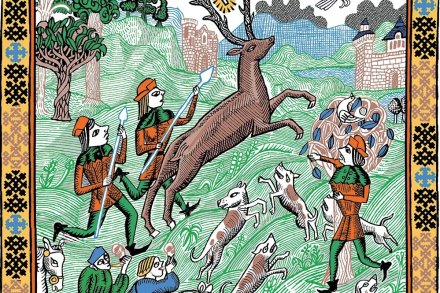
When I was a teenager, my closest friend, Henry, would vanish into the Shropshire Hills over the hunting season’s weekends. When he returned, it was with a wind-beaten face, wearing the traditional beagler’s white breeks and green socks, with a leather hunting whip slung over his shoulder. I knew nothing of this world, until one late autumnal Saturday he invited me to join him. As I watched the beagle pack race across the landscape, I realised I had stepped into a magical event, a hunting scene from a medieval tapestry brought to life. I was hooked. To this day, many sporting Christians throughout Europe honour St Hubert with songs and prayers after a hunt Beagling was my entry into field sports, but soon the door might be closed to others.

Hunters laugh off the Harris-Walz campaign effort to win their vote

Avid outdoorsmen are slamming a new political coalition formed by the Harris-Walz campaign aimed at winning their vote in the 2024 presidential election. “Hunters and anglers want to support Harris-Walz as much as the fish and game want to be eaten,” one Maryland-based hunter who recently bagged a state record bear chuckled to The Spectator. Governor Tim Walz kicked off the “Hunters and Anglers for Harris-Walz” group on Friday with an article placed in Outdoor Life magazine. The coalition is described as “a new national organizing program to engage, mobilize a broad coalition of sportspeople, conservationists and rural and gun violence prevention voters in key states across the country.

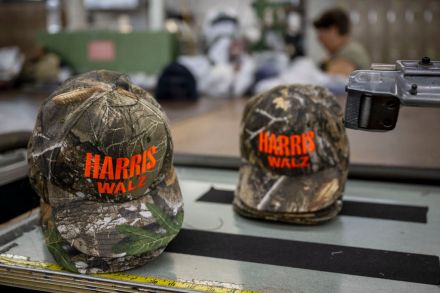
hunters Embroidered campaign hats of US Vice President and Democratic presidential candidate Kamala Harris and Minnesota Governor and Democratic vice presidential candidate Tim Walz (Photo by ANGELA WEISS/AFP via Getty Images)

Tory wars, the reality of trail hunting & is Sally Rooney-mania over?

From our UK edition

43 min listen

This week: who’s on top in the Conservative leadership race? That’s the question Katy Balls asks in the magazine this week as she looks ahead to the Conservative Party conference. Each Tory hopeful will be pitching for the support of MPs and the party faithful ahead of the next round of voting. Who’s got the most to lose, and could there be some sneaky tactics behind the scenes? Katy joins the podcast to discuss, alongside Conservative peer Ruth Porter, who ran Liz Truss’s leadership campaign in 2022. We also include an excerpt from the hustings that Katy conducted with each of the candidates earlier this week. You can find the full interviews on The Spectator’s YouTube channel: https://www.youtube.

It may be too late to save trail hunting

From our UK edition

There’s a grumble, often repeated among country folk, that ‘hunting people got hunting banned’. What they mean (I think) is that a combination of complacency, arrogance and the failure to get the public onside is what did for hunting. It’s not really fair: arguably, without the disaster of the Iraq war, Tony Blair may not have felt he needed to chuck a piece of legislation at his backbenchers, like a juicy bone to a pack of hungry hounds. The hunting ban never was about animal welfare, but class hatred, Dennis Skinner declaring that the bill was ‘for the miners’. The ban, Blair later admitted, was ‘one of the domestic legislative measures I most regret’.