Hungary

Even Hungary has soured on Vladimir Putin

As Russian tanks rolled across the Ukrainian border, the front page of the Hungarian tabloid Pesti Hírlap revived an old rallying cry to capture the national mood. “Ruszkik haza!” (“Russians go home!”) was the headline, with Budapest 1956, Prague 1968, and Kyiv 2022 listed below the fold. The line was borrowed from graffiti scrawled on Budapest street corners during the 1956 anti-Soviet uprising, a heroic but doomed effort that has since entered into Hungarian national lore. Is it 1956 all over again? Despite some eerie parallels, the political geography of Europe has changed considerably since the bad old days of the Cold War. Budapest is two hours from Vienna by train and Prague is actually further West than the Austrian capital.

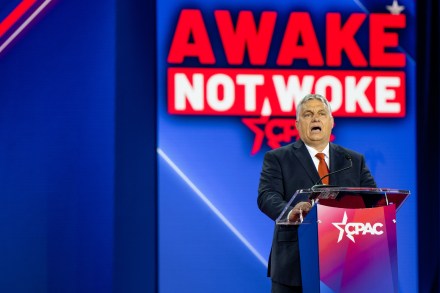
Can Viktor Orbán’s conservatism work in America?

American conservatives are often accused of narrow-minded parochialism, but in recent years, the right has turned its gaze abroad. The Brexit referendum and the rise of Boris Johnson in the United Kingdom anticipated the potential appeal of conservative populism to working-class voters. Alt-right intellectuals look to Singapore’s curious mix of technocratic managerialism and libertarian economics as a blueprint for governance, while their more extreme (and extremely online) fellow travelers celebrate would-be strongmen like Brazil’s Jair Bolsonaro and the Philippines' Rodrigo Duterte. More recently, the presidential campaign of Éric Zemmour in France has captured the imagination of immigration restrictionists.

Viktor Orbán is winning his culture war

Budapest Even supporters of Hungarian prime minister Viktor Orbán acknowledge privately that the Pegasus scandal is a hard blow to the embattled leader. Last month’s news that government spies had employed Israeli software to commandeer the smartphones of journalists, activists and government opponents confirmed the worst authoritarian stereotypes of Orbán, who will be running for his fourth consecutive term in 2022. These allegations, if true — and many Orbán backers with whom I spoke assume that they are — will likely displace what was Orbán’s greatest liability heading into next year’s vote: that he and his Fidesz party oversee a vast web of public corruption.

viktor orbán

Viktor Orbán, literal authoritarian

Wake up, everyone! Democracy is in peril again. Blasting across Cockburn’s email feed recently was a new piece from Yasmeen Serhan for the Atlantic, titled 'The Autocrat’s Legacy.’ The piece is about the unfathomable wickedness of Hungarian prime minister Viktor Orbán. He’s the autocrat. Orbán doesn’t stick his opponents in jail or ban political parties or rig the votes in elections. He’s a much deadlier kind of authoritarian: the kind who wins elections but believes wrong things. Orbán has been the dominant political force in Hungary since 2010, when his Fidesz party dominated elections so thoroughly that they achieved a supermajority capable of passing a new constitution (which they did; replacing Hungary’s Communist-era document). Whoops, that’s 'supermajority’.

orbán

The most locked-down couple in Eastern Europe

We had lost the habit of checking the national statistics of infections and deaths from COVID-19. They didn’t mean much in Budapest as the summer wound down and the city visibly revived, with heavier traffic and more restaurants open. But then there was a spike in cases in next-door Croatia, and the Hungarian government pondered closing the borders. That threatened our hope — desperation, really — for a beach vacation. We were the most locked-down couple in town. My wife had broken her heel and been confined to our apartment for four months, and I’d been stricken with sciatica and moved like a glacier. To our relief, the Croatian statistics were not too alarming and the Hungarians postponed restrictions. We still had to work out how to get to Hvar, though.

hvar

Hungary isn’t afraid to call ‘Christian persecution’ what it is

Following Donald Trump’s election, there was hope that the US would aid Christian communities overseas, especially in Iraq where the population of Christians was reduced by over 80 percent since the US invasion. The Obama administration was less receptive to a focus on persecuted Christians, often opting to use euphemistic terms. Christian persecution became known more as a series of sporadic, unrelated incidents rather than a phenomena. The US has invested significantly in helping rebuild Iraq, but the effectiveness of our aid has been limited, and some people on the ground in Iraq claim they never saw the entirety of the aid themselves.

hungary christians

Roger Scruton on Soros and Hungary

‘It’s complete nonsense,’ Sir Roger Scruton told me last November. ‘It’s all fine. It’s only social media, isn’t it?’We were talking after the British government had appointed Scruton, Britain’s most eminent public intellectual, as the unpaid chairman of the Building Better, Building Beautiful commission. The appointment had unleashed a wave of outrage from the hard left — which, this being the age of Jeremy Corbyn, is also Her Majesty’s Opposition. Scruton was assailed as a homophobe, an apologist for date rape and eugenics, and, in a touching display of interfaith harmony, as both anti-Semitic and an Islamophobic. All of the accusations selectively misrepresented his statements, sometimes to the point of fiction.

roger scruton soros hungary

Bibi blows up Israel’s Central European alliance

Nationalism is a supremely powerful force in politics, but it’s perennially difficult to forge lasting alliances between competing nationalisms – as this week’s news demonstrates yet again. No country has benefited more from the growing split between Brussels and the European Union’s formerly Communist member states than Israel. In Warsaw, Budapest, Prague, and Bratislava, Prime Minister Benjamin Netanyahu found receptive European audiences, which Israel needed as the EU has soured on Israel’s occupation policies towards the Palestinians and increasingly aggressive rhetoric towards Iran. Netanyahu invested in these new relationships, which were based in more than mere convenience.

bibi warsaw