Hubris

Madness, mutiny and murder in the Canadian Arctic

The elegant, charismatic and narcissistic explorer Vilhjalmur Stefansson wasn’t the average adventurer that Alaska attracted in 1912. When he arrived in Seattle from the Gold Rush port of Nome, he told journalists that he had discovered ‘a lost tribe of whites’ in the uncharted High Arctic. He also sold politicians the vision of an undiscovered land rich in gold, raw metals and oil that, only nine years after the Wright Brothers’ first flight, would soon be covered with airfields. The Canadian government quickly offered Stefansson unlimited resources to lead an expedition back to the High Arctic. His objective was to claim what may have been the greatest geopolitical prize for Canada and the British Empire: the mysterious continent at the top of the world.

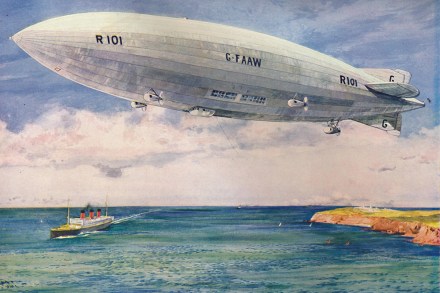
The hubris of the great airship designers

From our UK edition

Tribal rivalries have existed from humanity’s beginning and have fuelled the creation of every prestigious monument ever built. By the Age of Science we were building not pyramids but ironclads and submarines fighting for ascendancy at sea, expanding our empires in spite of an ever-growing movement for colonial independence. The Spanish-American war of 1898 added the United States to the list of great nations believing it to be their destiny, even duty, to bring their kind of progress to the world. Many understood that achieving overwhelming technological power as a nation guaranteed that no antagonist would dare attack. Limited by agreements made after the first world war, Britain no longer ruled the waves.

The demise of America has been greatly exaggerated

One of my favorite quotes about America — mainly because it annoys so many people — comes from the historian Robert Wiebe. In his book Self-Rule, he writes: ‘Telling Americans to improve democracy by sinking comfortably into community, by losing themselves in a collective life, is calling into the wind. There has never been an American democracy without its powerful strand of individualism, and nothing suggests there will ever be.’ Cue the yelping from nationalists, socialists, Burkeans, take your pick. Yet Wiebe was less making a political argument than he was observing what was right in front of his nose.

america