Horse racing

The turf | 4 August 2016

From our UK edition

Sometimes the labels people give themselves are more than mere braggadocio. Cassius Clay (Muhammad Ali if you must) really was ‘The Greatest’. For me Tina Turner’s exultant ‘Simply the Best’ was never bettered in its genre, and Glorious Goodwood manages year after year to live up to the name it has happily exploited since it was coined by an alliteratively minded journalist before the second world war. Sponsorship does not always improve things but the additional funds now provided by Qatar have only enhanced Goodwood’s appeal.

The Brexit effect

From our UK edition

Perhaps the most surprising thing about Theresa May’s arrival at No. 10 is that it has given us back a prime minister who has owned a racehorse. Well, part of one anyway. Theresa the Merciless was once in a syndicate at William Muir’s friendly Lambourn yard which owned a grey called Dome Patrol, the winner of a couple of races back in the 1990s. At least it did better than Brexit, a two-year-old filly that finished sixth at Newbury on referendum day after being fifth the time before. Not exactly going in the right direction...

Six of the best | 7 July 2016

From our UK edition

I love Eclipse Day at Sandown, the first occasion in the year when the classy three-year-olds start taking on their elders. Over the years it has given us some great contests and added lustre to the careers of some great horses. In 1986 Dancing Brave confirmed in the Sandown feature how unlucky he had been not to win the Derby. In 2009 Sea The Stars won the race in the fastest time for 40 years as he made it one of his six Group One victories in six months. In 2000 the ever-combative Giant’s Causeway got back up to win by a head under George Duffield after being passed by Pat Eddery on Kalanisi in one of the toughest and most enthralling finishes I have ever seen.

On the money | 22 June 2016

From our UK edition

Forced to depart Ascot earlier than usual to fulfil a cruise lecture booking on the fjords, I hadn’t reckoned with June in Norway. It turned out to require anoraks and sweaters rather than shorts and suntan oil, although Mrs Oakley and I were better prepared than one lady passenger: having travelled without a scarf, she confessed that it was indeed her deftly folded nightie she had wrapped around her neck for warmth. At least a bit of book-signing went without a hitch, better than the time a young lady asked me to write ‘To Bubbles with love and kisses’ and then, when asked to pay for the signed volume, demurred, saying that she thought the books came free with the talk.

Girl power | 9 June 2016

From our UK edition

How much strength do you need to win a horse race? Do women have enough? And if they don’t should they be given an allowance to help them in one of the few sports where they compete professionally against men? The question came up as I shared a farmer’s platter with champion trainer Paul Nicholls in his Ditcheat local at the end of the jumping season. Paul is no softie: one of the things he most admires in Ruby Walsh is his toughness, win or lose, and the end was signalled for one young rider in the Nicholls yard because he came into the unsaddling enclosure in tears after a mistake. But, like the former champion jump jockey Sir Anthony McCoy, Paul believes that it is time to give the girls some assistance.

Royal Ascot

From our UK edition

It’s time to scuttle under a rock if you are a Folkestone or Cornish crab: 7,000 of them will be consumed in Royal Ascot week, along with 2,900 lobsters, 160,000 glasses of Pimm’s, 51,000 bottles of champagne and 30,000 chocolate eclairs. Better get your chopper booking in fast, too: 400 helicopters will descend on to the Berkshire course during the week. In purely racing terms, Royal Ascot isn’t quite yet a Dubai with rhododendrons. Invitational events like Sheikh Mohammed’s World Cup in March and the Hong Kong International race day in December pull in more worldwide equine stars, and Ascot doesn’t have a centrepiece race like the Derby, Grand National or Cheltenham Gold Cup.

Twelve to follow | 12 May 2016

From our UK edition

It has been a little like scraping from the plate as slowly as possible the last traces of Mrs Oakley’s exquisitely sauced vitello tonnato; like draining reluctantly the last glass of our best Condrieu: this year I never wanted the jumps season to end. Sprinter Sacre came back to his best, Richard Johnson finally won the jockeys’ title, Paul Nicholls gutsily collected his tenth trainers’ championship. But if the joy of jump racing is continuity, the attraction of the Flat lies in its sense of renewal. As sleek would-be contenders started strutting their stuff in the Classic trials, as the first precocious two-year-olds bounded excitedly on to the scene, I remembered why I love the summer game too. Which will be the breakthrough stables this year?

Sandown thrills

From our UK edition

The difference between praying in church and praying at the racecourse, a gnarled old punter once said, is that at the track you really mean it. At Sandown last Saturday, the last day of the jumping season, all our prayers were answered: you simply could not have asked for a better day. One reason we were all there was to celebrate Richard Johnson’s first jockeys’ championship after 16 times finishing a good-tempered and sporting second to his friend A.P. McCoy. In between the autograph-signing, Dickie Johnson provided the perfect seasonal sign-off by winning the bet365 Oaksey Chase on Menorah for trainer Philip Hobbs in the familiar blue colours of Diana Whateley.

The horse from hell

From our UK edition

There were moments while reading this sprawling, ambitious novel when I thought I was reading a masterpiece. But at other times, it felt as if the author was convinced that she was writing one. The Sport of Kings is the story of the Forge family of Kentucky. They’re a brutal lot. In the opening scene, John Henry Forge ties his son Henry to a post and whips him. A black employee, Filip, caught with John Henry’s wife, is lynched. As well as violence, John Henry instils a fierce sense of destiny in his son. Against his father’s wishes, Henry turns the family farm over to raising racehorses. Through some severe inbreeding, Henry creates the horse from hell, the aptly named Hellsmouth, an immensely strong but fragile filly.

Riders and diners

From our UK edition

Not quite nil humanum a me alienum, but I have always been interested in other people’s trades and worlds. That was one reason why I enjoyed the late Woodrow Wyatt’s invitations to the annual Tote board lunch. I always found myself on a table with racehorse owners and trainers. When they realised that I barely knew the difference between a fetlock and a bridle, they became politely distant, until they discovered that I was a political journalist, which made them barely politely suspicious. Politicians they disdained. As for hacks, they only took notice of the ones that they could ride. That said, I am sure that they would have paid attention to Marcus Armytage, a delightful fellow who writes about equine matters in the Telegraph.

National review

From our UK edition

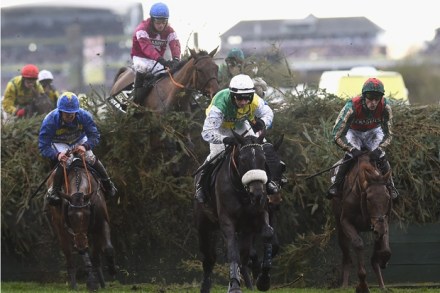
With great victories in Flat racing you witness hats-in-the-air exultation. You see the pride of trainers who nurtured the winner to full potential or of jockeys who timed their challenge perfectly. Sometimes you even spot the quieter satisfaction of the owners and breeders who framed the mating that brought it all about. But much of the joy springs not from the victory itself but from the oodles of cash the winner is now worth at stud. In jump racing that financial bonus is lacking and yet the raw emotion often seems ten times as intense, as we saw after Rule the World won this year’s Grand National. The winning trainer, Mouse Morris, was literally speechless.

Low life | 23 March 2016

From our UK edition

I shared a taxi from Cheltenham station to the house party in an outlying village with a stripper. Finding a taxi in Cheltenham during the Festival is as difficult as picking a winner in the Bumper, and we were amazed and pleased to have got one so easily. One wouldn’t have guessed that the dark, petite young woman, thickly wrapped against the cold night air, was a stripper, but she was proud enough of her occupation to talk about it on the seven-furlong ride between the station and the ‘gentleman’s club’ where we dropped her. She’d come all the way from Cardiff, she said, to dance in a cage from 10 p.m. until 6 a.m., and she very much hoped it was going to be worth the effort financially.

Real life | 10 March 2016

From our UK edition

‘Racing is 99.9 per cent disappointment,’ said the trainer philosophically, as I sat in the yard sipping coffee, waiting for the vet. She arrived in her pick-up a few minutes later and wound down her window. ‘Am I in the right place?’ ‘I don’t know,’ he said, still in sardonic mode. ‘It depends what you’re looking for.’ I leapt up and showed her the way to the far stable, where Darcy was standing on only three good legs. The foot that trod on the screw was now fine and she was sound on it. But then, during a short hack on the common, she had gone suddenly very lame in front.

Real life | 3 March 2016

From our UK edition

Darcy trod on a screw. Five little words which, if Darcy was anything other than a thoroughbred horse, might signify nothing more dramatic than a rummage through the medicine cabinet and the application of a plaster. But of course Darcy is a thoroughbred horse. And I did end up mothering equine and not human children. Remind me, please, why I did that? Oh yes, something about me never quite working out how to do life like normal people do it, and finding myself, as middle age bore down on me, only able to commune with creatures possessing four legs. Four very delicate, finely balanced legs in Darcy’s case. An expensive way to carry on one’s emotional life. But we are where we are. Darcy trod on a screw. She had been going reasonably well for her first season in training.

Nice guys do finish first

From our UK edition

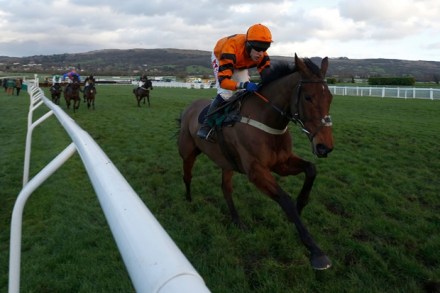
Richard Johnson, possibly the nicest man to occupy a saddle and certainly the most modest, once said of his Irish rival Ruby Walsh, ‘Ruby never seems to fight horses. It never looks forced with him, he never throws the kitchen sink. But I do — metal ones and porcelain if necessary.’ There weren’t too many of us there to see it but there was a trademark kitchen-sink job in Warwick’s third race last Friday, the Listers Audi Novices’ Handicap Steeplechase, worth just £2,972 to the winner. Johnson’s mount Cheat The Cheater shared the lead much of the way but before the last turn the nine-year-old was passed by three horses who appeared full of running. Most jockeys would have given up then and waited for another day.

Second thoughts

From our UK edition

Racing Life is all about judgment and I got one thing right at Cheltenham last Saturday after the overnight rain. Waved on to soggy grass by a parking attendant, I demurred, insisting that anyone who parked there would never drive off. I was waved on impatiently and foolishly let her win. When it came to leaving, I managed to start slithering across the grass towards safety, only for a 4 x 4 driving up the hard core to refuse to let me in. As I braked, I knew I was doomed. It must be something about being so high up that makes 4 x 4 drivers so arrogant but at least the arrival of the tractor 50 minutes later taught me where to find the bolt-on towbar for my car.

Christmas tips from Clare Balding and John Rutter

From our UK edition

For the Spectator's Christmas survey, we asked for some favourite seasonal rituals - and what to avoid at Christmas. Clare Balding I love a good walk on Boxing Day followed by watching the racing at Kempton. Avoid the internet. Be present in the moment, enjoying time with family rather than being distracted by online conversations.   John Rutter I conduct Christmas concerts around the country in the weeks before Christmas, so by the time the day comes, I’m ready to veg out, going to Christmas morning service in King’s College Chapel (sitting back while someone else does all the hard work), and enjoying food, drink and family at home.

Wear The Fox Hat looks innocent enough but try saying it in an Irish accent

From our UK edition

President Lyndon B. Johnson’s image never quite recovered in many people’s view from the photograph of him picking up his two beagles by their ears. Personally, I was nearly as affronted by the names he had given the two dogs: Him and Her. A dog is entitled to a good name, and so, for me, is a horse. The Tennessee novelist John Trotwood Moore once noted, ‘Wherever man has left his footprint in the long ascent from barbarism to civilisation we will find the hoofprint of the horse beside it,’ and while that may be going it a bit in the age of the drone and the mobile phone, racehorses are noble beasts and the names some people give them are an insult to their breeding.

Michelle Payne’s Melbourne Cup win is proof that women jockeys can triumph – if they’re given the opportunity

From our UK edition

Much has been written in these pages – both by Robin Oakley and myself – about the lack of female jockeys in racing. But every single time the topic is raised, the same argument pops up: that women simply can't compete with men because they ‘aren’t strong enough’. But yesterday Michelle Payne proved them all wrong, by becoming the first ever woman to win the Melbourne Cup. What was her message to those who think female jockeys aren’t good enough? ‘Everyone else can get stuffed, because they think women aren’t strong enough, but we just beat the world.’ ‘It’s a very male-dominated sport and people think we are not strong enough and all of the rest of it ... you know what?

Real life | 29 October 2015

From our UK edition

‘This is a two Voltarol day,’ I thought, as I popped another pill and settled into the bath after Darcy’s first hurdling session. Well, three Voltarol if you count the one I gave to the young jockey who parted company with his horse at the first hurdle just in front of me. He knelt on the ground wearing a stoical expression as he cradled his arm. He has been doing this since he was 15. When he is older he will be able to tell his children, in all seriousness, that he went to the school of hard knocks and the college of crashing into hurdles. ‘If there are bones sticking out,’ I thought, because the jockey tea room talk about injuries nonchalantly suffered is always luridly laid on for my benefit every time I nip in for a cuppa, ‘then that’s it.