Honey

The need for mead

I used to be terrified of homemade alcoholic drinks. Someone would bring out the elderflower champagne at a picnic, and I’d wave it away: ‘I’d love to. But I’m driving...’ Bottles of homemade cabernet would be pressed on me with irrepressible warmth at Christmas time; I’d accept them with a lying smile on my lips and an inward resolution to boil the contents for seven hours with sugar, oranges and cinnamon sticks and fob it off on guests as mulled wine. And for my narrow-minded ways I now repent. As I must, because with maturity comes the realization that, as Solzhenitsyn said, there is no us and them. The line dividing good from evil, the poised socialite from the homemade-liquor inflictor, cuts through the heart of every man.

mead

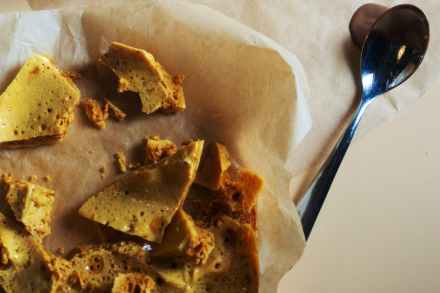
Homemade honeycomb is the perfect lockdown pick-me-up

Bonfire night in Britain this year, like most of the occasions we celebrate, was a little different to previous years: no hustling lines to public displays, squeezing spectators in like sardines, standing shoulder-to-shoulder. Many of us can’t have people round to ours, even in our gardens. It’s never been more important to lean into a shorthand to create a sense of occasion, something that reminds us of the rhythms and rituals of our year. Those foods that we eat at certain times are an ideal shorthand, filled with memory, nostalgia and the ability to transport us. And when it comes to Bonfire night, you can see why honeycomb has become so associated with it: bright, smokey and with more than enough sugar to gird you against the cold, it’s the perfect November treat.

honeycomb