Homosexuality

Complete Poems, by C.P. Cavafy – review

From our UK edition

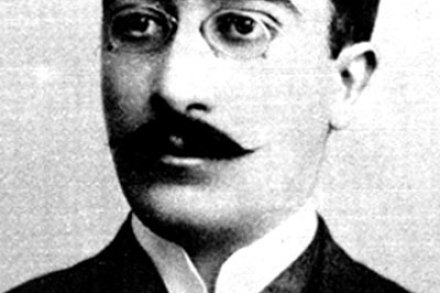
Constantine Cavafy was a poet who fascinated English novelists, and remained a presence in English fiction long after his death in 1933. When E.M. Forster lived in Alexandria during the first world war, he got to know Cavafy — and essays, a celebrated exchange of letters and a guidebook by Forster resulted. Cavafy haunts Lawrence Durrell’s Alexandria Quartet, which shares with the poet an aesthetic of the transfixed gaze, of remote history running under everything. Robert Liddell wrote a restrained, elegant life of the poet — oddly dismissed by this translator, Daniel Mendelsohn, as ‘workmanlike.
Gay sympathy for Cardinal Keith O’Brien

From our UK edition

Were you to try to identify the sort of journalist least likely to feel sympathy for Keith O’Brien, I suppose you’d place near the top of your list a columnist who was (a) an atheist, (b) especially allergic to the totalitarian mumbo-jumbo of the Roman Catholic church, (c) gay, and (d) a strong supporter of the coalition government’s plans for same-sex marriage. If so, this columnist regrets to disappoint. The downfall of the former Archbishop of St Andrew’s and Edinburgh has come to pass at least in part because he did not mince his words. I admire such people. As to O’Brien’s homosexual behaviour and the charge of hypocrisy… well, to that in a moment. Keith O’Brien’s career has been distinguished by simplicity of expression.

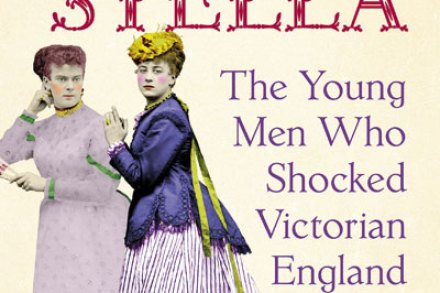
‘Fanny and Stella: The Young Men Who Shocked Victorian England’, by Neil McKenna – review

From our UK edition

Mick Jagger, the Danny La Rue of rock, impersonates a woman on the cover of the 1978 Stones album Some Girls. Vaudeville performers in the Jagger mould love to put on lipstick and ‘false bubbies’ (as Neil McKenna calls them). Boy X-Factor contestants, with their shaved eyebrows, diamond earrings and nails lovingly manicured, present an almost Gloria Swanson-like image of adornment. Perhaps it is merely romantic to suggest that the stylised wigs and gowns worn by our bishops and high court judges also have a homoerotic component. The former Pope Benedict XVI’s ruby-red pumps were nothing compared to the faux ermines worn in the House of Lords.

Long life | 28 February 2013

From our UK edition

Eight years ago I was in Rome for The Spectator to write a piece about the election of a new pope after the death of John-Paul II. Within two days, and after only four ballots, some wispy white smoke emerged from the little chimney on the roof of the Sistine chapel. The College of Cardinals had made its decision and chosen the German Cardinal Joseph Ratzinger to be the 265th occupant of the throne of St Peter. He was already 78 years old and said to be longing for speedy retirement from his taxing job as Prefect of the Congregation for the Doctrine of the Faith, the oldest of the great Vatican departments (once popularly known as the Holy Office or the Inquisition).

Finding Mr Wright

From our UK edition

The film When Harry Met Sally may be infamous for the scene in which the heroine mimics orgasm in a crowded café, but the real point of the story is a question: can a man and a woman ever be true friends, or must sex always get in the way? Jack Holmes and His Friend poses the equivalent question about a straight man and a gay one. If it’s made into a movie, the working title will surely be When Harry Met Gary. Homosexual writers seem to be much better than straight ones at combining high literary style with vastly enjoyable descriptions of really filthy sex. Edmund White is a master of both. This novel is like one from the French 18th century, where passages of intricate social comedy alternate with carnal episodes of Baroque detail.