Holocaust

What is anti-Semitic?

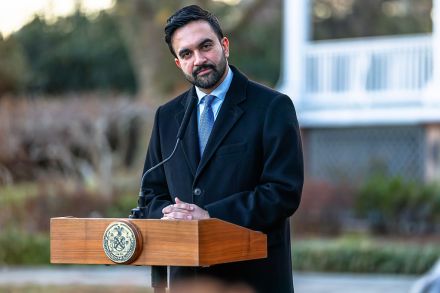
New York’s new mayor is woke. The Ugandan-born Muslim leftist Zohran Mamdani imperils the city as we know it, some people grumble. In a recent letter to supporters, Republican Representative Nancy Mace warned that Mamdani was “a man who’s bringing SHARIA LAW to America.” Of course, Sharia and woke are not the same thing. Mamdani’s program, brimming with paeans to trans and gay rights, might not thrill a Wahhabi cleric. Still, he has brought a Middle Eastern flavor, and not in the good sense. During the campaign Mamdani promised to arrest Israeli leader Benjamin Netanyahu should he decide to visit the United Nations. That hair-raising prospect would expose Mamdani to federal kidnapping charges. He has already done his share of scolding about the Middle East.

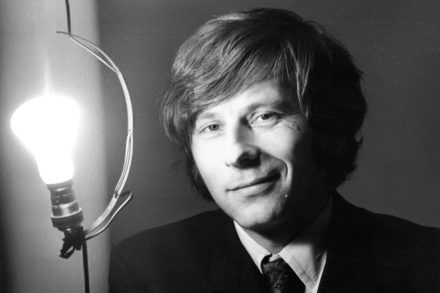
Roman Polanski at ninety: what will be his legacy?

How should we assess the reputation of a late-career movie director? In the case of Roman Polanski, who turns ninety on August 18, we can clearly tick the box denoting a solid body of work. He’s responsible for half a dozen enduring films, and one — 2002’s The Pianist — that rightly won him an Academy Award. Readers may have their own candidate, but for me Polanski’s first full-length feature, 1962’s Knife in the Water, remains at the top of the list. It’s a beautifully crafted, if at times noticeably low-budget, thriller that offers the classic Polanskian brew of claustrophobia, latent menace, voyeurism, class antagonisms and sexual tension, in this case set aboard a small yacht.

roman polanski

Ken Burns’s angry new film

There is probably no American documentary filmmaker more respected than Ken Burns. From his landmark 1990 series about the Civil War to his most recent work that has explored everyone and everything from Ernest Hemingway to country music, Burns has established himself as a fearless chronicler of stories that illuminate the nation’s history, sometimes in ways that viewers might find uncomfortable. His 2005 documentary about the African-American boxing champion Jack Johnson, Unforgiveable Blackness, was a fine example of the filmmaker turning his gaze on a subject that many might have preferred be left obscure, and it won him an Emmy for Outstanding Directing as a result — one of fifteen that he and his films have won to date.

A concert begun in darkness

It was all glitter at Blues Alley in Washington, DC when the trumpeter Terence Blanchard, who is the composer of a widely hailed opera called Fire Shut Up in My Bones that was recently performed at the Met, appeared in March with his E-Collective band as well as the Turtle Island Quartet to play several sets. Blanchard wore iridescent tennis shoes and played a miked trumpet with extra reverb that almost looked as though it was glowing in the dark. Periodically, he would tap his right foot onto an electronic device on the floor that manipulated his tones to extend them into the ether. Indeed, his audacious high notes lingered on long after he had stopped blowing. The collective is Blanchard’s foray into the world of deep funk. It definitely makes an impact.

Schächter

Eighty years after Wannsee

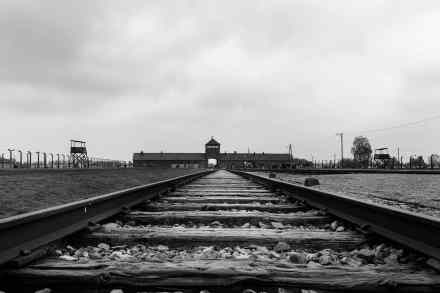
Eighty years ago in January, fifteen men sat around a table at a villa near Berlin and decided to eradicate a nation. To be precise, they decided how to eradicate a nation. Their decision, their “solution” as they perversely termed it, would lead to the murder of more than six million European Jews, though that is the easy-to-remember round number to which we so often default. The murders had started long before the Nazi leadership met at Wannsee in January 1942: this was not the first time a group of European leaders had planned to rid themselves of the Jews. The meeting clarified not just the goal of wiping out Europe’s Jewry, but the path to solving the “Jewish problem” by modern means.

jews