Hijab

The hijab is not a feminist symbol

The Women’s World Cup has tied a bow around a summer of own goals in feminist ideology. Barbie — yes, that plastic blonde with impossible proportions — became the feminist icon of the summer, trans women silenced the voices of biological females and the story of Lia Thomas’s prowess remains etched in our minds. But for the grand finale of this summer's theater of the absurd? White Western women elevating the hijab onto the pedestal of feminist glory. For those who may not know, the hijab is a religious headscarf traditionally worn by Muslim women. While the practice dates as far back as the fourth century AD, the popularity of the hijab is actually quite new, with a stark rise beginning in just the 1970s.
hijab

The Council of Europe was right to pull its hijab campaign

From our UK edition

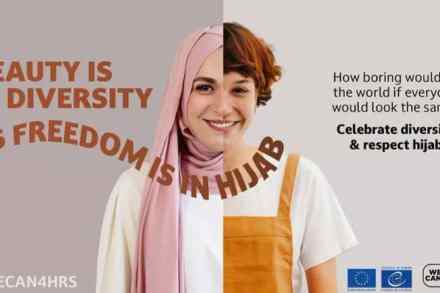
This week, the Council of Europe was forced to pull an advertising campaign promoting the hijab following a backlash from the French. As part of a campaign to promote respect for Muslim women, the European body released a number of campaign posters, one of which read ‘Beauty is in diversity as freedom is in hijab’. Shortly afterwards there was an outcry from French politicians, who called for the campaign to be dropped. Sarah El Haïry, France’s youth minister who is of Moroccan descent, said she was vocally ‘shocked’ by the campaign. The posters were also condemned by many Muslim heritage women and secular activists around the world. Some of the campaign’s messages, such as ‘my headscarf my choice’, are pretty uncontroversial.

Indonesia’s mandatory hijab ban is a triumph for women

From our UK edition

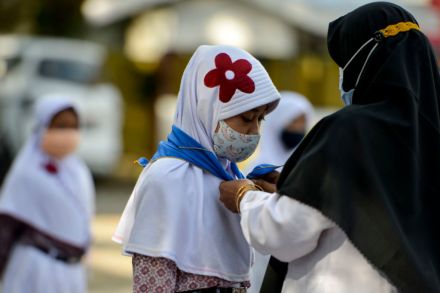
Last week, Indonesia banned schools across the country from forcing girls to wear the hijab, after the parents of a 16-year-old Christian schoolgirl uploaded a video of their daughter being forced to wear the headscarf in Padang, in West Sumatra. According to the Education Minister, schools that now fail to comply with the order will face sanctions. Before the ban, around 20 of Indonesia’s 34 provinces had mandated religious attire for female students and teachers in public schools. Millions of women in Indonesia, including non-Muslim minorities, have had to wear the hijab, with those who refuse facing intimidation and the possibility of expulsion. Public schools in Indonesia have now been given a month to change their policies.

Fashion victims: how feminists are betraying Muslim women

This article is in The Spectator’s November 2019 US edition. Subscribe here. When I was growing up, one of my closest female friends was Muslim. At first, her parents didn’t want us to be friends; they figured that as a child of divorced parents, I’d be a bad influence. Their restrictions pushed her to what they would surely have thought of as the dark side, had they ever known what we got up to. She and I were devout feminists, and we knew that women’s equality was more important than the dictates of religion. Neither she nor her mother covered her hair with a hijab or wore a baggy abaya. I’d been raised in a Christian household where short skirts were prohibited, but I’d recently moved in with my more permissive mother and stepfather.

feminists