Higher education

The students bullied into being woke

If, as Shakespeare observed, “all the world is a stage, and all its men and women merely players,” no place is that truer than the modern American university. In the first study of its kind, 88 percent of Northwestern and University of Michigan students admitted they “have pretended to hold more progressive views than [they] truly endorse to succeed socially or academically.” While the phenomenon of college students pretending to be more liberal than they actually are to make life easier for them as they attend these hotbeds of radicalism is not surprising, the true scale of it is. But how have we got here? If you’re looking for a single explanation, I’m sorry to disappoint you. The modern college environment is a perfect storm of several factors working together.

College

How Harvard lost America

President Trump’s proclamation, “Enhancing National Security by Addressing Risks at Harvard University,” pays a compliment to that crossroads of brilliance and turbidity. It treats Harvard as a serious educational institution, and one that in its misbehavior “presents an unacceptable risk to our Nation’s security.”    Trump was not referring to the risk of immersing some of America’s brightest and most ambitious students in a toxic soup of anti-Semitism, DEI and disdain for our republic. Nor were the “risks” he had in mind “everybody-gets-an-A" grade inflation or a curriculum that wastes the students’ intellectual talents on courses that sound more like entertainment (e.g.

harvard

Anna Peterson’s New York Times article has restored my faith

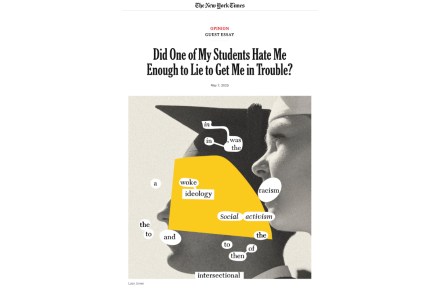
Are contemporary faculty members at risk from false accusations made by supporters of Governor DeSantis? Or more generally President Trump? Has a crackdown begun that instills fear into the hearts of classroom teachers? Is there an epidemic of self-censorship that has gripped the campus?  Anna Peterson, professor of religion at the University of Florida, believes all this is true.  She presented her testimony in a New York Times guest essay last Sunday, “Did One of My Students Hate Me Enough to Lie to Get Me in Trouble?” I am among those naturally disposed to doubt pretty much everything in the Times that has a political slant – and few of its articles don’t. Nonetheless, I’m an assiduous reader of the newspaper.

times

The unforgiving history of student loans

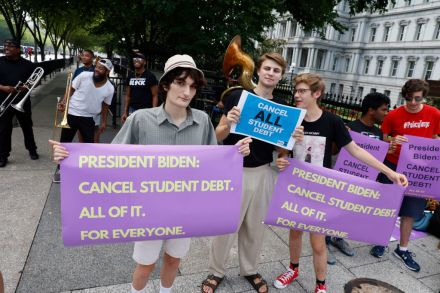
Republicans in the House are considering a bill to make major changes in federal student loans for college, and President Trump is floating the idea of making colleges responsible for borrowers who fail to repay. For decades student loans and their repayment are never far the center of controversy, but it wasn’t always that way. I grew up in the era before massive student debt. Student loans were available in 1971 when I went off to college, but they didn’t dominate the terrain like a Tyrannosaurus rex. They were more like Barney, the joyful purple denizen of PBS, who had a ferocious appetite for public funds but had not yet evolved into the carnivore who preys on the livelihoods of college graduates.   But the student-loan monster had already been born.

student loans

The Trump administration is giving us excellence, not equity

Americans are not a naturally gloomy people. We don’t necessarily expect things to go our way, but when they don’t, we can laugh it off. In my part of Vermont there’s a place called Hateful Hill, for example, so-named by stagecoach drivers who had a tough time with the steep road. But Hateful Hill is also a beautiful elevation. Today, even those who don’t “get” Donald Trump need to start seeing the upside. He doesn’t always get his way, which is probably a good thing, but he is leading a long-overdue revival of the American spirit and allowing for the return of optimism and the pursuit of excellence.

Trump

Another spring, another round of anti-Semitism on campus

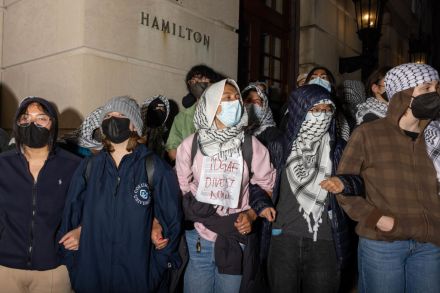
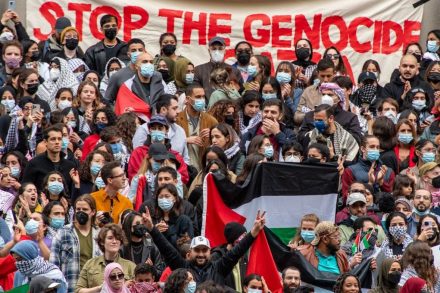
The weather is growing warm, which means anti-Semitic demonstrations are blooming at elite universities. The hatred of Jews is no longer hidden, as it was in the days when Jewish enrollment was quietly limited by quotas. Now, it is displayed openly by a campus coalition led by hardline American leftists (students, faculty, and administrators) and Muslim students, some from America, some from the Middle East.  Their hatred is screamed at Jewish students and pro-Israeli speakers—and then at anyone who dares support them or simply demands the basic right to speak or be heard. Any support for Israel is damned as “genocide” and then shouted down, shamed, or worse.

campus

What the Singer Sewing Machine teaches us about student loan repayment

The Singer Sewing Machine Company is credited – that’s the right word – with popularizing the idea of the installment plan. Starting in 1856, a customer could buy a sewing machine for a very modest down payment and a rather lengthy commitment to further payments. Isaac Singer copied the idea from a piano company, but he turned it into a model of aggressive marketing to the average household. His “dollar down, dollar a week” slogan launched the era of consumer credit on a mass scale, and helped to marry mass production of durable goods to middle-class household economy. The idea spread quickly. By early in the 20th century, people could buy “washing machines, refrigerators, phonographs and radios” on the installment plan. The idea faced some resistance too.

singer sewing machine student loan

Trump takes a hammer to the universities

President Trump has already dropped the first hammer on Harvard. He’s ready to drop the whole tool chest on a whole slew of universities – and it won’t be pretty. Outraged Democrats will call the punishing sanctions authoritarian, even fascist, and well beyond the authority of a constitutional officer. Republicans will back the president, saying universities had plenty of chances to correct their serious problems and did nothing.  Some threatened sanctions are readily defensible, such as demanding better protection for Jewish students and eliminating discrimination in admissions, hiring and promotion. Some are not, such as demanding intrusive federal oversight of course content and departmental hiring. All Trump’s actions will be challenged in court.

British trump universities

How to deal with the student mob

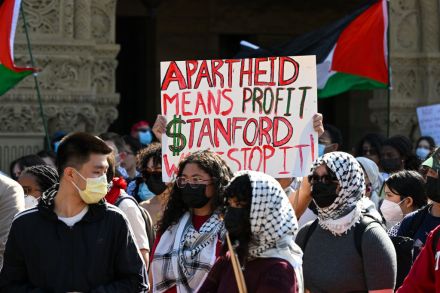
Last week’s violent anti-Semitic protest at Stanford is yet another sign of a pernicious climate on many campuses. The immediate targets are Jews and Israel. The larger targets are many of the values we prize in the West. At Stanford, students broke into the university president’s office using hammers and crowbars. They proceeded to barricade themselves inside, destroy the furnishings, and scrawl noxious graffiti there and on the building outside. Some estimates say they caused $700,000 in damages. Twelve students were arrested by local police. The Santa Clara District attorney announced that the break-in had been carefully organized in advance, caused enormous damage and warranted criminal charges. But, he said, it did not warrant severe punishment.

student

The trouble with the elite American campus

One of the key critiques of DEI — the identity-based preference system better known as Diversity, Equity and Inclusion — is that it places workers in professional positions they’re clearly unqualified for. Often with devastating outcomes. Boeing, for instance, has been accused of favoring race and gender when hiring for its factory floor — factories that have turned out airplanes that have literally fallen from the skies. Disney, too, has seen its quest for race- and gender- and sexuality-based inclusiveness come at a cost — a steep slide in its stock price.  But no area of public life has been more fully infiltrated by DEI than the academy — and the results have been disastrously on display since the Hamas attack against Israel nearly seven months ago.

elite american campus

On the ground at the People’s University for Palestine (formerly Columbia)

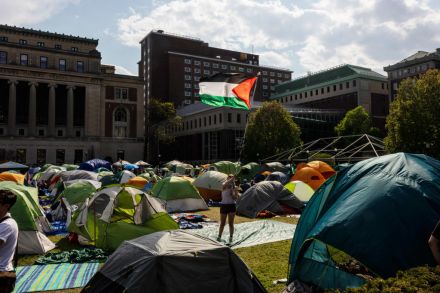
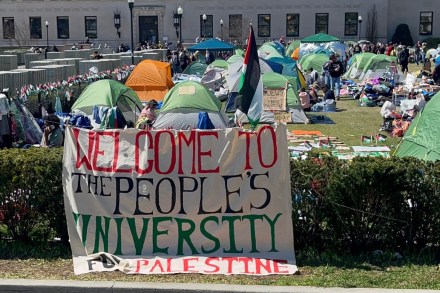
New York I’m on Columbia’s campus today. Sorry, I mean, “The People’s University for Palestine.” I graduated from the university in May 2020. My alumni ID allows me access. A couple of days ago, student protesters started occupying the South Lawn, in front of Butler Library. The police force was called in. Some arrests were made. The police were able to clear the eastern half of the lawn, but the western half remains occupied. Students have pitched tents. Hand-painted signs hang from clotheslines that stretch around the lawn. “Welcome to the People’s University for Palestine.” “Free All Palestinian Prisoners. Ceasefire Now.” “While You Read Gaza Bleeds.” “Admitted Students Enroll in Revolution.” Palestine flags and keffiyehs are everywhere.

columbia

Biden’s absurd student loan ‘solution’

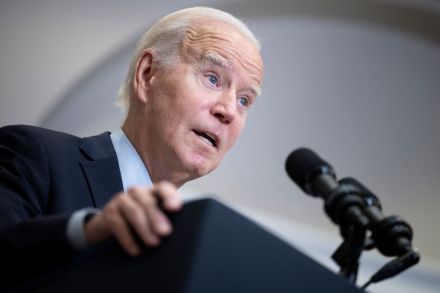
You’ve got to hand it to President Biden — when he puts his mind to something he doesn’t let mere semantics like the rule of law stop him. Despite an earlier Supreme Court slap down, “Middle Class Joe” provided an upper-class gift to some 150,000 college graduates in the form of $1.2 billion in student loan forgiveness. That brings total educational loan forgiveness under this White House to $137 billion effectuated by nothing more than a stroke of Biden’s pen via executive order. Biden openly boasted of his defiance, all but inviting the justices to try to stop his patronage gambit. It’s not that anyone can blame him, because it’s a political win-win for the White House.

The fight for civilization in higher education

The idea that Western civilization ushered in an age of oppression, cultural destruction, environmental degradation and all manner of human exploitation, is bittersweet. I don’t mean that it tastes like coffee or dark chocolate. I mean bittersweet the vine, Celastrus orbiculatus, with the colorful orange-red berries. This kind of bittersweet grows at a phenomenal rate, ascending into the canopy and strangling trees. If you drive north out of New York City, you will pass endless miles of arboreal carnage. Tens of thousands of roadside trees are draped in the deadly vine. It is an invasive Asian species that, once established, is impossible to eradicate. And while its fall berries are attractive and make for good floral arrays, they are inedible.

civilization higher education

The populism of Machiavelli and Jefferson

A few years ago a Marine turned novelist, G. Michael Hopf, captured a classic truth in a pithy formula. Inspired by cyclical theories of history — in particular the generational “turnings” of William Strauss and Neil Howe — Hopf wrote in his novel Those Who Remain, “Hard times create strong men, strong men create good times, good times create weak men, and weak men create hard times.” One need not put much stock in Strauss and Howe to appreciate the maxim. It could just as well be derived from Sallust or other classical sources. Or from Machiavelli: in his Discourses on the First Decade of Titus Livy, the Florentine philosopher considers where best to build a city.

Machiavelli

Why plagiarism matters

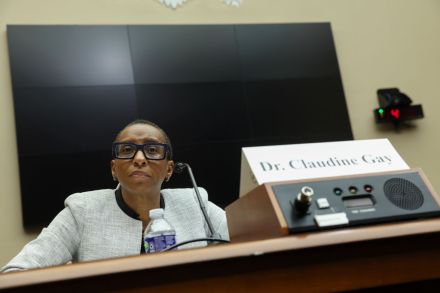
Harvard president Claudine Gay’s troubling history of appropriating other people’s idea and words and passing them off as her own has a well-worn name: plagiarism. Every college and university in the United States prohibits plagiarism. Most present students with explicit rules against it and lay out the possibility of drastic punishments, such as failing a course and, depending on the severity of the offense, expulsion from the college. Typically, instructors in freshman English include lessons on the proper ways to quote, paraphrase and cite sources.  Why? What is so wrong with plagiarism? We don’t punish actors for reciting their lines and failing to add, “Mr. William Shakespeare wrote that.

plagiarism

A history of intellect

It has it been widely noted that, as Western culture generally has grown steadily more materialistic in its values and interests (as if it were ever anything else, ungenerous critics might suggest) over the past half-century, it has become simultaneously more abstracted in its mental habits and orientation? Chesterton described a paradox as truth standing on its head to draw attention to itself. In this instance, we have an obvious example. But it’s a good question how this particular one came to be. Ancient Greece was an intensely intellectual world of ideas that were firmly grounded in empirical reality and in observed and confirmable truth.

intellect

Being denied a job for supporting Hamas isn’t ‘cancel culture’

Karol Markowicz has a piece today about cancel culture and the college students who signed on to reprehensible anti-Israel or even pro-Hamas statements, driving donors to pull funding for major higher ed institutions and even leading some professors to say flat-out: don’t hire the people who signed these. I’ve written repeatedly about the difficulty and sloppy definition of the term “cancel culture,” and why I think most people struggle to define it and just fall back on their priors: if someone I like is getting yelled at, it’s cancel culture; if someone I don’t like is getting yelled at, it isn’t.

hamas palestine cancel culture

The virtue-signaling behind the renaming of the Middlebury College chapel

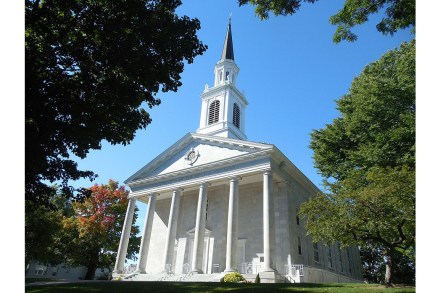
Early on the morning of September 27, 2021, Middlebury College president Laurie Patton had a stone bearing the name of the campus chapel removed from the building. It was done deftly. I don’t imagine she showed up with her own hammer and chisel, but the campus groundsmen executed her orders. Later that day, Patton and the chairman of the board of trustees sent out a message to the community announcing that they had de-named Mead Memorial Chapel, which henceforth would be known simply as Middlebury Chapel. The de-naming was a stealth operation. Outside of a small circle, no one knew it was coming.  Picture a small liberal arts college tucked away in the American hinterland. Picture on the crest of a hill a white marble church with an impressive spire flanked by academic halls.

middlebury college chapel

In defense of cranky professors

Thanks to a panel of the Fourth Circuit Court of Appeals, firing faculty members for “lack of collegiality” is suddenly a bright prospect for college administrators eager to rid themselves of gadflies, diversiphobes, conservatives and other riffraff. The case involved Stephen Porter, a tenured professor in the school of education at North Carolina State University, who had had the bad grace to object to various forms of mandatory diversity saluting. Some details to follow, but let’s first roll around in the hay of “collegiality.”  The two members (out of three) on the Fourth Circuit who invoked the term were not entirely breaking new ground. The woker sort of faculty and college administrators have been fondling the idea for a while.

Stanford’s Marc Tessier-Lavigne and the messiness of modern science

The president of Stanford University, neuroscientist Marc Tessier-Lavigne, has resigned in the shadow of an investigation that revealed that some scientific papers he had overseen contained “manipulated data” or evidence of other kinds of scientific malpractice.    His resignation may well be warranted — but before he disappears into ignominy, it would be wise to consider the situation.  In the now dimly remembered past, a scientist devised experiments and, working alone or with the help of a loyal assistant or two, carried them out. Or he sat in a room, as Einstein did, and thought through deep problems, eventually penning an article in which he said forth a bold new hypothesis.

Marc Tessier-Lavigne