Heroin

Growing up with thieves, murderers and heroin addicts

From our UK edition

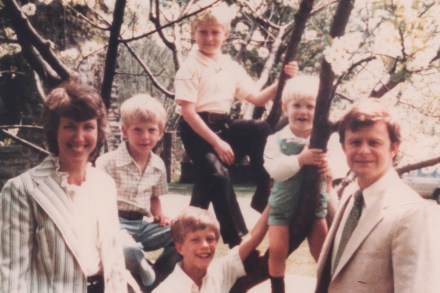
‘You can’t pick your parents, but they get to pick your life,’ Jonathan Tepper points out at the beginning of this extraordinary coming-of-age story. And: ‘If your parents are missionaries, it changes everything... They decide where you’ll live, when you’ll pack your bags and go, and you’ll get roped into their work saving the lost.’ In the 1980s and 1990s Jonathan’s parents, Elliott and Mary, were American missionaries in San Blas, then the poorest part of Madrid: ‘Our neighbourhood was the biggest drug supermarket not only in Spain but in all of Europe.’ At a time when Spain hadn’t started spending on prevention or rehabilitation, Jonathan, aged seven, along with his two older brothers – all of them blond and blue-eyed – saw junkies lying dead in ditches.
From street urchin to superstar: the unlikely career of Al Pacino

From our UK edition

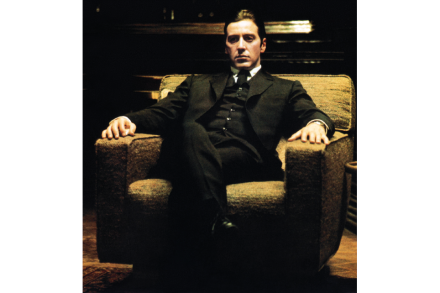
Ellen Barkin, Al Pacino’s lover-cum-prime- suspect in his comeback movie Sea of Love (1989), once dismissed the artifice of the British acting tradition (by way of an oddly ill-tempered pop at Nigel Havers) by comparing it with the immersive naturalism of the greats of post-war American cinema: Marlon Brando, Meryl Streep, Robert De Niro and Al Pacino. It’s a questionable claim, especially given that in Pacino Barkin had perhaps the least naturalistic co-star imaginable. He is forever searching for the off-beat, the syncopation that will spring the line open Pacino is – albeit in his own highly idiosyncratic way – no less theatrical an actor than John Gielgud, more invested in the musicality of his line readings than in fidelity to the real.

Decriminalizing fentanyl is a dangerous experiment

Last week, British Columbia became the first province in Canada and the second jurisdiction in North America to decriminalize the possession of small amounts of hard drugs for personal use. Those drugs include heroin, cocaine, methamphetamine, and even fentanyl, a synthetic opioid more than 50 times more powerful than heroin. British Columbia follows Oregon, which decriminalized all drugs in 2020, taking a more proactive — if controversial — approach to address the alarming number of overdose deaths across the region. Under the state's new guidelines, adults 18 years and older caught with less than 2.5 grams of an illicit substance will not be arrested or charged with a criminal offense.

A junkie’s pride

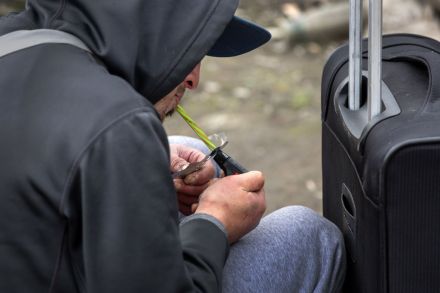
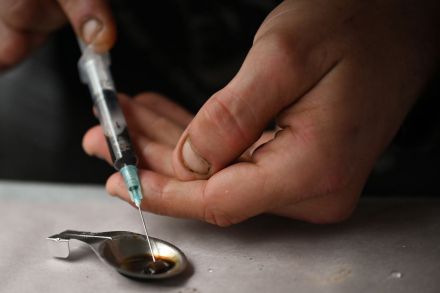
I first quit a substance at the tender age of nineteen, when heroin addiction brought me to my knees within a year. It was my freshman year of college and I’d started using it with my boyfriend. Our primary method of using was “chasing the dragon”: a process that involved putting some black tar on a piece of tinfoil and “chasing” the vapors from the heated tar using a tube — usually just a plastic Bic pen with the ink tube removed. It didn’t take long for me to lose everything. It was the first time I was ever fired from a job. My parents had to pack up the apartment I was living in and withdraw me from college. When I checked into the hospital, I weighed eighty-nine pounds and had bronchitis that had gone untreated for months.

Is Euphoria too bleak to be good?

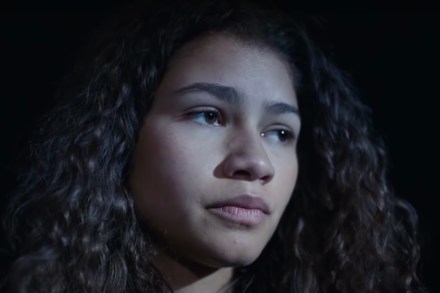
DARE is concerned about Euphoria. The anti-drug campaign put out a PSA recently warning that the show “chooses to misguidedly glorify and erroneously depict high school student drug use, addiction, anonymous sex, violence and other destructive behaviors as common and widespread in today’s world.” Considering the prevalence of drugs (snortable, swallowable, injectible), drug dealers (lovable, despicable), and drug-laced dream sequences on Euphoria, it would seem you can’t blame the group for being concerned. But it’s also hard to watch Euphoria and not think it's a cautionary drama on the dangers of drugs that could have been created by a group like DARE itself.

America needs a 12-step program

When I got sober in October of 2013, my sponsor said many things I didn’t want to hear. One of those things was ‘You have no idea who you are.’ Another was ‘Many of the things you thought you wanted, you’ll realize you don’t want and vice versa. If you manage to stay sober long enough, you’ll look around and marvel at who you have become.’ She turned out to be right, but I never could have predicted that in the span of five years I’d go from waiting tables to writing for Playboy to representing Independents on the Ben Shapiro Election Special on a Fox News panel. At a certain point, sometime around 2018, I looked around and said to myself, ‘Wait. I’m a conservative now? How much weed was I smoking!?

sober
social media heroin

Social media is nothing like heroin

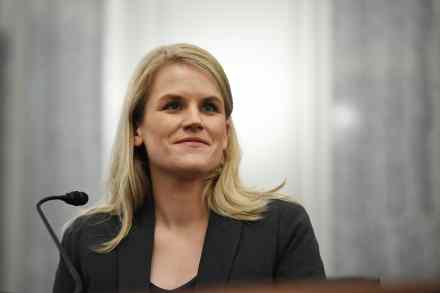
On Tuesday, Frances Haugen, speaking to the Senate Commerce Subcommittee on Consumer Protection, compared Facebook to tobacco and opioids while pushing for similar regulations. Haugen, a 'whistleblower' who came forward after Facebook dissolved her team and who admits she never worked on child safety during her time at Facebook, told a terrifying story about an app that harms young girls. Social media is like a drug. We hear this all the time. We’re powerless addicts in the face of its influence. We need to keep the kids safe from it. But is it? And do we? I used to call myself a Twitter addict. It’s the first thing I check each morning and the last thing I look at at night.

In Chet Baker’s albums you can hear America’s romantic self-image curdling

From our UK edition

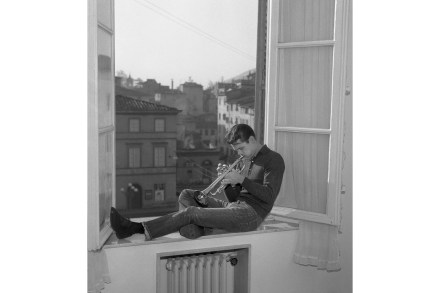
The thing to remember about Chet Baker, an old acquaintance says of the errant jazz musician in Deep In A Dream, James Gavin’s exemplary 2002 biography of Baker, is that ‘he can hurt people even after he’s dead’. Baker could be dangerous but mostly he hurt himself. He died, squalidly, in 1988, and his music, at least, can still wound. In Baker’s oeuvre the ballads are deep blue and the up-tempo tunes are somehow tinted even darker. The ‘jazz James Dean’, the ‘Prince of Cool’, Baker was extremely pretty in his younger days and made music that cast a similar enchantment. His trumpet style was lyrical, his singing voice light and seductive.