Herman Melville

Has the American novel abandoned God?

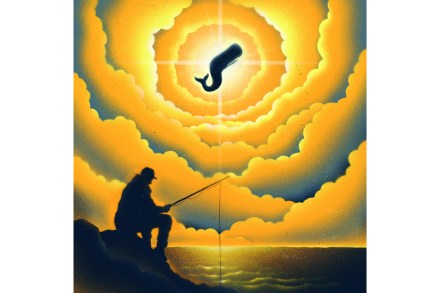
I have always thought “Call me Ishmael” to be a rather camp introduction to a novel. Given the line’s conspiratorial intimacy, I have long imagined it whispered by a drag queen in a dive bar at 3 a.m. This, however, is the fault of my own unseriousness. The resonance of the name Ishmael — Abraham’s illegitimate son by Hagar who is destined to wander the desert — remains the opening example of one of the clearest, cleverest and most consistent of themes in Herman Melville’s magnum opus Moby-Dick, namely, the quest for God. Religion runs through Moby-Dick. We might almost say that the Bible haunts it. There are the names, mostly of Biblical characters, and even the direct invocation of prophets: Ezekiel, Elijah and, of course, the ur-whale wrestler, Jonah.

God

The climate change conformists

Herman Melville spent several weeks as an involuntary guest of the Typee, Marquesan Islanders known for their fierce cannibalistic ways and their exquisite tattoos. It was 1842 and Melville was a rebellious twenty-two-year-old hand who had jumped ship from a whaling vessel. Several years later, in his first novel, Typee: A Peep at Polynesian Life, Melville recounted his deep fear that his hosts would tattoo his face. Facial tattoos were common among the islanders. Some Westerners got facially tattooed as well, but those were men who had relinquished their homes and become the original beachcombers, white men who belonged neither here nor there. Tattooing in general was hardly a respectable thing.