Health

Why must B&B guests give us advice?

From our UK edition

‘You could mow all this lawn here and it would look a treat,’ said the arborist, returning from a stroll around the grounds, which were looking resplendent in the sunshine. ‘Yes, yes, mow the grass. Good idea,’ I said, for the builder boyfriend has told me I have to agree with the customers. No matter what they say, no matter how obvious their suggestions, just smile and say ‘Good idea.’ Old houses are like horses. Passing strangers feel ownership of them. Once they encounter them, they proclaim how they would care for them, because they decide from their soulful look that the owners must be neglecting them – when the truth is the owners slave day and night for them, getting nothing but a good kicking for their trouble.

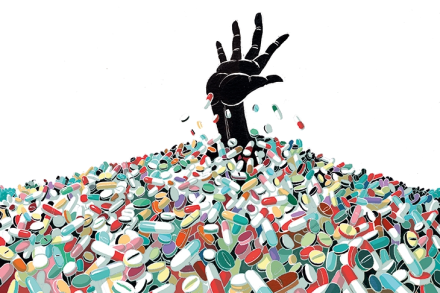
Are antidepressants making Americans violent?

On April 20, 1999, Eric Harris and Dylan Klebold entered Columbine High School in Colorado, armed to the teeth, and set about murdering their fellow classmates and teachers. When the shooting was over, 12 children and one teacher lay dead. Harris and Klebold were dead, too, and 20 others were wounded. Within a little over a week of the atrocity, there was already speculation that psychotropic drugs might have been a factor, specifically the powerful and relatively new antidepressant Luvox (fluvoxamine), which Harris was known to have been taking. Fluvoxamine is a selective serotonin reuptake inhibitor (SSRI), a class of antidepressant medication that was first trialed in the 1970s and then brought to market in  the US in the late 1980s.

antidepressants

Must my fish and chips come with a side of geopolitics?

From our UK edition

‘Our boys went to Lebanon and trained Hezbollah!’ shouted the drunk Irish lad in the fish and chip shop as an Indian man behind the counter silently fried chips. ‘Chucky ar la!’ the lad shouted, or Tiocfaidh ar la, to correctly spell in Irish the slogan of the IRA, meaning ‘Our day will come.’ And he went on shouting this, over and over, as the Indian fellow stared down into the fryer, and the Friday night customers formed a queue in this small fast-food joint in a West Cork harbour town. The Irish lad was not getting the message that the Hindu chap frying chips was probably not a massive Hezbollah or Hamas supporter, and he carried on shouting about Gaza and inviting the man behind the counter to join in with him.

Should we give weight loss jabs to children?

From our UK edition

I have seen the future of food. And some of you won’t like it. On a research trip to the Netherlands last week, along with the fellow partners of my firm, Bramble, I took a speedboat tour of the port of Rotterdam. One of the most awesome sights was the so-called ‘Innocent Blender’ – a vast smoothie-making fortress, box-shaped and silver – glinting over the water. This is where the British-based, Coca-Cola-owned company makes its ‘tasty little drinks’. The factory location makes sense: most of Europe’s imported fruit comes via Rotterdam. Massive tankers – 600ft long and filled with 40,000 tons of chilled orange juice from Brazil – move through constantly. The Blender is completely electric, runs on renewable energy and uses robots to purée, bottle and package.

Speed traps are designed to make you fail

From our UK edition

The builder boyfriend returned from a trip to London to inform me he was being done for speeding at 32mph, for crying out loud. He was flashed by a camera crawling uphill in a 30 zone going through the almost middle-of-nowhere in the Ashdown Forest, on his way to visit his sister in Sussex for the weekend. A few weeks after I completed a speed awareness course for doing an improbably incorrect 40mph on a dual carriageway during a trip to see my parents in Coventry, we were going round the same rigmarole with him. He showed me his letter from the Sussex Police on his return to Ireland. It was slightly less obnoxious than the one from West Midlands Police, but it amounted to the same thing: a £100 fine, sorry speed course.

The £486 driving licence con

From our UK edition

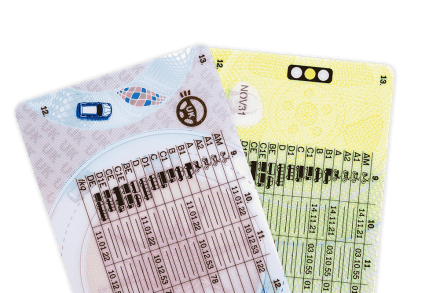
By changing the address on my driving licence, I was somehow signed up to something that began charging my credit card £39 a month and was going to carry on charging for ever. It was Barclaycard that spotted it and warned me it was a ‘scam’ in a text alert. Had I really agreed to a recurring payment to a company called British Drive? I had no idea what British Drive was, and at first suspected it was an insurance policy, or the firm that organised my recent speeding course. Eventually, I realised it could be something to do with going on to the DVLA website – or so I thought – to change my driving licence address. I tried to cancel the payment on the Barclaycard app but it wouldn’t cancel.

The sorry state of our public conveniences

From our UK edition

Britain’s public loos are a national embarrassment. If you are in any doubt, head to Liverpool Street Station and spend a penny. It’s unquestionably the most odious and unpleasant public lavatory anywhere in the supposedly civilised world. It has to be experienced to be believed, but suffice it to say that the level of cleanliness on display would make a Medicine Sans Frontier doctor fresh from West Africa recoil in fear and reach for their PPE. The floor is usually awash in various places with unknown fluids. The long shared trough installed for handwashing is so disgusting that you wouldn’t clean your dog in it. The supposedly automatic taps barely dispense water. The soap dispensers are equally hit and miss.

We shouldn’t downplay the risks of ADHD medication

I was diagnosed with ADHD in my freshman year of college. I’d suspected as much in high school, but I disliked the idea of taking medication. College was different. No matter what I tried, I kept finding gaps in my notes – and therefore gaps in my knowledge on test day. While I was prescribed so-called “smart drugs,” I didn’t delude myself into thinking they would magically make me more intelligent – which is why I laughed when I saw the ADHD research industry perform a volte-face in the pages of the New York Times, in a piece headlined: “Have we been thinking about ADHD all wrong?” The obvious answer is yes.

ADHD

MAHA must harness the power of Gwyneth Paltrow

Gwyneth Paltrow may be set to pass her celebrity-everyone-loves-to-hate crown to another out-of-touch elitist. The Goop founder and queen of outrageous “wellness” hacks has announced – gasp! – that she’s begun eating like the rest of us. Paltrow has followed a Paleo diet for years – meaning she cut out virtually all culinary joy for the sake of eating like a cavewoman, though I assume she did more gathering than hunting. Yet on her Goop podcast last week, Paltrow announced, “I’m a little sick of it if I’m honest. I’m getting back into eating some sourdough bread and some cheese. There, I said it. A little pasta. After being strict with it for so long.” Paltrow’s foray into normal-people food is serendipitous; or perhaps it’s ingenious timing.

gwyneth paltrow

Aren’t women wonderful?

From our UK edition

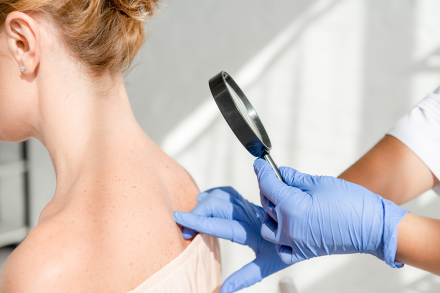
The mole specialist was wearing a pink Chanel-looking suit and pink diamanté shoes. By mole specialist, I don’t mean someone turned up dressed in Chanel to deal with moles on our land. I mean I went to see a top London dermatologist about a mole I was worried about, and when I walked into her office she looked so fabulous all I wanted to do was talk to her about her Jackie O miniskirt and jacket, given a twist with the sparkly stilettos. Before I could do that, however, she complimented me on my long striped coat. ‘Villa Gallo,’ I said, sitting down in front of her desk on the first floor of a smart building in Chelsea. ‘And can I say, your shoes are divine.

In defence of benzos

From our UK edition

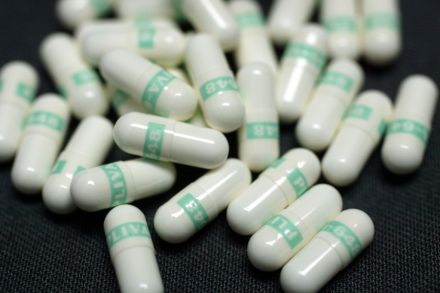
In the latest series of The White Lotus – a moral fable about the narcissism and toxicity of the privileged class – Parker Posey plays Victoria Ratliff, a Southern matriarch routinely spaced out on the tranquilliser lorazepam. Her daughter Piper asks why she needs it. ‘Certain social situations make me anxious,’ she drawls. When her husband Timothy (Jason Isaacs) gets word that his crooked financial empire is about to crumble, he starts necking Victoria’s pills in secret before swiping the bottle. My ears always prick up at the mention of lorazepam because, like Timothy Ratliff, I have taken it illicitly to manage anxiety. However, I was not stealing it from my wife, but receiving it in the post from my mother.

Is it time to clean up my act?

From our UK edition

I was having a drink in the Bishops’ Bar in the House of Lords last month when I was introduced to a 92-year-old peer called Lord McColl of Dulwich. I asked him if he’d known my father, Michael, who was made a life peer in 1978. Had they overlapped? He told me he hadn’t merely known him; he’d operated on him. If I have mild indigestion I think I’ve got stomach cancer; if I get a headache I decide it’s a brain tumour I realised with a start that the man I was talking to was the famous surgeon Ian McColl, who was made a life peer in the Queen’s birthday honours list in 1989. As professor of surgery at Guy’s Hospital, he treated my father for bowel cancer in 1983, an operation so successful that Michael had gone on to live for another 19 years.

What would it take to make America healthy again?

The Executive Order establishing President Trump’s Make America Healthy Again Commission presented some big, fat, sobering truths. “Six in ten Americans have at least one chronic disease,” the order says, “and four in ten have two or more chronic diseases.” It also notes that our people don’t live, on average, as long as those in other developed nations: 78.8 years in the US compared to 82.6 years in our cousin countries. How did this happen? How did the world’s most powerful nation ever get to the point where 77 percent of its youth can’t qualify for military service and we need a commission to stop us from spiraling faster and faster down the Doritos Loco Tacos-Ozempic highway? Robert F. Kennedy Jr.

healthy

I was convinced by the cholesterol sceptics

From our UK edition

It’s never a good thing when your cardiologist sounds alarmed on the phone. Come in tomorrow, he said: we’ll get you on the table. He wasn’t talking about cracking my chest, thank Christ, but threading a wire in through a vein to get a look at the heart, blow up a tiny balloon to stretch the artery, and maybe leave behind a metal tube or three. I wasn’t keen on that last part. Then I thought: serves me right. I should have avoided all those bacon sandwiches and steaks fried in butter. ‘The wages of sin is death.’ Probably should have taken the statins, too. But if you are, understandably, unwilling to take a fistful of pills every day for the rest of your life, there are some medical mavericks to confirm your decision.

The donor center is the last bastion of civility

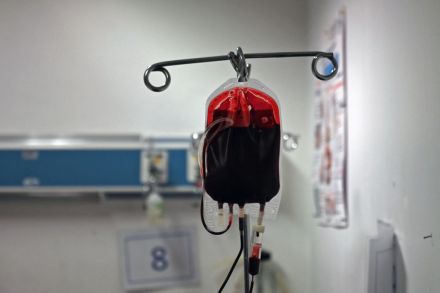
“Braiding Sweetgrass,” she cawed from the other side of the room. “By someone named Robin something. Robin Kimmerer, I think.” The source of this unsolicited book recommendation was Sandra, an eighty-six-year-old musician and Quaker. Since the 1960s — Sandra later told me — she’d donated “probably about three hundred pints” of blood. She was such a prolific giver, that when President Nixon proclaimed the first National Blood Donor Month in 1970 — which still is January — she was interviewed on TV. I met Sandra in early January. We were half-sitting, half-lying foot-to-foot in a donor center on the Upper East Side of Manhattan.

blood

Bryan Johnson and the meme-ing of life

In fifth grade my class read Tuck Everlasting, by Natalie Babbitt, the story of a ten- year-old girl who stumbles on a family of immortals, the Tucks, who impress upon her that eternal life is unnatural and actually a curse. The novel had a profound effect on me. I became obsessed with the book and with the relationship of life to death. One passage in particular has haunted me for decades. “You can’t have living without dying. So you can’t call it living, what we got,” the patriarch, Angus Tuck, says. “We just are, we just be, like rocks beside the road.” I’ve been thinking about this book a lot since I became aware of the tech entrepreneur Bryan Johnson.

I am facing a future in a wheelchair

From our UK edition

I’ve always liked the old Winston Churchill maxim ‘Never stand up when you can sit down, and never sit down when you can lie down’. After a month lying down in hospital, contemplating life without the use of my legs, I now utter a laugh which I hope is suitably hollow. O, my lovely legs! By the time I was 14, they were the longest in my class; by the time I was 17 they had embarked on the merry dance that has been my ‘journey’, propelling me forever onwards towards enough fun, love and money for nine lifetimes. Now I feel like a mermaid – without the sexiness – and my shameless gams are but a floppy old mono-thing.

The highs and lows of Dry January

From our UK edition

The first week of Dry January was relatively easy. Not falling asleep in front of the television was a pleasant change, as was waking up in the morning with a clear head. I started to remember things I usually forget, such as where I’d left my keys, and began to work through my ‘to do’ list, getting round to jobs I’d been putting off for months. It wasn’t that my willpower increased. It was that making myself perform tedious administrative tasks took less effort. My inner clerk woke up. The novelty of being calm and even-tempered wears off pretty quickly Two weeks in and I’m beginning to get bored. High on the list of benefits of being teetotal, according to the finger-waggers, is that your mood stabilises – and I’ve definitely noticed that.

How real is your ADHD?

From our UK edition

Why does everyone suddenly seem to have ADHD? It’s a question that many of us working in mental health have been asking each other recently. Just a decade or so ago I rarely saw anyone in clinic with ‘attention deficit hyperactivity disorder’; now I see at least one case a day. It’s bewildering. Have all these people simply been undiagnosed for years? Is ADHD a medical fad? No one yet knows. The increased awareness of mental health problems has been a boon for private doctors. It’s a gold mine ADHD used to be mainly diagnosed in children, but more and more people are now getting a diagnosis in adulthood.

Good riddance to 2024

From our UK edition

January. When the assisted dying bill comes in, I’ll be first in the queue. Non-stop nosebleeds, Covid-esque symptoms, leg cramps, a cough resistant to antibiotics, and unremunerated press interviews for my Burton/Taylor book. In the old days I’d be in New York, running amok with publicity handmaidens, going on television and racking up bills in the Gramercy Park Hotel. Now everything is done from the back-bedroom here in Hastings, where I dwell in the slum district, my window overlooking immigrants doing their laundry. Paul Bailey went to the trouble of getting his name removed from my acknowledgements. That’s real hatred February. First anniversary of my myocardial infarction, when I collapsed in Morrisons car park.