Hassan Nasrallah

Israel is turning the screws on Hezbollah

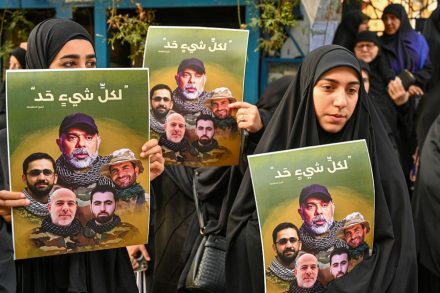
The killing of Lebanese Hezbollah military chief Haytham Ali Tababtabai by Israel this week reflects how much the balance of power between Jerusalem and the Iran-backed Shia Islamist group has shifted since the year-long war between the two in 2023 and 2024. Yet, paradoxically, Tabatabai’s killing also shows that nothing has been finally settled between the two enemies. While Hezbollah has now been shown to be much weaker than Israel, it nevertheless remains stronger than any internal faction in Lebanon, including the official Lebanese government.
hezbollah lebanon

A shaky truce in Beirut

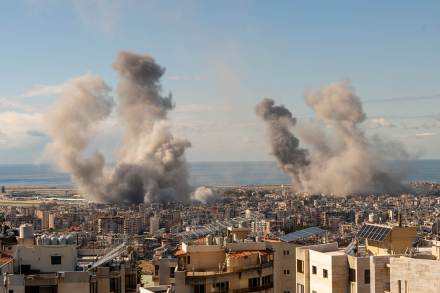
There was an Israeli drone buzzing over Beirut at 8 a.m. on November 27, four hours after a ceasefire was signed and the shooting stopped. It soon disappeared and a feeling of elation set in. It was the best day we had in months. The Christmas spirit was palpable in Gemmayzeh, a Christian neighborhood in central Beirut. Christmas decorations were going up and the bars were packed that night. Lebanese in the diaspora who’d canceled their holiday trips to Beirut rebooked that day. But the Lebanese also know how to manage their expectations — they always hedge good news with dread. The agreement lays out an initial sixty-day truce, during which Hezbollah is required to withdraw its forces north of the Litani river, and the Lebanese Army is to take its place.

beirut

Iran attacks Israel: what does it mean and what happens next?

A few hours before Iran launched missiles at Israel, America’s spy satellite saw Iran moving the weapons onto their launching pads. They told Israel (and leaked to the media) that an attack was “imminent.” They were right. Within hours, several hundred Iranian missiles were flying toward the Jewish State, just as they had in April. The earlier attack caused little damage — most of the missiles were intercepted — and early reports are that the recent attack met the same fate. Israel’s success shooting down the missiles is crucial, not only because it saved lives but because it does not require Israel to launch a full-scale counter-attack. Safety from the missiles did not protect all Israelis, though.

With Israel, the US is caught in a world of contradictions

Ever since a 2,000-pound bomb demolished Hezbollah’s headquarters in Southern Beirut last Friday and killed Hassan Nasrallah, the leader of the organization since 1992, there was an expectation among the commentariat that Iran would retaliate. The scope of that response, however, was very much in dispute. The Iranian government was reportedly divided about whether to respond at all, with the newly-elected president, Masoud Pezeshkian, taking the position that an attack against Israel would likely ruin his foreign policy agenda — he offered the West the thinnest of olive branches during his time in New York for the UN General Assembly meetings — and give the Israeli government an excuse to strike inside Iranian borders.

Israel’s campaign to kill Nasrallah, Hezbollah and Hamas 

The killing of Hassan Nazrallah is the latest — and most impressive — stage in Israel’s campaign to wipe out Iran’s terrorist proxies on its doorstep. From the Egyptian border to Beirut, the campaign is the most dazzling demonstration of real-time intelligence, high technology and precise military action in the modern era. It will be recounted on screen and studied by military experts for decades to come. James Bond’s gadgets had nothing on the booby-trapped pagers. As the meme put it, “From the liver to the knee.”  The battle started a year ago, when Hamas terrorists in Gaza broke the ceasefire, raped and killed innocent Israelis and took hundreds of hostages for negotiating leverage. It was obvious from the outset that Israel would respond with full force.

israel gaza nasrallah