Harvard

How Harvard befriended Hamas

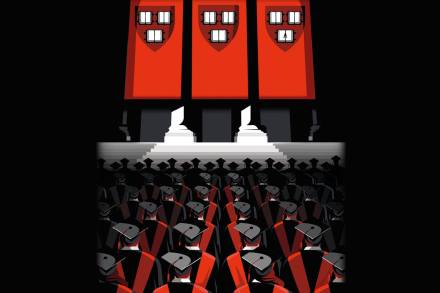
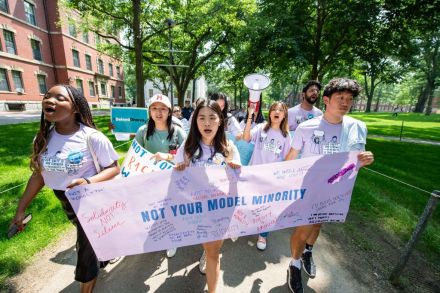
In the aftermath of the October 7 attack on Israel, when videos were circulating on social media showing the enormities perpetrated on Israelis by Hamas terrorists — women raped, old people and children abducted, civilians murdered en masse — students of Harvard’s leftist groups banded together to condemn... Israel. Members of thirty-four student organizations signed a letter declaring that they “hold the Israeli regime entirely responsible for all unfolding violence.” The spectacle of America’s elite youth engaging in a shameless act of victim-blaming sent shockwaves through the world. Reprehensible as the letter is, the reality is that Harvard’s relentless pursuit of elitism has, for generations, been a breeding ground for antisemitism.

harvard hamas

It can happen at Harvard

How did we get to the point that on numerous American campuses devoted to “social justice,” many student groups openly celebrated a brutal Hamas attack that killed more than 1,000 Israeli civilians and saw many hundreds tortured, beheaded, executed in front of family members and set on fire?  How did we get to the point on campuses where any unwanted sexual contact, even if intended only as a non-violent romantic approach, is denounced as a crime against women and can lead to expulsion, yet student protesters celebrate the mass rape of Israeli women, including rape victims still bleeding from the violation or killed and stripped naked, being paraded through the streets of Gaza as howling mobs defiled and abused their bodies?

harvard

The kids are running the classroom

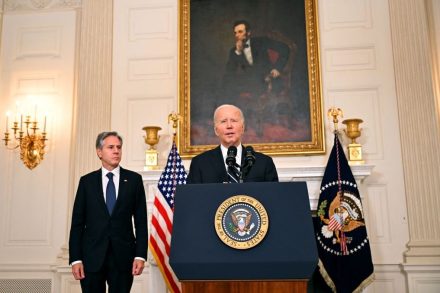
The Democratic Party is in a state of rhetorical paralysis. This weekend, as Palestinian terrorists streamed across the Israeli border, the White House maintained hours of thunderous silence. On Saturday, the Biden administration released a few limp paragraphs to the effect that “terrorism is never justified” and “Israel has a right to defend itself and its people.” This, after an uninterrupted outpouring of financial and oratorical support for Ukraine, is weak tea. But as the head of a party that is being overrun in not-so-slow motion by a vigorous young coterie of anti-Israel extremists, what more could Joe Biden say?

kids running classroom democrats

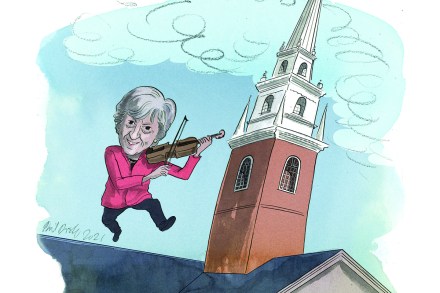
Drew Gilpin Faust, a rebel with a cause

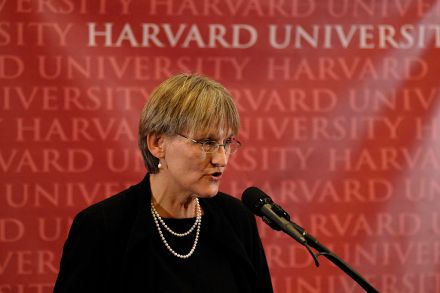
In 1957, when Drew Gilpin Faust was nine years old and growing up in the Shenandoah Valley, she learned from the car radio that in Virginia, black children were forbidden by law from going to school with white children. Disturbed by this egregious instance of Jim Crow segregation, she sent a letter to the president. “Please Mr. Eisenhower,” she wrote, “please try and have schools and other things accept colored people.” Young Drew’s sense of what was and wasn’t fair lay at the heart of her childhood rebelliousness, as well as her battle, as a young woman coming of age in the 1960s, against unjust social hierarchies.

faust

Why legacy students aren’t a civil rights issue

I just caught the news that four pages in a notebook dated 2014 and stuffed into a couch cushion have been accepted as a valid will for the late singer Aretha Franklin. The jury that decided this enriched two of her sons and disappointed a third son, who was favored in an earlier will. This is what I call a legacy. But America is all worked up about another kind of legacy. I refer, of course, to the endearing habit of colleges and universities to give a leg up to the kinder of their alumni. Why do they do this? And why are so many people worked up over it?  These aren’t hard questions. Colleges have two reasons for their legacy programs.

legacy

Is the age of the legacy student over?

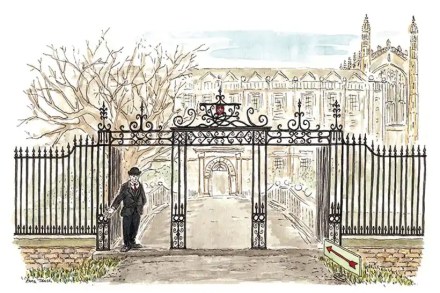
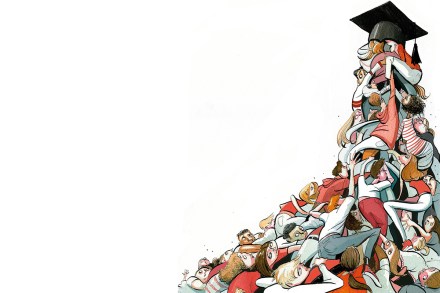
Johnston’s Gate isn’t the only entrance to Harvard Yard. For years, money, status and secret lists have opened back doors into Harvard University for a select group of privileged students. And the easiest way to open these doors? The right parents. According to the Harvard Crimson, over a third of the class of 2022 had a parent or other relative who attended Harvard. In the wake of the Supreme Court’s ruling against affirmative action, the admission policy that has created America's aristocrats is starting to take some heat. Could legacy admission be the next to go? Three Boston-based advocacy groups say yes.

small colleges legacy

NPR says Asian Americans should love affirmative action

NPR thinks Asian Americans should stand against the Supreme Court’s ruling on affirmative action whether they like it or not. In an article published Sunday, NPR’s race and identity correspondent Sandhya Dirks argued that white conservative activists have used affirmative action to divide Asians from other communities of color for far too long. In fact, Asian students have nothing to lose by embracing the practice.  Per the article, Asian Americans became proxies for white privilege when affirmative action lawsuits brought by white students failed in 2013. To beat the legal system, Edward Blum, the head of Students for Fair Admissions, approached Asian students who he claimed had been hurt by biased college admissions.

harvard npr

Why the Supreme Court’s Harvard decision matters

The decision is all anybody can talk about. Well, that’s not exactly true. It’s the banner headline in the New York Times, but if you scroll down or turn the pages, you will find something on “Smoke From Canada Fires Stretches From Midwest to East Coast,” and ‘Dangerous High Temperatures Stretch Across the South.” The world hasn’t stopped spinning and Mr. Putin is still causing trouble. A French police officer killed a seventeen-year-old French citizen of Algerian and Moroccan descent, touching off riots in several cities.  But the story that has riveted the attention of America is the Supreme Court’s decision in Students For Fair Admissions, Inc. v. President and Fellows of Harvard College. And for good reason.

harvard supreme court

Will US colleges’ brand power survive falling standards?

Nike. Supreme. Ralph Lauren. Abercrombie and Fitch. Harvard and Yale. On the streets of Budapest, style-conscious teenagers have collapsed the distinction between the Ivy League and streetwear. Maybe Americans still balk at wearing the logo of schools they didn’t get into, but the market for collegiate apparel in Eastern Europe is not limited to alumni, students and ambitious high-schoolers. Even kids with no interest in (or chance of) going to Harvard are drawn by the power of its name. Meanwhile, American higher education is being convulsed by a social-justice revolution that upends the basis of these schools’ claims to exclusivity.

university college

This is how small colleges die

Iowa Wesleyan is the latest. Finlandia University before that. Pennsylvania College of Health Sciences as of January 2024. Many others you have probably not heard of: Stone Academy, Cazenovia College, Bloomfield College. These are colleges and universities that have breathed their last. Most often they are just local stories. A college that has been reduced to a few hundred students and perhaps two dozen faculty members comes to its final, final end.  In most cases, that final end has been dragged out long past the point where there was any realistic hope of saving the institution. As a former college president once told me, “Colleges die hard.” The faculty and administrators rarely have other career options.

small colleges legacy

The Harvard connection

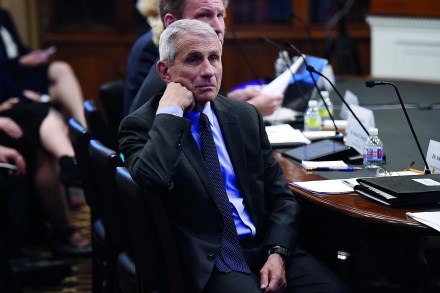
On the morning of Sunday February 2, 2020, Anthony Fauci, then in the middle of putting together America’s pandemic response, received an unusual email with a highly unusual request. The email, revealed as part of a tranche of FOIA documents requested by the Intercept, was from George Daley, the dean of Harvard Medical School. “Alan Garber, Harvard’s provost, and I met yesterday with a team led by Jack Xia, the CEO of China’s Evergrande Company, and Dr. Jack Liu, Evergrande’s chief health officer,” Daley wrote. Addressing the director of the National Institute of Allergy and Infectious Diseases as “Tony,” he asked for “whatever information you are willing to share on your current efforts to coordinate a response.

fauci

How Harvard went woke

On January 1, 1993, I arrived at Harvard to take up a newly endowed professorship in Yiddish literature. It seemed preposterous: me at Harvard, Yiddish at Harvard. The university had never figured in my aspirations. My impressions of the university had been formed mostly from what I knew of its program in Jewish studies, which was jokingly referred to as ‘the Yeshiva on the Charles’ because of its emphasis on Talmudic and medieval sources. Its almost exclusively male Department of Near Eastern Languages and Civilizations felt obliged to appoint a female. My gender played an even more prominent part in the deliberations of the Department of Comparative Literature where I was to hold a joint appointment.

ruth wisse harvard

Obama’s disappearing legacy

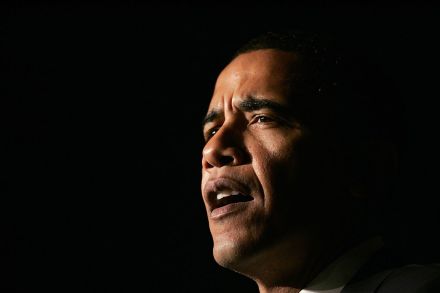
The presidency of Barack Obama was heralded as a transformative event in American racial history. So why did it seem to do so little to advance racial equality or alter long-standing patterns of African American subjugation? We hear that, if he wins in November, Joe Biden, the former vice president, will restore the essence of the Obama-Biden administration and put America back on a path to racial justice. But over eight years, what did Obama achieve? Long before Obama ran for president, a wide range of black voices questioned whether he was ‘black enough’ to represent African Americans. At Harvard Law, Obama’s election as the first black president of the prestigious Harvard Law Review drew national news coverage.

obama

Ivies offer half-baked education at full sticker price

Princeton won’t be Princeton without anyone present, grumbled president Eisgruber, lying on the rug. Harvard and Princeton yesterday announced their plans for the 2020-21 academic year, and they don’t look good. Harvard will welcome ‘first-year students’ on campus in the fall and seniors in the spring; Princeton will welcome ‘first-year students’ and juniors in the fall and sophomores and seniors in the spring. (God forbid either university use the term ‘freshmen’.) Remote learning will be the norm and parties will be prohibited. Princeton, at least, offers a 10 percent tuition reduction. Harvard is increasing its tuition by 4 percent.

ivy league Harvard University

Anonymous Instagram account accuses Ivy Leaguers of racism

An anonymous Instagram account surfaced this weekend that accused multiple Ivy League students of racism, without evidence.‘Ivy League Racists’ (@ivyleagueracists) — which has since been deleted — posted pictures of white male students alongside descriptions of the racist acts they purportedly committed.For instance, one post read: ‘[name redacted] of [location redacted] raped an innocent black freshman at Penn. The victim is now suffering from depression and suicidal thoughts. Contact Penn Police at 2155733333.’Another post was aimed at a former Princeton sportsman, naming his hometown, parents and siblings. Neither post provided any tangible proof of the students’ alleged misconduct. The Spectator reached out to both men for comment.

ivy league

Harvard is more racist than Kyle Kashuv

Even in our age of outrage, Harvard’s decision to rescind its offer of admission to Parkland survivor Kyle Kashuv is surprising. Kashuv apologized immediately after foolish, insensitive and racist remarks that Kashuv had made as a 16-year-old resurfaced online. He apologized again to Harvard after the university reached out to him to get the full story. Despite this, Harvard has withdrawn its offer and rebuffed Kashuv’s attempt to appeal the decision in person. Harvard’s response runs entirely counter to the stated goals of any university. Institutions of higher learning are predicated on the notion that young adults are capable of developing toward maturity. That’s why they leave their friends and families and delay entering the workforce.

kyle kashuv

At Harvard, you’re guilty until proven innocent

‘In 55 years of association with Harvard, I can’t remember a worse violation of academic freedom than this one. And Harvard has had a few,’ Alan Dershowitz tells me in this week’s Censored in the City podcast. https://audioboom.com/posts/7260600-is-there-still-academic-freedom-at-harvard Activists on the left have been working hard to change definitions and distort values for some time. We shouldn't be surprised that they’ve started succeeding. At first it was simple. One word at a time, like how you define the meaning of safety or assault. Then it became about bigger ideas. The left, who once championed free speech and academic freedom, began distorting how we should think about and advocate for those values.

harvey weinstein guilty harvard

Operation Varsity Blues and the wrong sort of college corruption

We knew Felicity Huffman from Desperate Housewives, but we didn’t know how desperate a mother she was until now. Huffman and Lori Loughlin of Full House are the two celebrities caught in the Operation Varsity Blues dragnet, along with 31 other individuals who paid as much as $500,000 per dimwit child to one William ‘Rick’ Singer, all so their pampered, ignorant, SAT-flunking little darlings could get into ‘good’ schools where they could snort Xanax, butt-chug ketamine, and slob around in sweatpants and flip-flops like inmates in a mental hospital — just like their more intelligent peers, apart from the Asians, who actually study and are America’s last chance. Let us count the ways in which college admissions are corrupt.

operation varsity blues felicity huffman

‘Don’t quote me. They would kill me’: A professor speaks about Brett Kavanaugh and #MeToo at Harvard

‘Don’t quote me on this,’ the professor says. ‘Let’s just say Kavanaugh is not going to be the last professor who’s not going to be teaching at Harvard. And several of them are tenured, and they’re going to have to leave.’ The professor teaches at a top university in the Northeast. We’re talking hours after Brett Kavanaugh’s withdrawal from teaching a course on the history of the Supreme Court at Harvard next January. That would have been the tenth time that Kavanaugh had taught that course. Now, however, he has become part of the Supreme Court’s history, and not in the way that he wanted.

None of my Harvard students thinks Brexit is a good idea

Across the street at the Museum of Fine Arts, there is an extraordinary collection of Georgian furniture and paintings from Boston just before the revolution. It all seems a lot more sumptuous than the sort of thing that would have been found in a contemporary English town of 15,000. The colonials were, of course, more lightly taxed than the British, yet they rebelled. Might it have been to do with sovereignty and ‘taking back control’? I suppose it worked out for them. Still, when I asked my study group at Harvard’s Kennedy School whether Brexit was a good idea, not a single hand went up.

harvard brexit