Harvard

Michelle Obama’s new book about style lacks substance

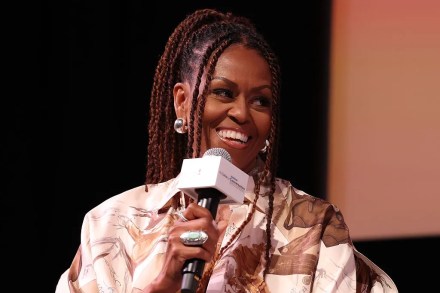
First lady is a strange role. Even when your husband is the first black president, and you’re a Princeton and Harvard-educated former corporate lawyer, America still projects its most regressive ideas about gender onto you. So I understand that Michelle Obama, like Hillary Clinton before her (skipping Laura Bush, a more classical first lady, along with, more recently, Jill Biden and Melania Trump), might have felt constrained, faced with expectations she could never satisfy. I don’t doubt that being black added enormously to that burden. Yet there is nothing more irritating than the person of Michelle Obama complaining. And she is always complaining.
michelle obama

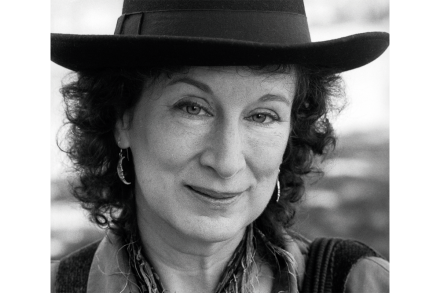
Margaret Atwood’s autobiography reveals a steely self-possession

The problem with the contemporary literary life, most of its observers usually agree, is that nobody at large in it does anything much except write. A century ago, your specimen male novelist could be found fighting in wars or traveling to places from which the reportage he brought back had genuine novelty. These days, alas, our man just sits at a desk and every so often looks out of the window at the teeming world beyond. The trajectory of the 21st-century novelist is as familiar – and as unavoidable – as a portrait of Taylor Swift. You grow up, you show an aptitude for literature, you start writing books and, unless something very unusual happens, you go on writing them.

Margaret Atwood

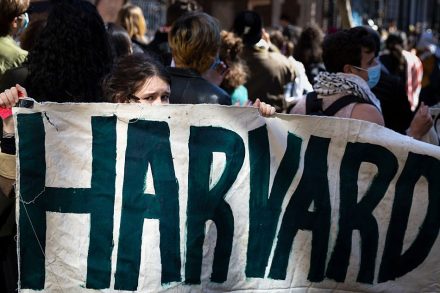
How Harvard lost America

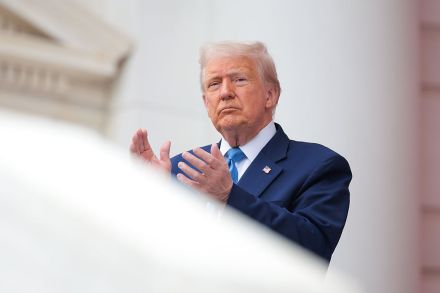
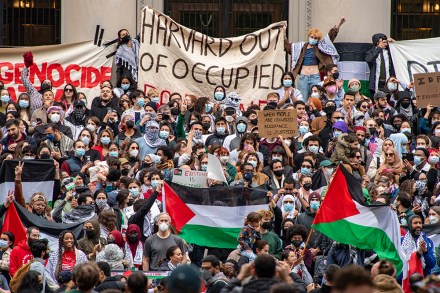
President Trump’s proclamation, “Enhancing National Security by Addressing Risks at Harvard University,” pays a compliment to that crossroads of brilliance and turbidity. It treats Harvard as a serious educational institution, and one that in its misbehavior “presents an unacceptable risk to our Nation’s security.”    Trump was not referring to the risk of immersing some of America’s brightest and most ambitious students in a toxic soup of anti-Semitism, DEI and disdain for our republic. Nor were the “risks” he had in mind “everybody-gets-an-A" grade inflation or a curriculum that wastes the students’ intellectual talents on courses that sound more like entertainment (e.g.

harvard

The fight to make science great again

If one were looking for dismal assessments of the Trump administration’s contributions to the vitality of American intellectual inquiry, the editorial eructations of Holden Thorp would likely be at the top of the list.   Thorp is the editor-in-chief of Science, the weekly journal of American Association for the Advancement of Science (AAAS). This makes him one of the most influential figures in the academy and in American science as a whole. Few weeks go by without an editorial from Thorp denouncing the havoc wrought by Trump. The May 8 issue is mildly titled, “The New Reality for American Academe,” but the mildness ends there.

science
Pam Bondi

The DoJ is wise to deploy the False Claims Act against colleges

Like Papal encyclicals, many statutes are known by the opening words of their Latin formulation. One that I just learned about is known as a “Qui tam” action. By itself, it is an enigmatic expression, since it just means “Who so” or “Who as.”   If you look it up, though, you will discover that “Qui tam” is shorthand for “Qui tam pro domino rege quam pro se ipso in hac parte sequitur,” which makes much more sense: “Who prosecutes in this matter both for the King and for himself.” That tam, as is often the case, is balanced with quam, “as x, so y.” Spinoza contains a famous example toward the end of the Ethics: “Sed omnia praeclara tam difficilia quam rara sunt”: “For all things excellent are as difficult as they are rare.

The reviving of the American mind

In his 1987 book, The Closing of the American Mind, Allan Bloom argued that higher education no longer taught US citizens how to think. “We are like ignorant shepherds living on a site where great civilizations once flourished,” he wrote. “The shepherds play with the fragments that pop up to the surface, having no notion of the beautiful structures of which they were once a part.” Now, almost 40 years later, we’re even more clueless. The rot in academia has spread throughout the education system and can be found all over American life. Rational thinking has now been almost entirely usurped by the baser passions of anger and grievance, as we saw all too clearly in the collective insanity of the Black Lives Matter riots of 2020.

Trump
Trump

The Trump administration is giving us excellence, not equity

Americans are not a naturally gloomy people. We don’t necessarily expect things to go our way, but when they don’t, we can laugh it off. In my part of Vermont there’s a place called Hateful Hill, for example, so-named by stagecoach drivers who had a tough time with the steep road. But Hateful Hill is also a beautiful elevation. Today, even those who don’t “get” Donald Trump need to start seeing the upside. He doesn’t always get his way, which is probably a good thing, but he is leading a long-overdue revival of the American spirit and allowing for the return of optimism and the pursuit of excellence.

Rufo

How Christopher Rufo is changing American education

As fire-breathing counter-revolutionaries go, Christopher Rufo seems notably mild-mannered. Perhaps it’s his northern California roots and Pacific Northwest home that keep him from embracing the based lifestyle pursued by so many conservatives in the Trumpian era. He doesn’t like sports. He doesn’t enjoy UFC. He allows his four kids to watch Disney movies and admits he was once a vegetarian. Yet it’s also possible that the Georgetown-educated PBS documentarian turned right-wing iconoclast is effective precisely for that reason: he knows the people he is criticizing.

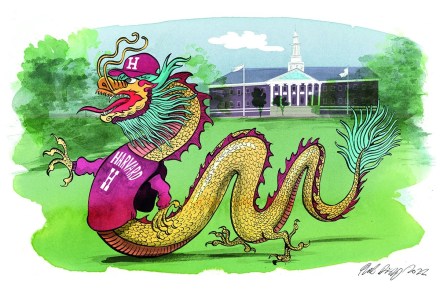
Harvard’s intricate China ties

Scratch almost any major US political story and sooner or later you’ll hit a big red nerve that belongs to the Chinese Communist party (CCP). Tariffs, energy, TikTok, the border, Fentanyl, Greenland, Panama, the Gulf of America – on all these subjects the Trump administration is, one way or another, trying to limit Beijing’s power in the West. And Donald Trump’s "war on Harvard," it turns out, is no exception. It’s clear that the President is pushing against anti-Semitism and the Diversity, Equity and Inclusion madness on America’s most famous campus, as well as in countless other colleges and universities.

Harvard

Trump takes a hammer to the universities

President Trump has already dropped the first hammer on Harvard. He’s ready to drop the whole tool chest on a whole slew of universities – and it won’t be pretty. Outraged Democrats will call the punishing sanctions authoritarian, even fascist, and well beyond the authority of a constitutional officer. Republicans will back the president, saying universities had plenty of chances to correct their serious problems and did nothing.  Some threatened sanctions are readily defensible, such as demanding better protection for Jewish students and eliminating discrimination in admissions, hiring and promotion. Some are not, such as demanding intrusive federal oversight of course content and departmental hiring. All Trump’s actions will be challenged in court.

British trump universities

Harvard against America

This is drumming season.  That’s the time of year when the woodpeckers stake out their territories by tapping out tattoos on hollow trees.  Road signs or “no trespassing” edicts make an even more impressive racket.  I come to Vermont to get away from Midtown Manhattan’s horns and sirens – but this time of year, it’s just a visit to the percussion section.  But the real racket isn’t from the birds declaring their sovereignty over the woods.  It is from Harvard declaring its sovereignty over American higher education. In a letter dated April 14, the principals of two Washington law firms wrote a brief letter to three officials in the Trump administration telling them they need not worry about antisemitism at Harvard.

harvard

An end to Israel is the only ‘de-escalation’ the pro-Palestine crowd wants

Everywhere you turn in conversations about Israel, Gaza, Jews and antisemitism right now, the long-promised specter of expansion and escalation is... well... escalating. More than nine months into Israel’s war with Hamas, the rhetoric of conflict and activism has escalated into violent confrontations on the battlefields of war, politics and protest.   Across Israel’s northern flank, for instance, its months-long flare-up with Hezbollah is quickly escalating into an all-out war as the Iranian-backed militia killed a pair of Israeli civilians last week via rockets launched from Lebanon.

The digital Ozymandias: Egyptologist Peter Der Manuelian on his mission to make Giza last forever

The Giza Plateau is perhaps the first location that springs to mind when we think about Ancient Egypt. With its collection of pyramids, temples and monuments, all watched over by the Great Sphinx, the area has fascinated visitors for thousands of years. Its structures, often decorated with magnificent inscriptions, paintings and sculptures, have been around for so long that it’s only natural to assume that they always will be. Yet the years have not always been kind to Giza. The challenge of preservation has become even more critical than back in Percy Bysshe Shelley’s day when he wrote “Ozymandias,” his contemplative poem about the passage of time.

Giza

The trouble with the elite American campus

One of the key critiques of DEI — the identity-based preference system better known as Diversity, Equity and Inclusion — is that it places workers in professional positions they’re clearly unqualified for. Often with devastating outcomes. Boeing, for instance, has been accused of favoring race and gender when hiring for its factory floor — factories that have turned out airplanes that have literally fallen from the skies. Disney, too, has seen its quest for race- and gender- and sexuality-based inclusiveness come at a cost — a steep slide in its stock price.  But no area of public life has been more fully infiltrated by DEI than the academy — and the results have been disastrously on display since the Hamas attack against Israel nearly seven months ago.

elite american campus

Claudine Gay may be gone, but the issues on campus remain

Claudine, we hardly knew ye. Gay’s tenure atop Harvard was the shortest in that university’s history. Yet it was still too long. In mere months, she did enormous damage to one of the world’s great universities. Gay is not the only one who should be held accountable for this fiasco. The university’s governing board, the Fellows of Harvard Corporation, should be out, too. They chose her, and their choice did enormous damage to the institution. They should pay for it. Their statement accepting her resignation shows just how feckless they are. Don’t read it if you are glucose intolerant. “First and foremost, we thank President Gay for her deep and unwavering commitment to Harvard and to the pursuit of academic excellence . . .

education

Lessons from the removal of Harvard’s president

“This is not a decision I came to easily,” wrote disgraced former Harvard University President Claudine Gay of her resignation just after New Years. That might be the only honest thing Gay has said about the debilitating scandal in which she has devastated her once-prestigious institution over the past three months. Indeed, her decision to resign did not come easily at all. It only came after Gay repeatedly failed to state, including in Congressional testimony, and in the wake of the deadliest anti-Semitic violence since the Holocaust, that calling for the genocidal murder of members of her university community is a violation of its code of conduct.

Claudine Gay was bad for Harvard, but Harvard is bad for the country

I advise you to have a bottle of Dramamine on hand before reading Claudine Gay’s nauseating missive announcing her resignation as president of Harvard University. “It has been distressing,” she (or perhaps it was someone else) wrote, “to have doubt cast on my commitments to confronting hate and to upholding scholarly rigor — two bedrock values that are fundamental to who I am — and frightening to be subjected to personal attacks and threats fueled by racial animus.” “Confronting hate”? “Upholding scholarly rigor”? “Racial animus”? Puh-leeze!  Gay had a chance to “confront hate” when the pampered panty-waist radicals at Harvard demonstrated in favor of Hamas. She didn’t.

When will Harvard give Claudine Gay the boot?

You are probably almost as sick of hearing about Claudine Gay — as of this writing, still the president of Harvard University — as I am of writing about her. As I pointed out a year ago in this space, Harvard’s appointment of Gay, a black woman, was simply the next chapter in the university’s long-running pursuit of its racial spoils system. Gay’s entire academic career has been a testimony to the power of that enterprise. What a prize Harvard had in Claudine Gay: a black female who was an avid proponent of the whole “Diversity, Equity and Inclusion” racket. Could there be any doubt that she was being groomed for the top slot?

claudine gay

Why plagiarism matters

Harvard president Claudine Gay’s troubling history of appropriating other people’s idea and words and passing them off as her own has a well-worn name: plagiarism. Every college and university in the United States prohibits plagiarism. Most present students with explicit rules against it and lay out the possibility of drastic punishments, such as failing a course and, depending on the severity of the offense, expulsion from the college. Typically, instructors in freshman English include lessons on the proper ways to quote, paraphrase and cite sources.  Why? What is so wrong with plagiarism? We don’t punish actors for reciting their lines and failing to add, “Mr. William Shakespeare wrote that.

plagiarism

The disgraceful, ducking, diving, dodging college presidents

It was a clarifying moment, wasn’t it? The presidents of MIT, Harvard and the University of Pennsylvania testifying for the House Education Committee about the wave of rabid antisemitism on their campuses. Representative Elise Stefanik of New York asked the same question of UPenn’s Liz Magill, MIT’s Sally Kornbluth and Harvard’s Claudine Gay. Does calling for the genocide of Jews violate your campus’s rule of conduct, yes or no? That was the question.  You might think it was a pretty simple question.

college presidents