Hamburg

Philosophy’s greatest pessimist wasn’t so miserable after all

From our UK edition

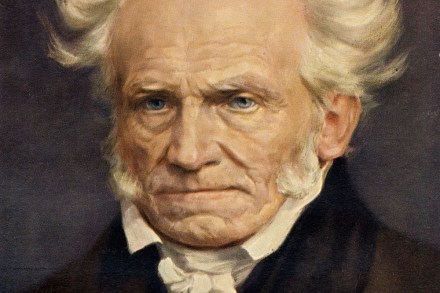
According to the German philosopher Arthur Schopenhauer (1788-1860), people prefer reading books about great thinkers rather than by the thinkers themselves because ‘like is attracted to like and the shallow, tasteless gossip of a contemporary pinhead is more agreeable and convenient to them than the thoughts of great minds’. Thankfully, this contemptuous attitude towards biographers has not deterred David Bather Woods, a professor at Warwick University, from taking a fresh look at one of the most influential yet misunderstood figures in western philosophy. Woods’s prose is clear and compelling, though the book’s thematic structure is confusing. He argues that the defining event in Schopenhauer’s life was the suspected suicide of his father, Heinrich Floris.
Who invented the hamburger?

The hamburger is the perfect meal in the hand, eaten by workers on their lunch breaks, or by families who cannot afford fancy restaurants. It is the great comestible leveler, suitable alike for suburban barbecues and the front steps of tenement houses. The staple food of American democracy yields cheeseburgers, baconburgers, franchise brands, and drive-in outlets with total annual sales of five billion units. The precise origins of the patty, however, remain opaque. Nobody knows for certain who first thought of cooking a patty of minced beef and serving it inside a fresh-baked bun. The earliest use of the name was for an 11-cent dish, the ‘Hamburger steak’, served at a New York restaurant, Delmonico’s, in 1873. There is no mention of buns or relish.

hamburger

A tastefully muted mishmash of interior design, Nazi fetishism and war guilt

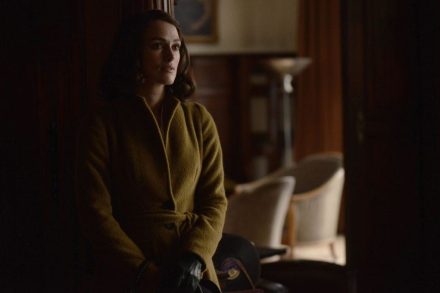
Lewis loves Rachael. Rachael loves Lewis, but she’s not sure if he still loves her. Stephen the handsome widower loves Rachael on sight. Stephen and Rachael have an affair. What happens when Lewis finds out? This plot will be familiar to all practitioners of suburban adultery. It will also be familiar to those students who, rather than taking their pleasure quickly on the kitchen table like Stephen and Rachael, have read Anna Karenina. It is also the plot of The Aftermath, a tastefully muted mishmash of interior design, Nazi fetishism and war guilt, enlivened by that unacknowledged innovation of the World War Two era, the key party. It’s the winter of 1945. The victorious Allies have divided Germany into zones of occupation: American British, French, Russian, erogenous.

aftermath keira knightley