Hamas

What Iran gains from the conflict in Israel

From our UK edition

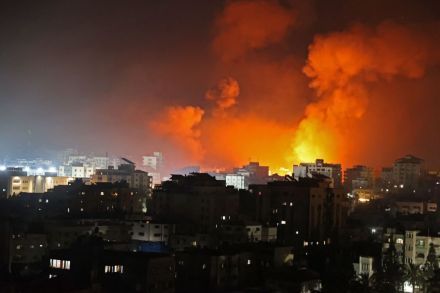
A little more than a week before Hamas carried out its Operation Al-Aqsa Flood, the US National Security Advisor, Jake Sullivan, said: ‘The Middle East region is quieter today than it has been in two decades.’ Sullivan was expressing a consensus view, one apparently shared by the Israeli government. Then came the attacks of last weekend and, as the Israeli President, Isaac Herzog, said, ‘Not since the Holocaust have so many Jews been killed in one day.’ The surprise attacks have been called Israel’s 9/11, its Pearl Harbor, and so the question Israelis are asking is: how could this happen? And of more consequence, perhaps: who was really behind it? The sheer scale of the attack may not have been planned.

joe biden middle east foreign policy

Biden must rethink US policy in the Middle East

Responsibility for the catastrophe now unfolding in the Middle East belongs to Hamas and its sponsor, Iran. The atrocities we are now discovering — the deliberate killing of innocents, the capture of hostages — were an integral part of Hamas’s military strategy and grew directly out of its vicious hatred of all Jews — and of Western civilization. These are acts of true evil and, in committing them, Hamas has the full backing of Iran. President Biden spoke for America when he said, bluntly, “The brutality of Hamas’s blood thirstiness brings to mind the worst rampages of ISIS. This is terrorism.” It is important to begin with these basic points before discussing mistakes made by Israeli and American leaders.

Mainstream media sanitizes Hamas terror attacks

For years, the Gaza Strip conflict has been as much about media optics as anything else. Hamas, the controlling party in Gaza, have become expert media manipulators. They carefully stage propaganda for the mostly sympathetic international media and our own media here in the US. In the wake of the worst terror attack against Jews since World War Two, however, that has seen the death toll rise to more than 1,000 victims and 150 hostages, you would think Hamas would be about to lose the optics war. Not so fast.What began as breaking news reporting by American outlets quickly shifted to the default position of sympathizing with Palestinians, and focusing almost solely on Israel’s retaliation, as has usually been the case with this conflict.

Pro-Hamas protests sweep the US

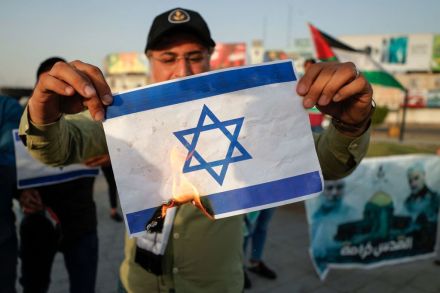
As the bodies of hundreds of Israelis lay freshly butchered by Hamas terrorists, the group’s supporters from around the world celebrated — including by mourning the dead terrorists and cohosting a rally with a designated terrorist group — and urged them to “globalize the intifada.” The rallies sprouted up almost immediately after Hamas stunned Israel by launching a surprise attack, likely with Iranian assistance, on the fiftieth anniversary of the Yom Kippur War. The images of Israeli grandparents and infants being held hostage, and of Israeli villages being wiped out shocked the world. It wasn’t just Israelis who were murdered, however; nine Americans have already been confirmed among the dead, along with German, French and Cambodian citizens.

hamas

Five of the worst responses to the Hamas attacks on Israel

From our UK edition

Tragedies are often the moment when statesmen are at their best. Unfortunately, as we’ve seen from the response to yesterday’s attacks by Hamas on Israel, they can also show politicians at their worst. Below are five of the more insensitive, tone-deaf and even downright offensive reactions to the tragedy that is unfolding in the Middle East… Jeremy Corbyn Where else to start? Step forward Jeremy Corbyn, the man who sinks to every occasion. The Right Honourable Member for Islington North reacted to the Hamas attack with his signature blend of cynicism and equivocation, declaring that: The unfolding events in Israel and Palestine are deeply alarming. We need an immediate ceasefire and urgent de-escalation.

Priti Patel’s Hamas ban doesn’t go far enough

From our UK edition

It’s been a rough old week for Hamas. The UK announced plans to proscribe the organisation, Justin Bieber ignored its call to cancel his 2022 concert in Tel Aviv, and even the recently friendly Labour party has vowed that it ‘does not and will not support BDS’. One minute, you’re going about your business, trying to drive the Jews into the sea, and the next you’re being treated like you’re the bad guy. Priti Patel’s decision to add Hamas to the Home Office list of terrorist organisations corrects a 20-year-old error which saw the Izz al-Din al-Qassem Brigades — Hamas’s paramilitary wing — outlawed in 2001 but the rest of the organisation unaffected.

I’m getting sick of the Tories

From our UK edition

I suppose this happens to all of us at different speeds, but I am getting a little fed up of this government. In particular, I am getting fed up of the gap between its rhetoric and its actions. Most of the time this is most noticeable with the Prime Minister, who gives his base the occasional morsel of right-wingery only to then force-feed them great dollops of lefty-greenery. On a trip to Washington, Priti Patel has demonstrated that she is also no stranger to this tactic. So far we have had Patel (the DC version) talk about ‘the mass migration crisis’, as though she is merely an observer of the crisis in the Channel rather than one of the only people actually able to solve it.

The war Israel is losing against Hamas

From our UK edition

The Gaza conflict is bloody, brutal, and genuinely heartbreaking, but it is also perfunctory. This is a fight in which the military battle is predetermined: Hamas cannot win, and Israel cannot lose. What happens in between is almost balletic in its endless predictability. Hamas fires rockets, Israel fires back; Hamas targets Israeli cities; Israel bombs buildings in which Hamas hides and stores weapons. So what’s the point? Well, apart from Hamas needing to show strength – and Israel needing to, in the words of its security experts, 'mow the grass' by periodically degrading Hamas’ military capabilities – there is a wider battle raging. This fight isn't about missiles or rockets but about narratives; to fight you need a reason.

Israel’s PR problems have nothing to do with PR

Following the US setback during the Tet Offensive in Vietnam in 1968, Walter Cronkite, the mythical CBS News television broadcaster, was sent to Southeast Asia to report on the military intervention there. After Cronkite proclaimed in his broadcast that the US lost the war in Vietnam and that it was time to bring the boys back home, then President Lyndon B. Johnson told his advisors, 'If I lost Cronkite, I lost Middle America.' Urban legend or not, it reflected the way I imagined the role of the American media to be when I had served as a press officer at the Israeli Consulate in New York about a decade or so after Cronkite aired that broadcast from Vietnam.

israel

The problem with the New York Times’ Gaza coverage

From our UK edition

While war raged between Israel and Gaza, the New York Times published a powerful montage of 64 minors said to have been killed in the conflict so far. Under its famous motto ‘All the news that’s fit to print’, and with the headline ‘They Were Just Children’, America’s paper of record informed us that ‘they had wanted to be doctors, artists and leaders’, and invited us to read their stories. It was impossible to look at those innocent faces without feeling deeply distressed.

How London became a hub for Hamas

From our UK edition

As the dust settles over Gaza, and Israel’s Iron Dome sensors cool, minds inevitably turn to the lessons that can be learned from the 11-day conflict that cost hundreds of lives. Foreign Secretary Dominic Raab, the American secretary of state Antony Blinken, and other international dignitaries have visited the region and offered their carefully calibrated support for ‘both sides’ delivering high-handed lectures on the ethics of asymmetric warfare in densely populated urban sprawl. Sadly, however, the British government has become part of the problem. It may have deep military and security ties to the Jewish state, but there lurks an elephant in the room. London itself has been allowed to become one of the world’s most important Hamas hubs.

Inside Hamas’s tunnel complex

From our UK edition

In the wake of its ceasefire agreement with Israel, Hamas has again attempted to paint itself as a struggling resistance movement against an occupying force. After 11 days of fighting, which left more than 250 people dead, Hamas’s co-founder, Mahmoud Zahar, claimed a strategic and a symbolic victory.  ‘The new element here is the degree of the resistance movement, in particular in Gaza, to attack the Israeli targets and very important points, including most of the overcrowded areas... the civilian society,’ he told Sky News. ‘So for how long will the Israelis accept that?’ By painting itself as a plucky victim, Hamas is trying to convince the Arab world – and Muslims in the West, like me – that we should be on its side.

Will they let in Gazans at the Soho House Tel Aviv?

A regular column by an anonymous whistle-blower operating deep within the heart of the Social Justice Movement. To protect their identity, they will go under the code-name ‘They/Them’. Wokeyleaks is a confidential news leak organization for anyone who wishes to divulge classified information (and hilarious anecdotes) about woke culture without fear of getting canceled. To any would-be Edward Snowflakes out there: leak your woke-culture war crimes to wokeyleaks@protonmail.com. We promise to protect our sources. Having spent a lot of time in Brooklyn, I find it easier to understand Israel’s occupation of Palestine not as a ‘religious conflict’, but as a kind of militarized gentrification.

soho house tel aviv

Hamas doesn’t want a Palestinian state

From our UK edition

Do Hamas’s supporters in the West know what this organisation really stands for? The reality is that Hamas is no liberation movement in search of a Palestinian nation. Instead, it seeks the destruction of Israel and the establishment of an Islamic empire on its ruins. How do we know? Because senior Hamas leader Mahmoud al-Zahar has said so: Islamic and traditional views reject the notion of establishing an independent Palestinian state… In the past, there was no independent Palestinian state… This is a holy land. It is not the property of the Palestinians or the Arabs. This land is the property of all Muslims in all parts of the world… [Hence] our main goal is to establish a great Islamic state, be it pan-Arabic or pan-Islamic.

How Israel won the war

From our UK edition

Golda Meir, Israel’s first female Prime Minister, once said that when forced to choose between being ‘dead and pitied’ or ‘alive with a bad image’, her country would opt for the latter. Now that Israel and the Gaza militants have agreed a ceasefire after 11 days of fighting, these words ring truer than ever. Both sides will now strive to present a ‘victory picture’ to their peoples and to the world. But while Jerusalem may have lost the propaganda war – anti-Israel feeling and antisemitism is surging both in Europe and the United States – it emerges from this conflict the strongest, its security boosted by a hugely degraded enemy.

What’s the real reason so many people hate Israel?

From our UK edition

Did you know that for the past three weeks Turkey has been engaged in a military assault on Iraqi Kurdistan? It’s been brutal. The Turks, who have one of the most powerful military forces on Earth, have used F-16s, F-4 Terminators and other terrifying hi-tech weaponry to pummel Kurdish positions in northern Iraq. Families have fled their homes in terror. Livelihoods have been destroyed.  ‘Every day, every night… we are being bombed. Our lands are being destroyed. We cannot grow our crops’, says a Kurdish farmer.  It’s unclear how many people have died. According to Turkey, dozens of Kurdish people, mostly militants, apparently, have been killed or captured.

Bibi is back

From our UK edition

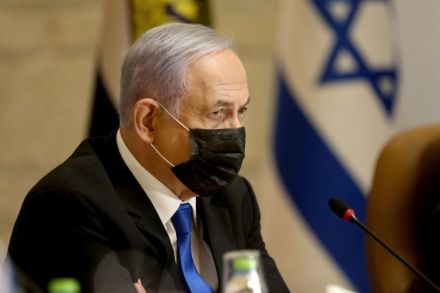
Is Benjamin Netanyahu’s time up? A fortnight ago, it seemed so. Netanyahu’s mandate for forming a coalition expired. The opportunity was handed instead to Yair Lapid, leader of Israel’s second largest political party Yesh Atid. Many dissatisfied Israelis started to hope: after four inconclusive elections, there was finally a chance to oust Netanyahu. But then hostilities broke out between Israel and Hamas, and reports of Netanyahu’s political death appear to be greatly exaggerated. In the weeks before this latest Israeli-Palestinian conflict, there was talk that Israel's new government would be made up of an eclectic coalition that would include parties on the left, right and centre, as well as an Arab-Israeli party.

associated press

The decline and fall of the Associated Press

Once, long ago, in a land far away, the best journalists tried to stand aloof from the stories they reported. The idea was simple and powerful. If journalists tried to be neutral and kept their reporting separate from their opinions, analysis, and speculation, then the public would believe them. Those days are long gone — and the media’s credibility is gone with them. Journalists and media organizations are now smack in the middle of many stories they cover, in part because they want to be. They want to spin them, to set ‘the Narrative’. Imbued with this new mission, many journalists have become partisan protagonists.

Hamas’s rockets are killing Palestinians too

From our UK edition

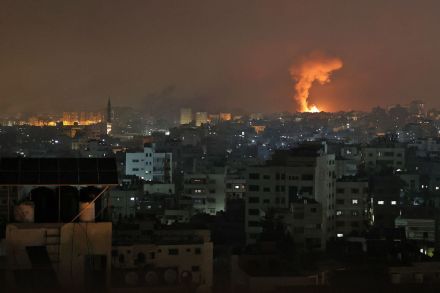
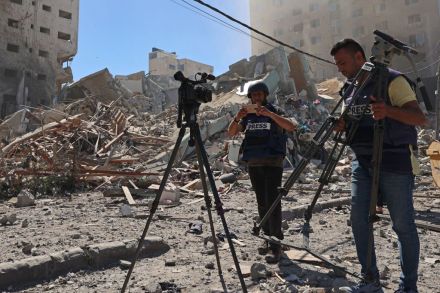
Israel’s military action in Gaza is widely reported daily across the world. Images of hundreds of rockets lighting up the skies over Israeli cities and of the rubble of destroyed buildings in the Gaza Strip are once again part of the daily cycle of print and broadcast news. But most reports are thin on details of Israel’s military activities. What exactly are their aims? How are they pursuing them? And how much success are they having? Often Israel’s military activities seem baffling to the wider world. The country’s reluctance to give a detailed, running-commentary on every strike frustrates journalists and citizens, who then assume the worst of motives for these unexplained acts.

Inside Israel’s Iron Dome

From our UK edition

A dramatic photo from the Gaza strip taken in the early hours of Friday morning looks like something out of a Marvel film. On the right, rockets fly from Gaza. The gentle trajectory of their parabolic curves shouldn’t fool anyone: these are unguided explosives travelling at hundreds of miles an hour towards an Israeli town. On the left, each one snaking a unique, winding path, interceptors from Israel’s Iron Dome anti-rocket system shoot up to meet the missiles. In 2001, when Hamas started firing rockets from Gaza into Israel (and, at that time, the still-extant Israeli settlements in Gaza), the terrorist organisation introduced a new weapon that would change the strategic picture of the Israeli-Palestinian conflict.