Haiti

What has the reparations movement ever done for victims of modern slavery?

From our UK edition

Slavery was – and importantly continues to be – a moral abomination. Its existence in the 21st century is a disgrace. Whole communities such as the Uighurs are subject to forced labour; two years ago it was estimated that 5.8 million people were living in slavery in China. And slavery is a problem much closer to home. Immigrants in the West are also at risk. A student of mine, an Indian national, enquired about the possibility of working at a Brick Lane curry house. He was told that they would ‘employ’ him, but that he would have to surrender his passport and sleep in a locked room on the premises.

Hotel Oloffson is ruined – and so is Haiti

From our UK edition

Earlier this month, in Haiti’s tatterdemalion capital of Port-au-Prince, armed gangs burned down the Hotel Oloffson. As news of the attack spread, both Haitians and foreigners mourned the loss of one of the most beautiful gingerbread mansions in the Caribbean. Thinly disguised as the Hotel Trianon in Graham Greene’s 1966 novel The Comedians, the Oloffson had served as a meeting place for writers, journalists, actors and artists of every stripe and nationality. Past guests include Nöel Coward, John Gielgud, Marlon Brando, Tennessee Williams, Jacqueline Onassis and Mick Jagger (who wrote ‘Emotional Rescue’ there). Laughably, a room had been named after me as the author of a book on Haiti.

The American mercenary is back

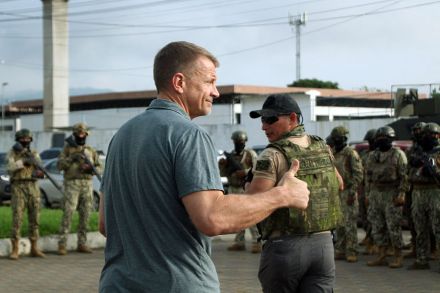
Two years after the fiery death of Yevgeny Prigozhin, the warlord behind Russia’s Wagner Group, the global shadow war waged by mercenaries and contractors still rages on. And now one of the most well-known names in the mercenary world is back in the headlines: Erik Prince. The founder of Blackwater and longtime ally of President Donald Trump, is on the ground in Haiti, where he has signed a deal with the government to take on the armed gangs that have brought the capital to the brink of collapse.Prince sold Blackwater in 2010 after its contractors opened fire on civilians in Iraq and it now operates under a different name.

Erik Prince

If ‘wokeness’ is over, can someone tell the Fitzwilliam Museum?

From our UK edition

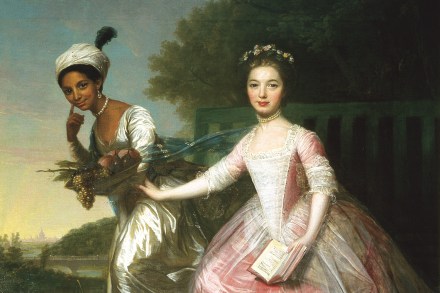
Optimists believe that the tide of ‘wokeness’ is now ebbing. If so, the message has not yet reached Cambridge, whose wonderful university museum has its classical façade covered in sententious phrases in neon, and which has recently opened a new exhibition in agit-prop style: Rise Up: Resistance, Revolution, Abolition. Such activism is fully in step with the Museums Association, the curators’ club that instructs its members to turn their institutions into activist cells. If all this makes its founding benefactor Viscount Fitzwilliam turn in his grave, all the better: he is stigmatised as a profiteer from the slave trade, even before one reaches the cloakroom.

The Vodou kingpin behind Haiti’s latest massacre

From our UK edition

For a politician known for his ability to shock, Donald Trump managed to outdo himself with his baseless claim during last year’s presidential debate that Haitian immigrants in Springfield, Ohio, were stealing, butchering and eating household pets. Regardless of this racist lie – new Haitian immigrants to Ohio do not eat people’s pets and are in the main perfectly respectable – Haiti itself is a mess and a good place to flee. The country’s extreme problems can’t be denied, although the US is doing a good job of ignoring them. Dictators assume guilt by association: if one old person is against you, they may all be killed Since the devastating earthquake of 2010, criminal gangs have grown larger and more powerful.

On the road with Danny Lyon

From our UK edition

A Google search for ‘Danny Lyon’ produces more than eight million results in 0.30 seconds, yet the celebrated American photojournalist and filmmaker is little known in the UK. This superb, quixotic, bare-all memoir ought to change that. Starting in 1962, Lyon not only photographed the heroes of the US civil rights movement as staff photographer for the Student Non-Violent Coordinating Committee (SNCC, pronounced ‘snick’), but in a way was one of the heroes himself, risking jail, beatings and abuse. He’s had prizes galore and two solo shows at the Art Institute of Chicago.

Are Haitian refugees headed to the US?

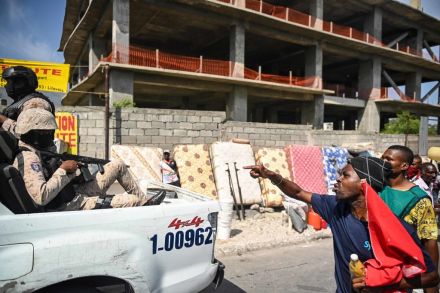
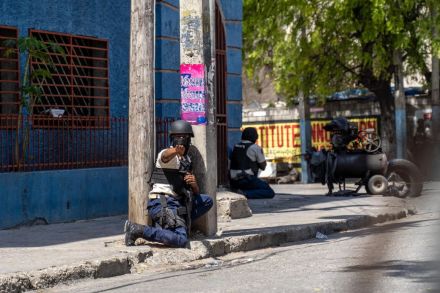
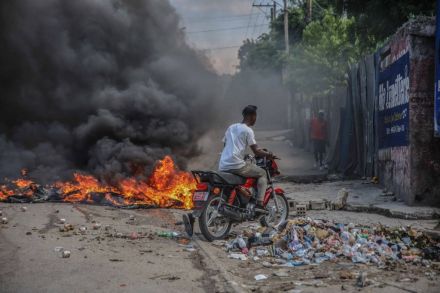
Haiti is battling an insurgency, with gangs terrorizing the citizenry and international actors fearing the beginning of a refugee crisis. You could already label the situation a low-scale civil war, but things are set to get worse, as the leading gang leader Jimmy “Barbecue” Chérizier continues to mobilize for regime change. The conflict has gotten so out of control that Haitian prime minister Ariel Henry, who the Biden administration energetically backed following the assassination of former prime minister Jovenel Moïse in 2021, announced early Tuesday that he would resign following the creation of a transitional presidential council.

Haiti is only getting more chaotic

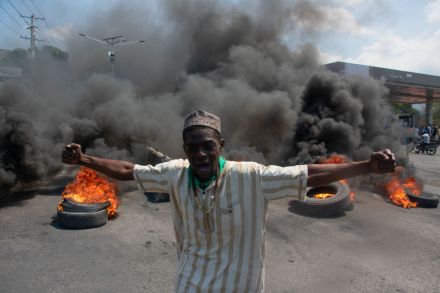
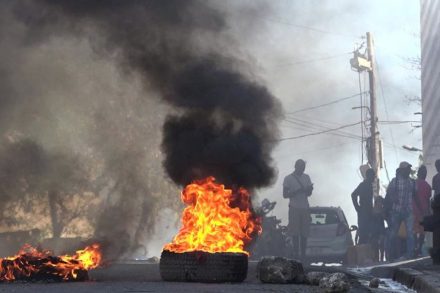
The Haitian government declared a state of emergency Sunday evening, following two prison breaks, as major gang leader Jimmy “Barbecue” Chérizier seeks to oust prime minister Ariel Henry. “Barbecue” — a nickname that originates either from having set people on fire, his mother having worked as a fried chicken vendor or both  — is a former cop who is now the head of the Revolutionary Forces of the G9 Family and Allies.

haiti

Why Haiti’s humanitarian disaster is a problem for Biden

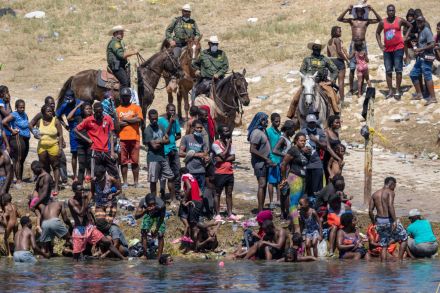
With the end of Title 42, Donald Trump’s helpful bequest to Joe Biden of a means to exclude asylum-seekers on grounds of a health emergency that has long since passed, the administration is bracing for scenes of alien hordes thronging the border. But if there’s one picture the Biden administration least wants to see again, it’s that striking image from September 2021 of a mounted border patrolman appearing to whip a cowering Haitian migrant with his reins.  Then-White House press secretary Jen Psaki reported at the time that Biden found the photo “horrific” and “horrible,” adding “that’s not who the Biden administration is.” That same month, the US deported over 6,000 Haitians, flown with shackled hands and feet to a country many of them had left years before.

haiti

Why Haiti’s problems are America’s problems

Haiti tends to not get much attention in the American press, but it should. The country has descended into a state of near-anarchy, with gangs ruling the streets and the government more or less nonfunctional. There has not been an election since 2016, and both the legislative and executive branches of government have no elected officials in office. The country has been ruled by an unelected prime minister, Ariel Henry, since the July 2021 assassination of President Jovenel Moïse. Elections are tentatively planned for this year, but the timeline is not yet set. The crisis in Haiti is a problem for the whole region, including the United States.

Jimmy Carter’s second act was better than his first

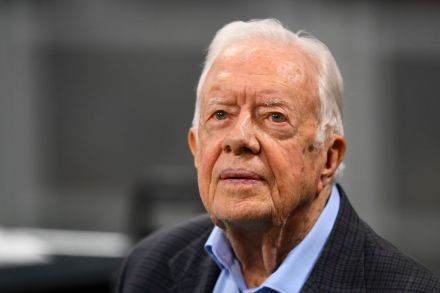
Jimmy Carter is commonly depicted as one of America’s worst presidents. His four-year tenure is said to be a mishmash of screw-ups, from high energy prices and even higher inflation to low economic growth and a very public, very embarrassing hostage rescue attempt in Iran. His signature achievement, the 1978 Camp David Accords, which codified peace and normalized diplomatic relations between Egypt and Israel, is treated as a small stretch of fresh pavement in an otherwise potholed road. Fair or not, that’s the perception.

jimmy carter

Abolishing slavery was no cause for smugness

From our UK edition

When the 13 colonies of the United States declared independence in 1776, the first country to recognise the new nation was France. Other leading European powers, such as Britain and Spain, acknowledged its arrival at the Treaty of Paris, two years after a decisive victory by American forces. Yet when Haiti asserted independence in 1804, it was ostracised by Britain, France, Spain and the US. During its first fragile years as a fledgling state, that self-declared guru of liberty Thomas Jefferson even imposed a rigid blockade while president. Washington then took more than half a century to recognise its Caribbean neighbour. The reason for such contrasting attitudes towards the first and second independent nations in the western hemisphere was simple.

America has few good options in Haiti

Haiti has never been known as a beacon of stability and tranquility. Most of its politicians are feckless, in league with criminals, or too consumed with trying to stay alive themselves. America not so long ago intervened on the island twice in 10 years — the first time in 1994, when President Clinton’s threat of an invasion compelled the junta to reverse its coup three years earlier, and the second in 2004, when the Bush administration participated in an international stabilization force after Haiti’s president Jean-Bertrand Aristide resigned. But this year has been an especially tough one for the Western Hemisphere's poorest nation.

haiti

Are we in a pandemic or not?

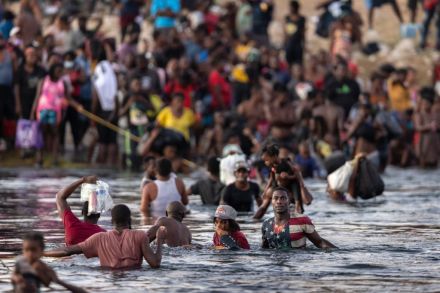
No one has done more to undermine the Biden administration’s vaccination strategy than Joe Biden. From his confusion over when to wear a mask and when not to wear a mask, to the lack of press conferences, on through the Delta variant, we arrive at Biden’s biggest optics crisis yet: 15,000 migrants flooding the southern border under a Del Rio, Texas, bridge in temperatures reaching 100 degrees. Homeland Security secretary Alejandro Mayorkas confirmed last week that his department's border officials did not test the some 12,000 to 15,000 migrants for COVID. He did say that some had fallen ill, but would not elaborate further.

pandemic

Black Caucus silent on Maxine Waters’s border comments

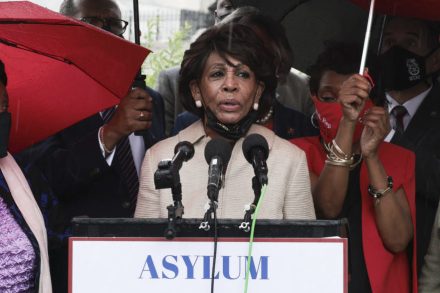
The Congressional Black Caucus did not respond when asked on Friday whether they agree with Rep. Maxine Waters’s comment that the treatment of Haitian migrants by Border Patrol agents is 'worse than what we witnessed in slavery'. 'What we witnessed takes us back hundreds of years. What we witnessed was worse than what we witnessed in slavery,' Waters said during a news conference outside the Capitol on Wednesday. 'Cowboys — with their reins, again — whipping black people, Haitians, into the water where they're scrambling and falling down when all they're trying to do is escape from violence in their country.

Rep. Maxine Waters (D-CA) (Photo by Anna Moneymaker/Getty Images)

The Biden border crisis isn’t going away

The record influx of illegal immigrants on the southern border — and the White House's refusal to refer to it as a 'crisis' — was the biggest story of the young Biden presidency at the start of the year. Even though the number of illegal crossings continued to swell, hitting over 200,000 migrants a month, the scandal practically disappeared during the summer. The media distracted Americans with fear-mongering about the new Delta variant of COVID-19 and warmongering about the undeniably disastrous withdrawal from Afghanistan. The Biden border crisis has now returned with a vengeance. This week, more than 10,000 Haitians descended on the border town of Del Rio, Texas seeking entry to the United States.

border

Why Haiti’s president was assassinated

From our UK edition

There was a time when Haiti was at the centre of the New World. It was one of the richest islands on the globe, producing cane sugar for the sweet tooth of Europe. It cultivated coffee, cotton and rice, and it produced rum. The Pearl of the Antilles, the island stood at the gateway to all the resources of South and Central America. Mexico, with all its gold, lay just beyond Haiti’s northernmost cape. Great powers of the era — France, Britain, Germany, and the United States — vied for political and military control. Now Haiti is failed state. Failed by the West after centuries of violence and resource extraction and failed by its own leaders who have also enriched themselves off the backs of their compatriots.

Toussaint Louverture: the true hero of Haiti

From our UK edition

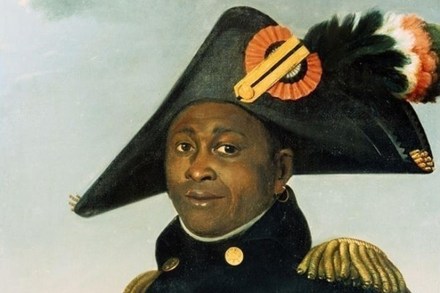
In Haiti you have to be careful which founding father you admire. The average Haitian will think first of Toussaint Louverture when talking about their island’s revolt against France in the late 18th century, and about the original idea of a full-fledged Black republic: Toussaint the stable, the intense, the military genius, courageous, careful. But for others, the real hero of the revolution is Jean-Jacques Dessalines, or Papa Dessalines, who is said to have connived with the French to remove Toussaint from power. Once France had exiled Toussaint, Dessalines turned on the French, rejecting their ‘peace’ and authority. He prosecuted the revolution to its bloody end, but without the restraint that Toussaint had often demanded from his fighters.