Hadrian

There’s a world beyond Manchester, Andy

From our UK edition

‘Things are just completely coming full circle here. For me to be here with you all in the heart of Manchester this Friday morning, at the end of a fairly big week, is just everything to me,’ said a Mr A.M. Burnham MA (Cantab.) after he had sent all his advisers up the hill to Manchester only to send them back down again. Seneca would have had something to say about that. Addressing his friend Lucilius, Seneca points out that it is no surprise that his travels have done nothing for his state of mind and goes on to quote Socrates: ‘Why do you wonder that globe-trotting does not help you, seeing that you always take yourself with you? You cannot shake off the reason that sent you on your travels.’ So what was that reason? Mr Burnham knows about Manchester already.

Murder, incest and paedophilia in imperial Rome

From our UK edition

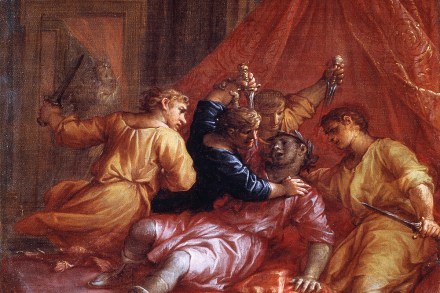
I came to Suetonius’s Lives of the Caesars as a schoolboy after watching I, Claudius, the BBC series based on Robert Graves’s pair of novels about imperial Rome. Incredibly, it’s almost half a century since this was compulsory Monday night viewing in our household. The mere sight of the snake slithering across the opening credits was enough to make my younger brother bury his head in a cushion. Graves had spiced up Suetonius’s racy accounts of violent murder, incest and poison. But, in the world before trigger-warnings, the BBC outdid him in bloodlust. The most gruesome scene in the TV drama – of Caligula doing some amateur surgery on his sister’s stomach to remove their unborn incestuous child from the womb – was pure invention by the screenwriter Jack Pulman.

What ‘pax’ meant in Rome’s golden age of imperialism

From our UK edition

The Roman emperor Domitian began life as a spare. At the end of the 1st century CE, while his brother Titus was the heir to their father Vespasian, the younger boy’s ‘sense of resentment and frustration had festered’, writes Tom Holland. ‘Rather than stay in Rome, where his lack of meaningful responsibility was inevitably felt as something raw’, Domitian moved away with a wife whom his family disliked, ‘doomed forever to be a supernumerary’, paranoid, attracting gossip, avoiding any company in which ‘innocent mention of baldness’ might be viewed as ‘mockery of his own receding hairline’. In most judgments by posterity this Prince Harry of the early empire fulfilled all this lack of early promise. Big brother Titus became emperor only briefly.