Gustav Mahler

Inside Mahler’s mind

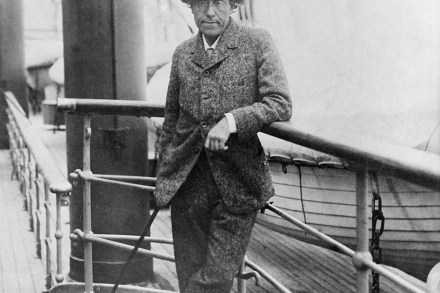
The arc of Gustav Mahler’s career was staggering. Born in 1860 to a poor Jewish family in Bohemia, through tenacity and talent he climbed to dizzying heights, nabbing the conductorship of the Vienna Hofoper, New York’s Metropolitan Opera and the New York Philharmonic. He became a celebrity, hounded by paparazzi as he zipped back and forth across the Atlantic by steamer, a forerunner of today’s globetrotting conductors with their NetJet commutes.  Yet Mahler was plagued throughout his life by nagging existential fears, serious illness and marital strife. He poured this angst into his composing. “Why have you lived?” Mahler wrote in a letter to a friend. “Why have you suffered? Is it all some huge, awful joke?

mahler

Of Mahler and mandates

On February 23, 1897 a slight Austrian eccentric walked into the parish church of St. Ansgar and St. Bernhard in Hamburg, affirmed his belief in the Holy Trinity, the one, holy, Catholic, and apostolic church, and received the sacrament of baptism. Some months later, Gustav Mahler was named principal director of the Viennese court opera — a post that would have been denied to him had he not converted from Judaism. One hundred and twenty-five years after his baptism, the Kennedy Center for the Performing Arts honored Mahler by performing his Second Symphony with legendary guest conductor Michael Tilson Thomas.

Mahler

Monumental Mahler

A kind of gigantism took hold of the European mind in the years before World War One. It shaped everything, from empires to poetry. In the confidence of new technology and new ideas, things could be attempted on a larger scale than ever before. The mental power of the age could be measured in the sheer size of the things it produced. This might be ‘Jacky’ Fisher’s Dreadnought of 1906, which set off a European arms race in huge battleships, or a great construction — the Victoria memorial in front of Buckingham Palace is nothing to the one built in Kolkata.

mahler