Guggenheim

A vibrant, partial look at Gabriele Münter

Recognition can be late in coming for many artists, but perhaps especially so for women whose originality and talents too often become overshadowed by their more famous romantic partners. Museums are often eager to put on shows making this very argument as women artists are rediscovered. Sometimes the thesis succeeds; other times, it does not. The latest of these is the case of the German artist Gabriele Münter (1877-1962), whose reputation, until recent decades, rested less on her own body of work than on her long-time connection to her mentor and lover, the Russian expressionist Wassily Kandinsky (1866-1944). The Guggenheim Museum’s exhibition, Gabriele Münter: Contours of a World, attempts to rectify the imbalance.

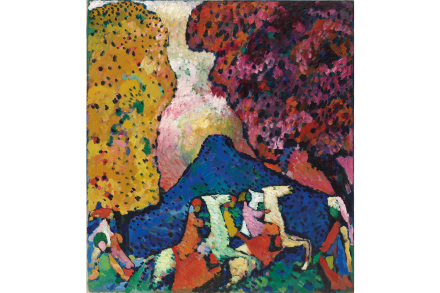
Kandinsky’s colors

The paintings of Vasily Kandinsky (1866-1944) have never looked quite as good as they do, right now, at the Solomon R. Guggenheim Museum in New York City. It’s worth mulling why that is. I mean, Kandinsky is old news, right? He’s a mainstay in the common consciousness of those who make art their livelihood, and the paintings remain on view at any institution that presumes to untangle the story of Modern art. Given the current vogue for politics and inclusivity, Kandinsky seems an unlikely figure for reappraisal: he’s a tough nut to enlist for this or that cause. As for excluding him from the canon — forget it. Dead white male though he may be, Kandinsky is immovable. Granted, his status as the first abstract painter has been called into question.

kandinsky