Grief

The importance of a good funeral

From our UK edition

In ITV’s otherwise terrible drama Finding Alice, one line struck me with particular force. A funeral director is addressing our heroine, who finds herself unexpectedly having to organise last rites for her partner. Wicker coffins are particularly popular now with relatives, says the undertaker, and I found myself nodding in strong agreement. A light woven coffin, made of pleasingly biodegradable material and topped with a simple but stylish cross of early spring flowers, was exactly what we selected for my father, to be buried in one of the last remaining — and therefore highly sought-after — spots in the churchyard.
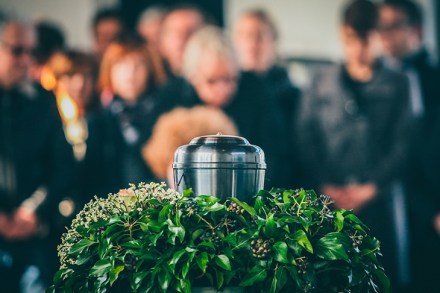
The art of mourning well

From our UK edition

Malindi, Kenya I’ve learned that mourning must be tackled ever so gently. As a younger man, when friends were killed in Africa’s wars I’d become angry and drink. When Dad died I cut adrift in Yemen for a time. Following Mum’s death a month ago, I decided to stay quietly at her home on the beach. The Kaskazi monsoon whirls through the house and white horses roar on the reef. Soon after dusk the memories appear more vivid than in daylight and these parade through my fitful sleeps until dawn, when I can at last get up and trek along the foreshore among ghost crabs and sandpipers. Each morning I box with my coach Amani, before starting work. I run the Laikipia farm by telephone and spend my days on Zoom calls to England.

‘People confuse sadness with darkness’: the complicated world of Mary Gaitskill

From our UK edition

In the early 1990s, the American novelist Mary Gaitskill suffered an abrupt awakening. ‘I lived in New York, I didn’t have a television, I didn’t listen to the radio. I didn’t even read magazines or newspapers very often. I was really too preoccupied with my own existence, which was hand to mouth a lot of the time,’ she says. ‘But when I was a little better off, I began to pay attention. I did get a TV. I did listen to the news a lot. And I was just like, holy shit. What a weird fucking world.’ What particularly astonished her, she says, is how central the fashion industry had become: ‘Models had always been glamorous figures, but it was suddenly they were the most important thing any woman could possibly aspire to be.

Today’s undergraduates are customers – and the customer is always right

From our UK edition

If you’re looking for a sign of the academic times, you could do worse than consider the image, published in newspapers recently, of Mr Chan King Wai at a solemn ceremony in China last year. There is Mr Chan, grinning stiffly but with real pride, dressed in a scholar’s cap with a gold tassel, and a red and shiny purple gown. Around his neck, a little incongruously, is a stripy Brideshead-type scarf. He looks like he has presented himself for Oxbridge theme week on RuPaul’s Drag Race. He is showing a certificate to the camera. Holding the other end of the certificate, and mustering more of a grimace than a grin, is Alan Hudson — recently retired director of programmes in leadership and public policy at Oxford’s China Centre.

She was just a damn cat – and I loved her

From our UK edition

I’ve never dug a grave before. But that was how I spent my Sunday afternoon. Three feet is awfully deep to dig, and three feet is how deep you have to go if you don’t want foxes to turn a little tragedy into a horror-comedy. I laboured till the head of the spade went out of sight. My children were eating burgers from the barbecue a few feet away, and I worried that they might guess what I was up to. Thank God for the heroic incuriosity of children. I told the youngest something about planting a tree and it seemed to satisfy him. The truth would have been ‘planting the family cat after we put her down tomorrow’. I worried the hole wasn’t big enough. But then it struck me that it was just about the diameter of a cat door and I felt my throat catch.