Great britain

Have you ever heard of the St. Brice’s Day Massacre?

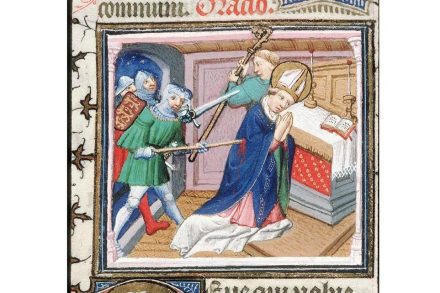
The St. Brice’s Day Massacre? I must admit I hadn’t heard of this “most just extermination” of Danes in Oxford at the instigation of King Aethelred the Unready in 1002, perhaps because the teaching of history in Britain tends to kick off in 1066. You certainly don’t think of Oxford as a place that pioneered techniques of ethnic cleansing. Crypt is a collection of seven essays that unearth details about how certain people lived and died in the past. If you didn’t already know Alice Roberts’s background as an anatomist and biological anthropologist, you’d have a good chance of deducing it from this book.
Roberts

How Wilfred Owen became a poet

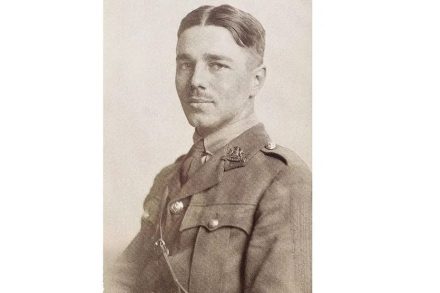
Here is the opening of a sonnet written by Wilfred Owen in the spring of 1911: “Three colors have I known the Deep to wear;/ ’Tis well today that Purple grandeurs gloom.” Owen was eighteen and had just been on a pilgrimage to Teignmouth in England, where his hero John Keats had once stayed. The kindest thing to say about this poem is that it is heavy with the influence of Keats. Six years later, in a seaside hotel requisitioned by the army and waiting to be sent back to the Western Front, he begins a poem like this: “Sit on the bed. I’m blind, and three parts shell.” This looks so simple. The monosyllables carry the meter without fuss; “shell” here means both munitions and protection.

Owen

Prince Harry’s hotel hideout

A lovely posh woman once told me that should things ever become too much in my life, there was a simple solution: “Just book yourself into a five-star hotel and forget about it. Works every time.” When Prince Harry arrived back in Britain last week to take on the British press in court, rumor has it that he did just that. Instead of spending the night at his previous home, Frogmore Cottage, or one of the many rooms at Buckingham Palace or Clarence House, he stayed at Soho House, the private members' club and hotel. It would not be surprising. Harry is accustomed to a luxurious life and some of these castles are getting far too shabby nowadays. There’s also the fact Meghan and Harry’s first ever date was at the Soho House on 76 Dean Street, London.

prince harry hotel

The brilliance of British civilization

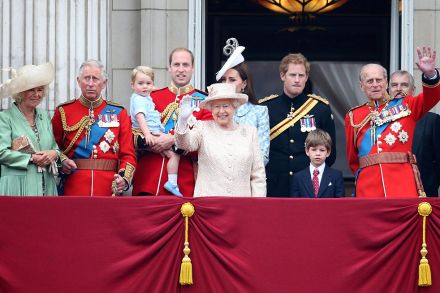
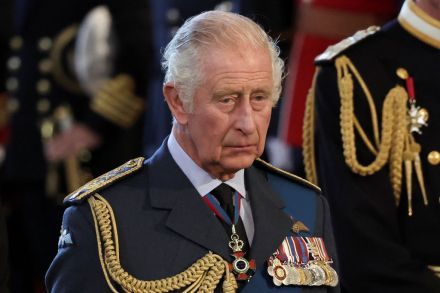
The day after the death of Queen Elizabeth II, I received a note from a friend in the Midwest asking whether I thought the British monarchy would survive her by more than a decade. I replied that of all British institutions the monarchy is the strongest — and that I expect it to last as long as Britain herself. Everything I witnessed in the week after the Queen died seems to me to justify this judgment, in particular the conduct of King Charles III, about whom my friend was skeptical. The events also confirmed my lifelong opinion that British civilization is the finest the world has ever seen; so fine, indeed, that I suspect that the citizens of most countries today are unable to appreciate the nature of its greatness, and how it came to be great; Americans, perhaps, especially.

british

What Americans can learn from the monarchy

September 8, 2022 will go down in history as the date we lost Her Majesty Elizabeth II, Queen of the United Kingdom of Great Britain and Northern Ireland, Canada, Australia, New Zealand, and of her other realms and territories, Head of the Commonwealth, Defender of the Faith. Her son Charles, Prince of Wales, has now succeeded her as King Charles III. For the first time in this writer’s life, the anthem is to be sung as "God Save the King." To write about the accomplishments of the sole public figure remaining from one’s earliest memories is a daunting task. The Queen in her turn inherited an institution that is difficult for Americans — especially of a conservative stripe — to understand.

Is Britain really ‘on the brink?’

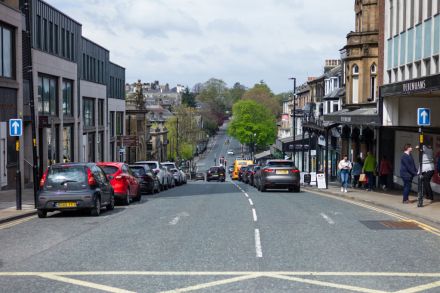
There’s a macabre joke in Britain these days that my friends and family also play. We compete to see who has had to wait the longest for medical treatment. It starts relatively innocuously. People talk of the ordinary things: like having to wait days to get an appointment with a doctor. They call up in the morning at 8 a.m., only to be told that all of the slots are gone. Best of luck tomorrow. Then someone will say that they’re waiting for minor surgery. Perhaps a small corrective procedure. It was put off first for the pandemic, and now is lost amid a sea of backlogged work. They wonder if someone has lost their details in the slush. Normally I win, although not always. My old general practitioner retired before the pandemic, and his practice was transferred over to another doctor.

More fake news on Brexit from the New York Times

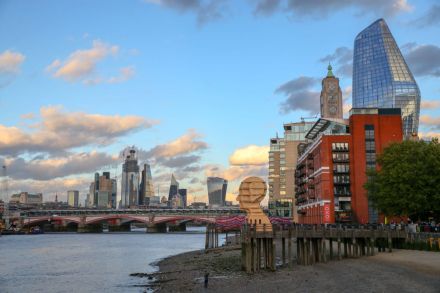
I happen to be in the Old Country this week, and am glad to report that everything in England is just as I left it. It’s raining constantly, except when it isn’t. No one speaks English in London, except the American tourists. And everyone, regardless of whether they want Britain to stay in the European Union or leave that undemocratic shambles of a superstate, wants to get Brexit over and done with, so they can get back to traditional pursuits like soccer, gardening and smoking crack. Imagine my surprise this morning as, scrolling through today’s New York Times as I mopped up the grease from my cooked breakfast, I saw the headline ‘British Hoarders Stock Up on Supplies, Preparing for Brexit’.

britain london brexit new york times