Great American Novel

Louis C.K. fails to follow in Faulkner’s footsteps

The Great American Novel is a holy obsession – the Everest every writer dreams of summiting. For most, that dream begins and ends with William Faulkner, whose winding sentences and sunburned Southern landscapes birthed prose that seemed to breathe. His words marched; crookedly, yes, but always with purpose. Louis C.K., a would-be Faulkner disciple, trudges into the same swamp in Ingram, minus the map, the bearings and any sense of control. What was presumably intended to echo the Mississippian’s hypnotic disarray becomes instead a masterclass in incoherence. The story, told in long and sweaty first-person narration, follows a boy wandering through a Texan landscape of mud, hunger and half-formed memories. The intention is noble; the execution is catastrophic.

louis ck

A lack of national identity has killed off the Great American Novel

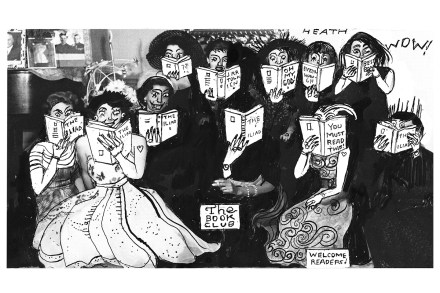
Is there hope for literature in America this century? The forecast looks grim. One walk through the literary fiction section at a bookstore is a testament to the art form’s cultural bankruptcy. Just about every other book on the new release table is a treatise on your racism masquerading as a tale of collective uplift. Fine, if you want to expiate your sins of privilege – but all in all, a snoozefest. Novels held a central place in America as a vital cultural force; novelists were worshipped as electrifying sages Same goes for most of the books on the New York Times list of the 100 best books of the century so far. The subjects of race, gender and oppression generally dominate.

The passage of Ragtime

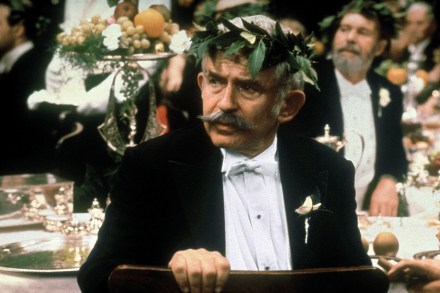
Back in the winter of 1980, a young Martin Amis found himself on the London set of Miloš Forman’s movie Ragtime. The plan was to inspect what Norman Mailer, whom Amis was profiling for the Observer newspaper, was doing with the part of Stanford White, the real-life architect murdered by the deranged husband of New York chorus girl Evelyn Nesbit. Impressed by the lavish million-dollar backdrop, Amis looked on as the nattily dressed and neatly bewigged author of The Executioner’s Song, accompanied by his sixth wife, Norris, made his way into a reconstruction of Madison Square Garden.

Ragtime

How F. Scott Fitzgerald anticipated our modern age

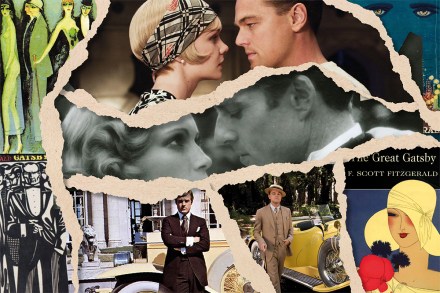
It has never been easier, or less rewarding, to be a Great Gatsby bore. As the book that is frequently, and speciously, cited as the Great American Novel — perhaps because, at around 180 pages, people have bothered to read it — turns 100 this month, it has become the byword for a certain kind of middlebrow literary appreciation. Even people who are barely aware of the novel know certain images and lines, such as the omnipresent lighthouse, “So we beat on, boats against the current, borne back ceaselessly into the past” and the whole Ralph Lauren-esque visual aesthetic that F. Scott Fitzgerald appeared to anticipate. The novel, published in April 1925, has achieved the impossible by breaking free of the page and reverberating across the world in a kind of endless meta-narrative.

Gatsby

Blood Meridian is Cormac McCarthy’s masterpiece

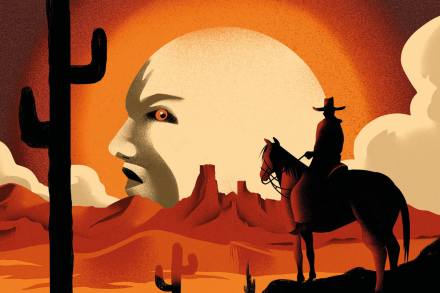
In June, Cormac McCarthy — our greatest living writer — slipped from this world to the next and joined his forebears Melville, Twain, Faulkner and Flannery O’Connor in the American literary pantheon. By noon the following day, Blood Meridian, or The Evening Redness in the West, his magnum opus, had reached number eight on Amazon’s Top 100 Books, assuring that, for the first time, it would hit the New York Times Paperback Bestseller List; a curious development for a novel that, when it was first published in 1985, failed to sell its initial print run of 1,500 and was quickly remaindered.

blood meridian