Government

How Cameron should structure his national security team

From our UK edition

Reports that the Tories are thinking about appointing a Minister for Afghanistan raise the broader question of how they should structure their national security team. Though the Tories bang on about their idea of setting up a National Security Council, there has been precious little detail given  of how it would work, how it would be different than the Foreign and Defence Policy Secretariat in the Cabinet Office and who would staff it. The National Security Council should be led by a minister, sitting in either the Commons or the Lords, who would also act as the National Security Adviser to the Prime Minister, supported by a National Security Director, from the ranks of the Civil Service.


What Dougie didn’t say

From our UK edition

The New Statesman’s interview with Douglas Alexander is making waves for Alexander’s admission that he was briefed against by Brown’s inner circle following the election that never was. The treatment of Alexander, a man who had been a Brown loyalist for his entire political career and was only following instructions, was particularly brutal. But what strikes me about the interview is how Alexander, who is still Labour’s general election coordinator, did not produce a single positive domestic policy argument for re-electing Labour that the New Statesman thought was worth printing. Indeed, when the interview turns to British politics, all we hear from Alexander is negative slogans about the Tories: they are “untested” and “outside the mainstream.

AnotherĀ goat goes

From our UK edition

News is breaking that the Health Minister Lord Darzi is leaving the government. By my count, that means Lord West is the ony one of Gordon's goats still in post.

Defending his own premiership

From our UK edition

The Times's story of how Bob Ainsworth came to be Defence Secretary is equal parts extraordinary and disheartening.  Here are the key passages: "Mr Ainsworth’s predecessor, John Hutton, had indicated to Mr Brown in mid-May that he was thinking of leaving the Government. Mr Hutton, recently remarried, had a compelling family reason for wanting to step down. But Mr Brown, preoccupied with the elections and the possibility of a leadership challenge, appears to have spent little time thinking about the vacancy. It wasn’t until around noon the day after the polls that he began to focus on who should oversee Britain’s military and its engagement in Afghanistan.

Continuing the immigration debate

From our UK edition

My post on immigration the other week was picked up by BBC World Service, who invited me to discuss it with Lord Maurice Peston (podcast here). I regard it as one of the most important yet least discussed issues in Britain right now, and my original also raised some typically robust comments and critiques from CoffeeHousers. My point is that Britain has a dangerously dysfunctional labour market, one so flawed that when the economy expands it sucks in foreign workers rather than tackling our unemployment. I also revealed that all net job creation in the private sector can be accounted for by immigration. Anyway, allow me to respond to some of the points raised: 1. THE BORIS FACTOR.

So who’s really “playing politics” over troop numbers?

From our UK edition

Just when you thought Brown's government couldn't sink any lower, you go and read the Sunday Times's lead story today and the comments it contains from "senior Labour figures", including a minister.  Here are the first few paragraphs: "Senior Labour figures accused the head of the army last night of playing politics as he said that there were too few troops and helicopters in the Afghan war zone. One minister expressed fury that General Sir Richard Dannatt, the chief of the general staff, had attended a private dinner with Tory MPs and suggested an extra 2,000 troops were needed in Helmand province. The general’s remarks put him at odds with the official government line, that the 9,000 British troops already in Afghanistan are sufficient to cope with the offensive.

Good lord

From our UK edition

Earlier this week, Lord Malloch Brown announced he's resigning his brief as Africa Minister in the Foreign Office. I'm sure this will cause some rejoicing, including among my Coffee House colleagues. It was, after all, the Spectator that went to town on the former UN staffer's grace-and-favour appartment in Admiralty Arch and the other niceties offered to him by the Prime Minister a few years ago. However, I have always found Malloch Brown professional, courteous, and insightful. He may have struggled to find his proper role immediately upon appointment - foolishly describing himself as a Richelieu-type character to David Milliband's king - and sometimes allowed his sense of self-worth get the better of him, but he was miles ahead of any other Foreign Office minister.

Smith’s claims call Brown’s political judgement into question

From our UK edition

Ok, let's get the hard, grim facts out of the way first: Jacqui Smith was an ineffective Home Secretary whose expense claims were dubious, to say the least, and who rightly lost her job in government.  But - having said that - it's hard not to feel slightly sorry for her as she discusses the embarrassment caused by her husband's porn rentals in an interview with the Guardian today.  The whole piece is a remarkably candid exchange: she also discusses how she "did wrong" with her expenses, and how she'd "definitely" be voted out "if the general election was tomorrow".  But this passage struck me more than any other:      "[Smith] insists she wasn't forced out - that Brown asked her to stay when she first said she wanted out.

Darling speaks his mind

From our UK edition

You've got to hand it to Alistair Darling: he really does seem to be making the most of his post-reshuffle security.  His interview with the Telegraph's Ben Brogan today is a case in point.  Once again, he goes against the Brown/Mandelson claim that there won't be a spending review before the next election.  But it's this passage which jumped out at me: "In another departure from Mr Brown, he even talks about reversing tax increases, including the planned rise in the top rate to 50p on those earning more than £150,000. 'Looking into the future I would like to be able to reduce tax. Raising the top rate is something I didn’t want to do.'" Brown will be livid.  Just imagine: a Chancellor who speaks against the authority of Number 10.

The extent of Johnson’s loyalty?

From our UK edition

Kevin Maguire's Commons Confidential column in the latest New Statesman contains this intriguing little snippet: "Home Secretary Alan Johnson was a picture of innocence during the plot to oust Brown and replace him with a former postie with the initials A J. Not so his entourage. It has come to the attention of No 10 that one of his team offered a job in Downing Street to a hackette." After his article for the Indy earlier this week - and his fizzy performance in Manchester yesterday (covered by John Rentoul as part of his AJ4PM series) - you suspect Johnson is being a little more active than the Dear Leader would like.

There could be a pay freeze, after all

From our UK edition

Over at the FT's Westminster blog, Jim Pickard picks up on an important comment from Stephen Timms, the Treasury minister, speaking at a committee meeting this morning.  Timms suggests that Treasury hasn't ruled out a public sector pay freeze, as recommended by the Audit Commission's Steve Bundred.  Here are the minister's words:   “It’s certain the case that our pay policy needs to reflect the wider economic circumstances ... we will be deciding on pay policy over the next few weeks, the policy has got to be fair to people who work in the public sector just as we have to be fair to everybody else. The suggestion by Steve Bundred has made is certainly one we will reflect on but the details on that will be made over the next few weeks.

The consequences of Johnson’s cowardice

From our UK edition

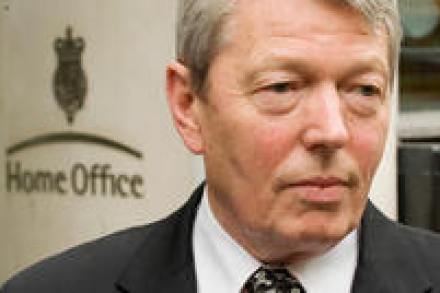
There was great excitement here in Old Queen Street when Lord Carlile, the Government’s own adviser on anti-terror law, announced that Alan Johnson can and should help poor Gary McKinnon. McKinnon is the computer nerd who hacked into the Pentagon looking for evidence of UFOs, but who is soon to be extradited and tried as a terrorist in America. Lord Carlile – not usually a dovish man – thinks a great injustice is being done (Mckinnon might get 70 years in a ‘supermax’ prison) and has said that the Home Secretary should prevent it. So we called the Home Office to find out when Alan Johnson was planning to act. “The Home Secretary can do nothing. This is a matter for the judicial review,” said his spokesman. So why does Lord Carlile think he can?

Rules versus discretion

From our UK edition

Today's White Paper on financial regulation avoids introducing some unnecessary regulatory changes at the expense of failing to introduce some necessary ones.  In particular, it fails to recognise the abject failure of Gordon Brown's "tripartite" framework, in which prudential supervision of the banks was taken from the Bank of England and given to the FSA. Prudential supervision is the proper task of the central bank, for only if it has oversight of banks can the central bank decide whether they should receive last resort lending when they need it.  Without prudential oversight, the Northern Rock debacle is the likely result, and the fact that we are still debating this the best part of two years into the credit crunch is a sorry indictment of UK policymaking in this period.

Harman’s debt calculator is broken

From our UK edition

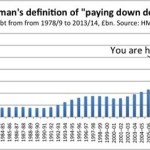
I know Harriet Harman is not supposed to be taken seriously, so I’m prepared to believe that she just struggles with numbers and didn’t knowingly mislead MPs today. But it’s worth correcting the record on one crucial point. “We have paid down debt,” she says. Actually, if you take the last Budget into account – it ranges to 2013/14 – decisions taken by her government will have increased national debt by more than every government since the Norman Conquest. Put together. If this is her definition of paying down debt, I’d hate to see her overdraft. Don’t they teach them anything in St Paul’s?

How important were all those initiatives the government kept announcing?

From our UK edition

There was a time when the government seemed to be announcing new measures to get the economy and the banking sector in particular moving again on an almost daily basis. Today, the Wall Street Journal has done a rather good audit of these measures. For instance, in January “the British government created a guarantee program meant to revive the dormant market for asset-backed securities. The program aims to spur purchases of banks' asset-back securities, or bundled consumer loans, by guaranteeing them for buyers. The guarantees were made available in April, but since then, none of the major U.K. banks has issued a security with such a guarantee.” Also, only 13 firms have joined in the government’s £5 billion trade insurance programme.

Brown puts on his gloomy face for the world stage

From our UK edition

How peculiar.  After all the economic optimism coming out of government recently, all the talk of recovery by the end of the year, Brown's going to warn that the worst of the recession may be yet to come in his meetings with G8 leaders this week.  The Times has the full story here, but this snippet from the Dear Leader's address in France today gives you the idea: "If we do not take the necessary action now to strengthen the world economy and put in place the conditions for sustainable world growth, we will be confronted with avoidable unemployment for years to come." So does this mean he's losing faith in the "green shoots" strategy, by which a grateful nation will hail him for leading the UK out of recession?  No, I rather suspect not.

More blows against Brown’s spending narrative

From our UK edition

It's public spending time again, dear CoffeeHousers, with a couple of eye-catching articles in  today's papers.  The first is a comment piece by Steve Bundred, chief exec of the Audit Commission, on the necessity for extensive spending cuts.  If you recall, Bundred claimed a few days ago that health and education shouldn't be ring-fenced from cuts, and here he repeats the point, adding a snappy conclusion: "So don't believe the shroud wavers who tell you grannies will die and children starve if spending is cut. They won't. Cuts are inevitable, and perfectly manageable. We should insist on a frank and intelligent debate about how and where they will fall, which will then enable everyone to make more sensible plans.

Gary McKinnon is a victim of injustice

From our UK edition

Well done to the Mail for their continued support for Gary McKinnon, whose case featured on their front page a couple of days ago. It was a bold decision, but absolutely the right thing to do. Unless Alan Johnson steps in at the last minute, an awful injustice is about to take place. Gary McKinnon is the 43-year-old from Hertfordshire who hacked into US military computers, looking for evidence of UFOs. No-one is denying that he has committed a crime ­ least of all Gary who made a full confession to the police. And, yes, Gary deserves to be punished - a light sentence or community service would be best. Instead - and although he could easily be tried in this country - he is to be extradited to the US.

Brown’s U-turns analysed

From our UK edition

Steve Richards’ column in today’s Independent - analysing Brown’s u-turns on the Post Office, 42 days and the abolition of 10p tax rate - is superb. As Steve notes, all these u-turns have in common the question of where does Brown stand in relation to Blairism; is he break from it or its continuation? Steve’s conclusion sums this up brilliantly: “The U-turns show that Brown has never acquired a clear voice of his own as Prime Minister and has failed to break away from his complicated past. Perhaps an early election would have liberated him from the manacles. Instead, we are left with a trail of major reversals that convey the insecure mindset of a Prime Minister trying too hard to win a big tent of support when virtually the entire campsite has moved on.

Another one for Miliband’s collection of cock-ups

From our UK edition

Great spot by Paul Waugh, who's got evidence of the latest Miliband cock-up over at his blog.  Basically, Miliband told the Commons earlier this week that British aid to India would be decreased and eventually stopped because "India is becoming a richer country".  But now he's had to sneak out a complete retraction, which even makes reference to India's "continuing levels of poverty": "We have no plans to scale down the provision of aid to India, nor to stop the provision of aid by 2011.  Our aid expenditure under current spending plans amounts to £285m in 2008/09, £275m in 2009/10, and £280m in 2010/11. These figures reflect India's continuing levels of poverty, with over 450 million Indians living on less than $1.