Government

Thank God they’re not running a war

From our UK edition

Last week, defence maestro Kevan Jones launched his master-strategy to smear General Sir Richard Dannatt. It was ingenious. An FOI request would reveal the General to be a spendthrift, abusing taxpayers' generosity by lavishing their money on his grace and favour accommodation and on raucous parties for his army mates. To borrow a phrase, there was just one small flaw in the plan: it was rubbish. The Mail reveals that General Dannatt’s grace and favour apartment is a stable block, not a palace, and that he pays tax on it because he views it as a perk. His other claims are modest. Audiciously, Sir Richard secured £19,270.77p in expenses between 2005 and 2009.


The stench of realpolitik

From our UK edition

Suggesting that al-Megrahi’s release was the result of a deal being struck to protect commercial interests should be offensive, but there are a number of questions the government need to answer. First, was al-Megrahi’s transfer a condition of the Blair-Gadaffi Deal in the Desert? On Friday, Saif al-Islam said: “In all commercial contracts for oil and gas with Britain, Megrahi was always on the negotiating table”. The Foreign Office deny this and yesterday Lord Mandelson said: “The issue of the prisoner’s release is quite separate from the general matter of our relations and indeed the prisoner’s release has not been influenced in any way by the British government.

Another Sunday, another set of damaging rumours for Brown

From our UK edition

Brace yourselves, it's leadership speculation time again.  A story in the Mail on Sunday alleges that Alistair Darling has been attacking Brown in private - "I am trying to talk sense into that man..." - before adding this: "Last night there were claims that backers of Home Secretary Alan Johnson - widely seen as the stop-gap leader if Mr Brown quits before the General Election - were secretly canvassing 'non-aligned' Labour MPs not closely linked to any potential successor. Sports Minister Gerry Sutcliffe, who ran Mr Johnson's unsuccessful Labour deputy leadership bid in 2007, was accused of quietly taking names." Whether true or no', these rumblings tell you everything you need to know about Brown's beleagured premiership.

The Tories have been put on the back foot, but don’t expect permanent damage

From our UK edition

There's plenty to be sceptical about with this #welovetheNHS Twitter campaign - not least the manner in which it's falsely polarising the debate into "lovers" or "haters", given that 140-character "tweets" hardly allow for nuanced arguments.  But, as Fraser pointed out last night, there's little doubting that it's a spot of good luck for Gordon Brown: a campaign by the left, for the left, which he managed to seize on with uncharacteristic speed.   Indeed, Brown beat David Cameron to the punch for perhaps the first time in months, and has put the Tory leader on the defensive.  Hence Cameron's blog post last night, which set out his own #reasonsforlovingtheNHSbutstillwantingittoimprove, so to speak.

Cameron plans to cut ministers’ pay

From our UK edition

Poor old Alan Duncan might have to survive on emergency rations. The Guardian reports that David Cameron is planning to cut ministerial pay if the Tories win the next election. Here are the details: ‘David Cameron is planning to make his ministers take significant salary cuts if he forms the next government, senior sources have told the Guardian. The Conservative party high command have calculated that if they are to push through cuts in public services, their politicians have to show they are prepared to "take a financial hit". A pay cut would also help the party as it attempts to renegotiate public sector pay deals. One senior Tory said a cut as high as 25% was being discussed, which would cost figures such as William Hague and George Osborne nearly £20,000 a year.

The NHS isn’t free

From our UK edition

If we are going to have a sensible debate about the NHS in this country, we need to deal with the myth that the NHS is free. Yes, the NHS is free at the point of use, but we all pay for it through taxation. I suspect that slightly fewer people would still ‘love the NHS’ if they knew precisely how much they were contributing towards its costs through all the taxes that they pay. I say this as someone who has no desire to import the US system. Before I went to live in the States, I was quite a fan of the US healthcare system. But having lived there for four years, I became more sceptical of it. I was lucky enough to work for a company that offered incredibly generous health insurance, but the system was incredibly bureaucratic.

Finally, a stroke of good luck for Gordon Brown

From our UK edition

This UK-US spat over the NHS has spilled over into a snowballing twitter campaign, with comments flooding in from Brits. Nigel Lawson said the NHS was like a religion to Britain, and many have come to defend the faith. Brown has lent his support to the campaign, and it's perfect for him. It allows him to play the patriotic card, telling those yanks (especially - boo - the conservative ones who watch Fox news, and their neocon supporters like Class Enemy Hannan) where to shove it. He also gives President Obama - he of Obama Beach fame - some political support. Finally, it allows him to claim that the NHS is somehow a great success - and of course it was a great Labour creation that the wicked Tories would ruin etc etc.

The next government will have to help this lost generation

From our UK edition

It's noteworthy enough when David Blanchflower - a member of the Bank of England's MPC until May this year - says that the government "isn't doing enough" to stem the unemployment crisis, as he does in an article for today's Guardian.  But his more specific points about the "lost generation" of unemployed young people are also worth highlighting. As Fraser blogged yesterday, this recession is taking a particular toll on those aged under 25.  Partially, this is down to school and university leavers being unable to find work.  But, as Blachflower points out, there's another effect at play - young people with jobs are the first in line to lose them, as firms make redundancies: "A policy of last in, first out is also operating.

The race to recovery is looking bad for Brown

From our UK edition

Oh dear.  Another blow to Brown's economic credibility this morning, as France and Germany announce that they've come out of recession already.  Both economies grew by 0.3 percent in the second quarter of the year - in contrast to the UK economy, which shrank by 0.8 percent. Whatever the factors behind it, this spells trouble for Brown.  A poor performance in the race to recovery not only calls his management of the economy into question, but it also undermines his anticipated "green shoots strategy".  The PM will find it hard to brag about our "green shoots" when other countries already have full-grown plants.

The truth behind Mandy’s “half-a-million jobs” claim

From our UK edition

Anyone listening to Lord Mandelson’s claim this morning that the Brown stimulus saved “at least” half a million jobs would have smelt a large, whiskered rat. The Treasury has tonight told The Telegraph that the 500,000 figure was a maximum estimate, not a minimum as Mandy claimed. Your baristas here at Coffee House have asked the Treasury to show us their study – not available, it seems. So we have submitted a Freedom of Information request for it. While we all hold our breath, it’s worth looking at this claim in more detail because it is a Brownie we are highly likely to hear again.

Osborne should avoid Brown-style rhetoric on cuts

From our UK edition

Right, I know I keep banging on about Osborne's speech, but - Alan Duncan's loose lips aside - it's certainly the topic du jour in Westminster.  Yesterday evening, I noted a couple of qualms I had with what I thought was - on the whole - an important and effective address.  Today, I've got another concern to add to the pile; one prompted by Osborne's article in the Times. The headline to that article reads thus: "The new dividing line: radical reform or cuts".  And the sub-head runs: "Sceptics argue that reform is a luxury we cannot afford.  Without it, money for schools and health will inevitably be slashed."  Now, there are some major problems with that argument.

Brown’s children

From our UK edition

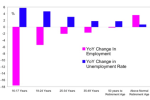
Why is this recession so cruel to the young? The unemployment figures - now up to 2.44 million - are bad enough. It's the largest single quarterly drop since data began in 1971. But look deeper and there's a striking disparity amongst the age groups. The under-18s – school leavers – are hit the most, with their employment numbers down 17% year-on-year. The 18-24 year olds are next worst hit. But there is actually a rise in pension-aged people returning to work. The bottom line: unemployment amongst the under-25s is a third higher than when Labour came to power. CoffeeHousers may remember how full of pious anger Gordon Brown was during the last recession, saying that youth unemployment was a particular outrage, and he called them "Major's children".

When Mandelson can’t launch a convincing counterattack, you know things are bad for Labour

From our UK edition

Whatever you might think of George Osborne's speech on progressive politics yesterday - and I have some doubts of my own - it's hard to take Peter Mandelson's Guardian article about it particularly seriously.  As Tim Montgomerie says over at ConservativeHome, there's little in there beyond personal attacks on Osborne and a caricature of the Tory position, all underpinned by the insistent claim that progressive ends can only be delivered by Labour means.  For someone who lambasted the media for not "not talking about policy" in his interview with the Guardian on Monday, it's a rather poor show. But, worst of all for Labour, is that Mandy's position is confused and inconsistent.

Renaissance of the Prince

From our UK edition

‘Kindly pussycat’? ‘Minister for fun’? ‘A benign uncle?’ This was how Lord Mandelson described himself in that pantomime of an interview with the Guardian earlier this week. But this morning, the Prince of Darkness returned. Perhaps running the government for three days maligned the would-be Widow Twanky of Monday, but it is more likely that Mandy couldn’t resist crossing swords with George Osborne again. He launches a scathing personal and political attack on Osborne and his progressive agenda in today’s Guardian. Here are the key sections: 'To be a progressive is to believe that we can make a better society and improve the conditions of individual lives by acting together...It is to believe in the necessity and value of social justice.

Supplementary notes on Osborne’s progressive speech

From our UK edition

Earlier, I wrote that Osborne's speech today seemed to be a significant moment for Project Cameron.  Having attended the Demos event a few hours ago, I still think that's the case.  Sure, there wasn't anything particularly new in it - and the delivery didn't quite zing - but its central point that Brown's approach to the public finances is regressive, while spending cuts and the right reforms could deliver better services for all, is a necessary refinement of the Tory message.  Come election time, Brown is going to deploy all kinds of attacks on the "nasty Tories" and their "cuts in frontline services", so it's important for Cameron & Co. that they counter this in advance.

Mandy’s class war avoids the real problems

From our UK edition

I don’t for a minute believe that Mandelson believes this class war nonsense, brilliantly rubbished by Melanie Phillips today. His decision to reprise the “posh unis don’t let in poor kids” theme is a more a sign that even someone as horribly powerful as Mandy feels the need to kowtow to a certain element of the Labour Party. The Sutton Trust is absolutely correct to point to social segregation as being one of the biggest problems in Britain today – but the problem lies with the schools, not the universities. The suggestion that snobbish admissions tutors are somehow to blame does the working class no favours by deflecting attention from the real problem.

Is Brown starting to accept defeat?

From our UK edition

The FT report on how Labour MPs aren't putting themselves forward to be parliamentary private secretaries - or "ministerial bag-carriers", as they're known around Westminster - says a lot about the party's confidence in Gordon Brown.  After all, as one source tells the newspaper: "Why would you bother if you know that there is no chance of becoming a minister in the next government?" But it's this snippet from the FT's analysis which could be more noteworthy: "One Downing Street insider said the prime minister was more relaxed because he now realised that he was certain to lose the next election and was powerless to defy political gravity." Sure, another insider goes on to deny the same in the following sentence.

Why Mandelson isn’t deputy PM

From our UK edition

As the country prepares for Peter Mandelson’s week in charge, The Mail on Sunday reports that the Cabinet Secretary, Sir Gus O’Donnell, put the kybosh on him acquiring the title of Deputy Prime Minister. O’Donnell may well have said that it was inappropriate for a peer to be deputy PM but I would have thought that Harriet Harman would also have objected. As the elected deputy leader of the Labour party, I can’t imagine she would have taken kindly to somebody else grabbing the title of deputy PM which Brown had conspicuously failed to offer her. Given all of Brown’s women trouble at the time of the mid-plot reshuffle, I doubt that he could have risked angering Harman.

20 percent Vat is likely whoever wins the next election

From our UK edition

I must admit that I thought that both the government and the Tories were committed to raising Vat to 20 percent after the next election. My recollection was that Vat rising to 20 percent was part of the PBR package that saw Vat temporarily cut to 15 percent and that the Tories had not opposed this part of the package. But having checked up, I see that this was not what was announced but merely what the Treasury was advocating internally. The Tories might be denying the story that they will raise Vat to 20 percent but I would be very surprised if they did not end up doing so. Vat is an easy tax to collect and hard to avoid so as the Tories look for an instant way to show the markets they are serious about dealing with the national debt, Vat is the obvious tax to increase.