Government waste

The lesson of Orbán: Trump must tackle corruption

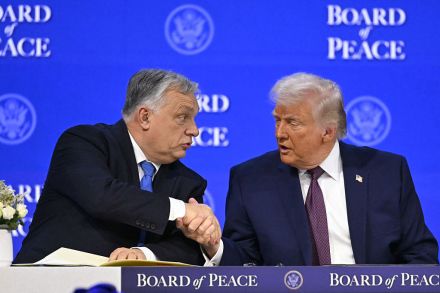
The landslide defeat of Hungarian Prime Minister Viktor Orbán carries lessons across the ocean for Donald Trump and both MAGA and non-MAGA Republicans. Trump pulled out all the stops for his ally, sending Vice President J.D. Vance to Hungary for a three-day endorsement tour and promising the day before the vote to “use the full Economic Might of the United States to strengthen Hungary’s Economy” if Orbán won. Well, he didn’t, and the Democrats are in full gloat mode after Orbán’s Fidesz party fell from 135 seats in parliament down to just 55. Senate Democratic Leader Chuck Schumer quickly made a comparison to the US, writing on X: “Pay attention, Donald Trump. Wannabe dictators wear out their welcome. November 2026 can’t come soon enough.
Trump Orban

Cut the bureaucracy — and the chainsaw

I retain a requisite amount of contempt for government-run institutions and the bureaucrats with whom I have to deal on occasion. Every interaction with them makes me want to pull my hair out. Government websites function as if they haven’t been updated since dial-up. I would rather go to the dentist than the DMV. It’s as if each employee has been specially hand-picked to make you hate the government more. These are features of the system, not bugs. Take the TSA, the organization which seems to derive the most joy out of making things difficult for parents flying with toddlers. In an effort to thwart these desperate adults chaperoning tiny terrorists, the agency will inexplicably change up the protocol for strollers every single time.

government

How the SNP wasted £110 million on PR and spin

From our UK edition

No country in the UK receives more public money per head than Scotland. An extra £2,200 is spent on every person living there than in England – and £1,900 more than the UK average. Yet public services north of the border are falling apart. Take education. Scotland spends more per pupil than anywhere else – £1,848 per head compared with £1,543 in England. Yet standards have plummeted while those in England have improved. The latest Pisa rankings show Scottish pupils to be a year behind their English counterparts, despite a testing bias in favour of Scottish children. When it comes to economic affairs, some £2,228 per head is spent on growth initiatives, welfare and subsidy in Scotland, compared with £1,805 in England.

Is Britain funding organisations that wish us harm?

From our UK edition

Frivolous state funding isn’t only going to chancers, the plain lucky and the devious, but also to those who would see Britain – and the West – come to harm. Just over a year ago, the National Secular Society (NSS) compiled a dossier for the Charity Commission which called for 44 charities that had ‘fuelled anti-Semitism and division’ and shown support for ‘Hamas and other anti-western actors’ to be investigated. In every case these organisations have kept their charitable status. The charities in the dossier have the stated purpose of ‘the advancement of religion for the public benefit’. In the NSS’s view, this is being used as cover for political agendas and extremist views – while the groups receive tax breaks and state funding.

The Spectator fights back against government excess

From our UK edition

Britons used to be able to rely on their parliament to safeguard liberty and their wallets. Those who were sent to the House of Commons came not as petitioners for a larger government and greater state expenditure but as guardians of individual freedom and defenders of private property. It was self-evident to them that those who spent their own money would always spend it more wisely than those who took others’ money and spent it to please whom they may. During those times MPs, including even ministers, regarded restraint on executive power and tight control on public spending as unquestioned virtues, and the nation prospered.

How to stop the government splurging our cash

From our UK edition

All too often, the Prime Minister recently lamented, Britain’s public servants are happy languishing in the ‘tepid bath of managed decline’. There is, however, one area in which Britain’s public servants are dynamic, innovative and world--leading: at spaffing gazillions of pounds of taxpayers’ money on wasteful projects which are variously inane, insane and indefensible. The British state makes the average drunken sailor look like a model of frugality. When William Gladstone was Chancellor of the Exchequer, he earned notoriety for his pursuit of ‘candle end’ economies – no saving was too trivial if he could leave money to ‘fructify in the pockets of the people’.

My impossible task as ‘minister for efficiency’

From our UK edition

I am delighted that The Spectator is launching a campaign to highlight the grotesque levels of financial waste in government. Of course public sectors worldwide have always defaulted towards profligacy – but we are in different territory now. Our GDP per capita is declining: through immigration, the population is growing faster than the real economy is growing. We have no more capacity to borrow – we are already paying 25 per cent more than the Italian government for ten-year debt. Keir Starmer and Rachel Reeves love to talk bullishly about growth, but they don’t understand that taxing the productive sector more and more and discouraging employment through onerous new regulations will stifle the economy. That leaves public waste – £200 billion of unproductive spending.

Return of the congressional earmark zombie

Much like a Hollywood movie monster franchise, earmarks are back in the federal government. Congress’s $1.5 trillion omnibus bill contains pages upon pages of so-called “member-directed spending” for hundreds of pet projects in congressional districts across the country. Senator Mike Braun put the final earmark count at $8 billion, taking up 367 pages of the 2,700-page bill that funds the government through the end of the fiscal year. Congress banned earmarks in 2011 thanks to a rather rare show of bipartisanship by House Republicans and then-President Barack Obama. Congressional bipartisanship then unanimously brought back earmarks last year.