Gossip

‘He said you said she said’ — country chatter is exhausting

From our UK edition

Speeding down the farm track from my little country retreat, I came across the gamekeeper in his Defender. I wound down my window. ‘Where are you off to in such a hurry?’ he asked, looking askance at the dust cloud and no doubt wondering whether I had collided with any of his pheasants. ‘I’m going back to London for a rest,’ I told him. ‘Oh dear,’ he muttered, lighting a roll-up. Yes, oh dear. Very certainly, oh dear. As he obviously knows only too well, but neglected to tell me when I moved into my rented barn conversion, living in the country is absolutely exhausting. Coming to this tranquil farm for long weekends is taking it out of me. I used to do three days country and four days town.

The Rothschilds, the Spenders, the Queen…

From our UK edition

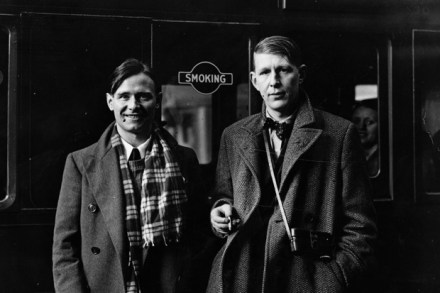
The novelist David Plante is French-Québécois by ancestry, grew up in a remote Francophone parish in Yankee New England and came to London half a century ago when still an avid young man. For 38 years he lived there with the late Nikos Stangos, a cosmopolitan of the Greek diaspora, whose father had been expelled from Bulgaria and his mother from Istanbul. Displacement and asylum were so much part of Stangos’s imagination that whenever he saw an old person in the street carrying a suitcase, tears came to his eyes. Stangos’s sensibility, zest and physical grace provide many of the richest moments in his lover’s diaries. Plante began keeping this diary in 1959.

Darling Monster, edited by John Julius Norwich – review

From our UK edition

It must have been awful for Diana and Duff Cooper to be separated from their only child during the war, but we can be grateful for it because it’s a joy to read the correspondence it gave rise to. The letters in this book span the years 1939 to 1952 and take in the Blitz, Diana’s short spell as a farmer in Sussex, a trip to the Far East, when Duff was collecting intelligence on the likelihood of a Japanese invasion, the couple’s three years in the Paris embassy, and several more in their house at Chantilly, as well as a great number of journeys around Europe and North Africa. The most charming thing about the war letters is how grown-up they are. John Julius Norwich was sent to safety in America and hardly saw his parents for two years.

As Luck Would Have It, by Derek Jacobi – review

From our UK edition

Alan Bennett once overheard an old lady say, ‘I think a knighthood was wasted on Derek Jacobi,’ and I know what she means. It’s strange how he has always been singled out for prizes and high honours — why not Ronald Pickup, Charles Kay, Edward Petherbridge, Frank Finlay or the late Jeremy Brett? Ian Richardson absolutely hated him — just couldn’t contain his envy and incredulity, at least in my presence. Though I’ve never been able to believe in Jacobi on stage or screen as a villain or as a passionate lover, by being fundamentally unthreatening (and shrewd), he is esteemed — just like the Emperor Claudius, his signature role.

There and Then: Personal Terms 6, by Frederic Raphael – review

From our UK edition

Frederic Raphael is forensic in his description of the failures of successful people. He is enviously superior and he is partial to the clever oxymoron: ‘predatory caution’, ‘reticent curiosity’, ‘intimidating reassurance’. It is as though he cannot see an abstract noun without qualifying it with a contradictory adjective. It is a kind of shorthand cleverness, but a cleverness nonetheless. For Raphael is undoubtedly clever, and intelligent, and knowledgeable and smart (and, we learn, good at football, tennis and bridge). It is hard not to envy his certainties. This is a thoroughly enjoyable read. Diaries promise indiscretions, and the joy of gossip.

This Town, by Mark Leibovich – review

From our UK edition

Many books have been written about the corruption, venality and incestuousness that characterise Washington DC, but none has been as highly anticipated or amusing as This Town. Written by Mark Leibovich, the senior national correspondent for the New York Times magazine, it has been on the minds of Washington’s chattering classes for at least two years before its release. Sparking that interest was the revelation that a young, ambitious Capitol Hill press aide, whom Leibovich had been cultivating as a source, was secretly forwarding him emails that provided an insight into how Washington really works.

A Rogues’ Gallery, by Peter Lewis – review

From our UK edition

Like Mel Brooks’s character the Two Thousand-Year-Old Man, Peter Lewis has met everyone of consequence. Though he doesn’t mention being an eyewitness at the Crucifixion, he was told by T.S. Eliot that working in a bank was quite nice (‘I never thought about poetry in the day’). Frankie Howerd wanted Lewis to give him a massage (‘I have this trouble, a hernia, you see. Gives me a lot of discomfort’); Diana Dors confessed to him that she’d rather watch television than go to orgies (‘but I had to become a sex symbol on tiger rugs and in mink bikinis’); and Samuel Beckett made his excuses and fled (‘Sorry, I just have to go to the lav’).

Steerpike: The Lib Dems’ free school fight, Dignitas on Scotland, and more

From our UK edition

Some politicians don’t read their own manifestos. And some don’t even read the names of their own parties. When it comes to academy schools, the Lib Dems are struggling to comprehend ‘liberal’ and ‘democratic’. A Suffolk school earmarked for closure was rescued by campaigning parents who invited a commercial operator — International English Schools UK — to take over its administration. Rather than celebrate, Nick Clegg was hopping mad. He apparently regards the profit-making IES as blasphemers against his ideology. A few months ago IES leafleted homes in Twickenham and Teddington offering ‘a new choice of education from September 2014 when IES welcomes the first pupils to a brand new primary school’.

The Hive, by Gill Hornby – review

From our UK edition

Who would have thought that the idea for a novel about mothers at the school gate would spark a frenzied bidding for world  rights? Not a subject to make the heart race, surely, but race publishers did for a first novel by Gill Hornby, whose inspiration it was. Plainly she did her research at a school gate, and her acute ear has captured every nuance of the motherly buzz that will be universally recognised. Heavens, they’re a lively lot, and how they talk — all in a language that is particular to forty-something mothers. They share a vocabulary — keenos, newbie, yikes, oops.soz, bagsy, delish. The words ping off the page, indicating incredible speed of communication that sometimes leaves the reader breathless. The children all go to St Ambrose School.

Steerpike | 21 March 2013

From our UK edition

Westminster’s top amateur prize-fighter, Eric Joyce, may face assault charges after his latest unscheduled bout in the House of Commons. The Falkirk MP had to be restrained last week after an alleged unseemly set-to at the Sports and Social Club. Ex-soldier Joyce first revealed his flair for pugilism in February 2012 when he ‘went berserk’ in the Strangers’ Bar after declaring it ‘full of fucking Tories’. ‘He won’t have that problem in the nick,’ says a Conservative friend. ‘It’s full of Lib Dems.’   Panic in Whitehall! Jeremy Hunt’s decision to dump health officials in hospital wards in order to give them ‘first-hand experience’ on the front-line has caused alarm among civil servants.