Gold

If investors are fleeing to gold this is not the time to be smug

From our UK edition

It came as no great surprise that the UK economy contracted by 0.2 per cent in the second quarter, following a first quarter in which growth had been artificially boosted to 0.5 per cent by stockpiling ahead of the original 29 March Brexit deadline. It’s fair to claim, as our editorial did two weeks ago, that the UK has performed better than expected for the past three years — particularly in terms of job numbers, which rose again in April to June despite the growth setback. True also that we’re in no worse shape than our European neighbours, and that our flexible, if painful, exchange rate will help us cope with a downturn.
In the realms of gold

From our UK edition

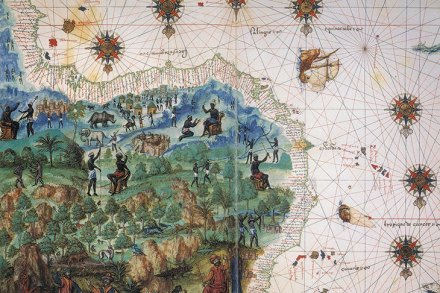
A thought kept recurring as I read Toby Green’s fascinating and occasionally frustrating book on the development of West Africa from the 15th to 19th centuries: that the money in my pocket was just a piece of polypropylene. And what is that worth in the greater scheme of things? The thought occured because money and its predecessor, barter goods, play a central role in the story Green has to tell in this monumental volume. The shells of the title are cowries, which for centuries were accepted as currency across the region. Cowries are not native to West Africa and had to be shipped from the Indian Ocean. But they worked as currency in the way polypropylene does: they had no absolute value but were accepted as currency because they were impossible to fake.

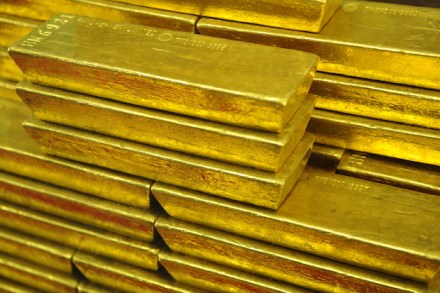
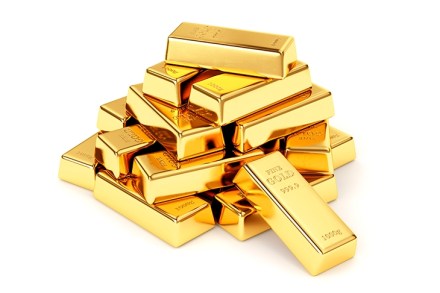
Should we be returning to the safe haven of gold?

From our UK edition

All good things must come to an end, including summer holidays and bull markets. The bull run in US shares that began in the aftermath of the financial crisis in March 2009 has now officially passed the previous record of 3,452 more-up-than-down days from October 1990 to March 2000. This time round, the S&P500 index of US stocks has risen by more than 300 per cent — and that rise has continued throughout Donald Trump’s reign, despite his trade war threats and other follies. But it has not been reflected in major European markets, which have drifted sideways, and has been increasingly sustained by a small number of top tech stocks that have outperformed everything else on the planet.

Is money an appropriate wedding present?

From our UK edition

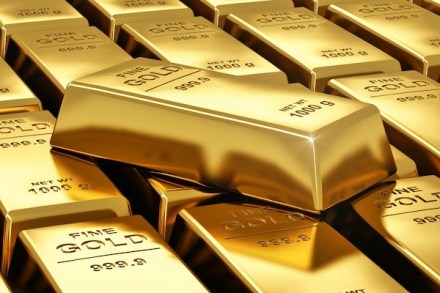
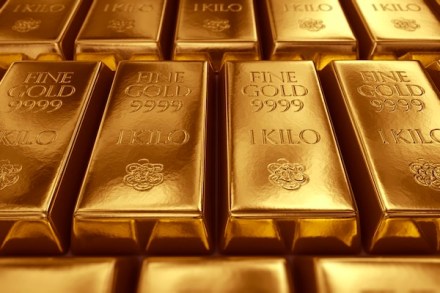
Dear Mary: I have been invited to the wedding of a distant relative through marriage, to her long-term partner. I did not expect to be invited, therefore would like to show my gratitude. However, there is no wedding list and they have specified on the invitation that the only gift they wish to receive is money. I find this to be slightly vulgar and frankly, given that they already own their home and are from relatively wealthy families, rather brass-necked. I do not wish to give cash in an envelope — à la Goodfellas — but would still like to get them something. What do you suggest? —C.S., Leicestershire A. Why not compromise with some pretty little bars of gold bullion?

America Notebook | 13 December 2017

From our UK edition

At the end of each year I pull out most of the New Year’s resolutions I’ve ever made — I now have them going back nearly two decades. They make for curious reading: some years they seem less like an account of what I intend to do with my life than what I don’t. I never took voice lessons, or wrote an original song for the guitar given to me six years ago by my wife, or even learned how to play that guitar. I never learned Spanish, or how to cook. I didn’t write that book about Obama, or create a television drama about Wall Street, or swim a 50-metre sprint in under 30 seconds, or ‘perform one act of charity each month big enough that it hurts at least a little bit to do it’.

The icemen cometh

From our UK edition

You wouldn’t want to stumble upon the Scythians. Armed with battle-axes, bows and daggers, and covered in fearsome tattoos, the horse-mad nomads ranged the Russian steppe from around 900 to 200 BC, turning squirrels into fur coats and human teeth into earrings. At their mightiest, they controlled territory from the Black Sea to the north border of China. They left behind no written record, only enormous burial mounds, chiefly in the Altai mountains and plains of southern Siberia. Chambers that weren’t looted in antiquity were preserved in the permafrost only to be discovered millennia later. It is thanks to Peter the Great and the expeditions he launched that so many objects have now been retrieved from the ice.

Jacqueline Gold, founder of Ann Summers, on how she became one of Britain’s richest women

From our UK edition

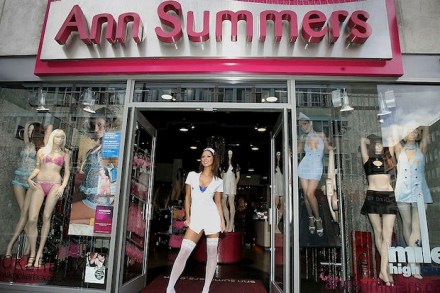
Ann Summers chief executive Jacqueline Gold has been credited with transforming the lingerie company into a more female-friendly business – and in the process has become Britain’s 16th richest woman, according to the latest Sunday Times Rich List. So what was the key to her success? Gold believes that identifying a gap in the market was what turned Ann Summers into such a recognisable brand. 'I knew that women were desperate to buy sexy lingerie and sex toys, but there wasn’t anywhere they could do that which offered a female-friendly, safe environment.' she explains. 'I spoke to friends and saw that we could replicate the popular concept of 'at home' parties, but with Ann Summers products.

Age as allegory

From our UK edition

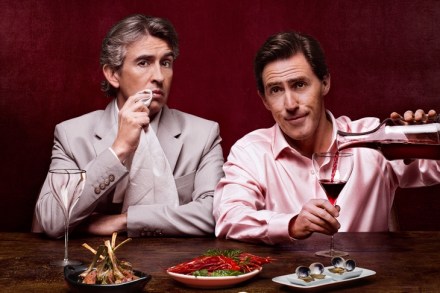
Sky Atlantic — available only to Sky customers — has the cunning/infuriating policy of broadcasting the kind of programmes most likely to appeal to people who pride themselves on not being Sky customers. (Basically, the liberal, metropolitan you-know-what.) Now, to a list that includes Veep, Curb Your Enthusiasm, Girls and Last Week Tonight with John Oliver, we can add The Trip, whose third series Sky has poached from the BBC. Like the first two — set in the Lake District and Italy — The Trip to Spain (Thursday) is directed by Michael Winterbottom and features Rob Brydon and Steve Coogan playing versions of themselves that feel teasingly close to the truth.

Barometer | 25 August 2016

From our UK edition

Golden years How many Olympic events would Team GB have to win before we could earn back the gold reserves sold by Gordon Brown? — Olympic gold medals are in fact gold-plated silver and contain only 6g of gold. Between 1999 and 2002 Gordon Brown sold off 395 tons of gold — enough to mint 64.7m medals. Assuming the number of golds on offer at the summer Olympics remains 812, as at Rio, that would mean winning every event at 79,679 Olympiads, taking us to the games of ad 320736. — It would be a different story if, as last happened in 1912, the medals were solid gold. With 500g of gold in each medal, we could achieve the feat by ad 5848.

Everything is illuminated

From our UK edition

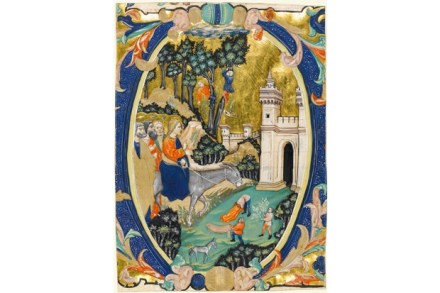
One could honour God with prayer, of course, and build cathedrals, amass treasuries, turn choirs into stained-glass jewel boxes, carve portals with saints and sinners. But for the medieval monks bent over vellum in chilly scriptoria colour, too, was devotion: offertories of lapis lazuli, azurite, cinnabar, silver and gold, gold and more gold. Silver tarnished on the page, but gold remained exquisite, inviolable, and monks and scholars found a dragonish greed for it. War, weather, revolution, Henry VIII, Oliver Cromwell, acquisitive magpies, trophy-hunters and time have stripped gold and pigment from sculptures and ivories.

We are where we are, clinging to the life raft of cliché

From our UK edition

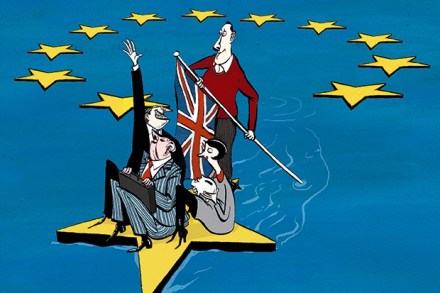
My column calling Brexit campaigners ‘hooligans’ and ending ‘Reader, I voted Remain’, caused quite a stir — coinciding as it did with The Spectator’s eloquent call for Leave. ‘Pathetic,’ spat a famous columnist encountered in the street. ‘Your words and Farage’s poster resonated so much that I (reluctantly) voted Remain,’ emailed a broadcaster who had previously given me a talking-to on the virtues of freedom. ‘I quite like being a hooligan,’ declared a Leaver on Facebook, alongside a selfie with the Boris-bus emblazoned ‘We send the EU £50 million a day.’ ‘Did someone else write your last paragraph?’ growled a veteran politico a day before the poll.

Stately Spanish galleons with gold moidores

From our UK edition

As every schoolboy knows, ‘the empire on which the sun never set’ was British, and ‘blue-blooded’ was a phrase applied to the nobility who ruled it for most of its history. And every schoolboy is wrong. The phrase was coined to describe the dominions of the Holy Roman Emperor Charles V (or Charles I of Spain), which were the first to span the requisite number of time zones; and ‘blue blood’ — sangre azul — referred to his Visigothic ancestors who reconquered Spain from the Moors, who had held it since 711 AD. These northern warlords would apparently show the purity of their ancestry by revealing the visible veins in their untanned forearms.

The lure of fool’s gold

From our UK edition

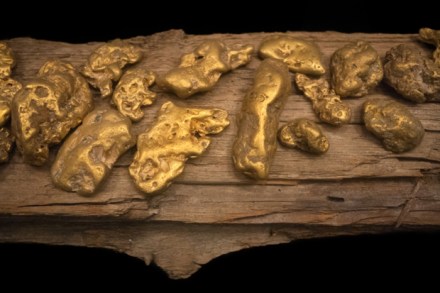
In 2008, the price of gold lofted above $1,000 an ounce for the first time in history, inspiring a rush of small-scale panners to head for the diggings with hope in their hearts. As the price of the metal fell and rose again — it nearly touched $2,000 an ounce in 2011 — journalist Steve Boggan contracted a touch of gold fever himself. He set off for California to find out who these chancers were. And to find some gold. I’ve taken Route 49 through inland California — Coloma to Sonora. The largely empty highway, which slices through heartbreaking landscape, is named of course after the fabled ‘Forty-niners’, and you can still smell, in those small towns with their jails and saloons and crummy hotels, the romance of possibility, the human capability to bet against all odds.

I miss the days when French rugby was great. Thierry Dusautoir must, too

From our UK edition

It used to be such a treat of a winter weekend, sitting down to watch France against Wales in Paris in the Six Nations. And not just because of the anthems. There would be the prospect of seeing players like Sella, Serge Blanco, the Williamses, JJ and JPR, Philippe Saint-André, Scott Gibbs, Rives, Jenkins — an almost endless list of exquisite, fluid runners, the essence of rugby genius. Now less so. It’s Mathieu Bastareaud and Jamie Roberts, a fifth of a ton of gristle and bone, banging into each other. The main question now is quite how poor Les Bleus will be. You can see it all in the resigned but deeply fed-up expression on the face of Thierry Dusautoir, the French captain.

The idiot economy – behind the ‘dark web’ cyber-crime busts

From our UK edition

Spectator Money is out, with ideas on how to make it, spend it and even how to be seen spending it. Freddy Gray looks at the 'social economy' - think tax loopholes for financiers of politically favoured endeavours; while Camilla Swift peruses credit cards such as Kanye West's 'African American Express' and the Dubai First Royale, 'studded with diamonds. Bring it on, Sheikh Sugardaddy.' Spare a thought, though, for the inconspicuous consumers - or at least, the wannabes.

The bull market is five years old. Does that mean it’s nearly over?

From our UK edition

There were no fireworks, and not much champagne. Indeed, it wasn’t an anniversary that many people noticed. But on 9 March, the bull market in equities was five years old. It was on that day back in 2009 that the Dow Jones Industrial Average, the key global benchmark for stocks, edged down another 80 points to close at 6,547, its lowest level since 1997. Although no one knew at the time, that was the bottom, and it was to go no lower. From then onwards, the recovery was under way. In London, our own low point came three days earlier, on 6 March 2009, when the FTSE100 index touched 3,530. There is an old saying among traders that ‘nobody rings a bell at the bottom of the market’.

Martin Vander Weyer: Bad news for pawnbrokers. Is that good news for the rest of us?

From our UK edition

While attention has focused on the sudden ubiquity and alleged iniquity of payday lenders, boom and impending bust has infected another part of the short-term credit sector. For the very reason that the global economy is recovering, Britain’s pawnbrokers are in trouble. Pawnbroking traces its history to the Medicis, but owes its traditional image in this country to Charles Dickens: ‘Of the numerous receptacles for misery and distress with which the streets of London unhappily abound,’ he wrote in 1835, ‘there are, perhaps, none which present such striking scenes as the pawnbrokers’ shops.’ Today’s UK market leader H&T, formerly Harvey & Thompson, opened for business on Vauxhall Bridge Road in 1897.

Investment special: The case for gold

From our UK edition

Few assets are more misunderstood than gold. I might even refine that statement — if you’ll pardon the pun — and say that few assets are more misunderstood than money. Gold happens to be both. Technically, of course, we are constrained by government edict to use pounds sterling for the payment of our taxes and debts. My take on this dismal state of affairs, but also my optimism, can best be summarised in the title of Nathan Lewis’s recent book, Gold: The Once and Future Money. Economists give money three attributes. It should be a unit of account (we can price things in it). It should be a medium of exchange — which avoids the inconvenience of barter.

An upside to the gold rout

From our UK edition

Unless you bet your life savings on gold some time in the past three years — after its price had passed on the way up the level to which it has now fallen back — there’s no need to be distressed by headlines about a ‘gold rout’, nor even the prospect of a ‘bear embrace’. The impulses behind this sudden downward lurch are positive for expectations of economic revival. Gold is the timeless safe haven for those who distrust governments and fear inflation, so a stampede of sellers — on Monday there seemed to be virtually no buyers — indicates an ebb tide in those sentiments.

Euro crisis enters a new phase

From our UK edition

It was a problem that would be fixed with a snap of the Commissioners' manicured fingers, but now fresh euro-storms are louring in the near distance. As predicted over the weekend, the markets reacted to the European Banking Authority’s deeply flawed stress tests with fevered concern and a clear note of contempt. The FTSE shed 90 points yesterday, with banks among the day’s biggest losers. The performance in Frankfurt and Paris was equally baleful, as investors fled for safe commodity stocks. As Fraser has noted, Allister Heath argues that the Eurozone crisis is responsible for the booming price of gold.