Globalization

The global cottage industry gaming America’s culture wars

It is the 9/11 of the blue ticks, the Hindenburg of the grifters, the dotcom bubble of the slop-peddlers. The influencer industry has been left reeling by a new function on X which allows readers to see the location from which any given account is operating. The latest update makes it possible to establish when and where an X account was set up and whether it has changed its name since then. A sensible measure, you might think, but not if X is where you make your living and do so by inserting yourself into other countries’ internal politics. There are no firm figures on how many earn a crust this way but even the most cursory glance through the Hellsite Formerly Known as Twitter will tell you the number isn’t insignificant.

X

Trump’s Japan deal is a hollow victory

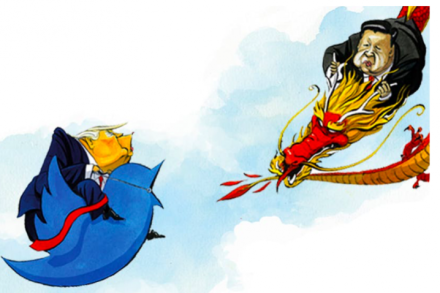
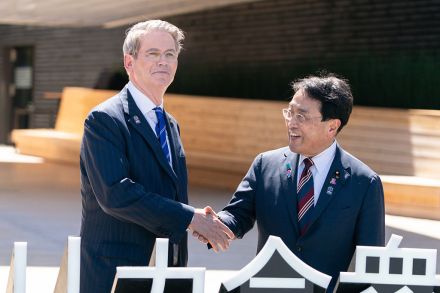
The reaction of markets to the US trade deal with Japan shows yet again that if you presage bad news with even worse news you can make people pathetically grateful at the outcome. Shares in Toyota surged by 14 percent at the news. Yet why, when the deal will see imports of Japanese cars to the US slapped with tariffs of 15 percent? Because back on "Liberation Day" in April,  Donald Trump announced that Japanese imports would be subject to 24 percent tariffs. Reactions to Trump’s reset in trade relations with the rest of the world have undergone wild swings in recent months. First, markets plunged.

Tariffs

How Pat Buchanan redefined the twenty-first century

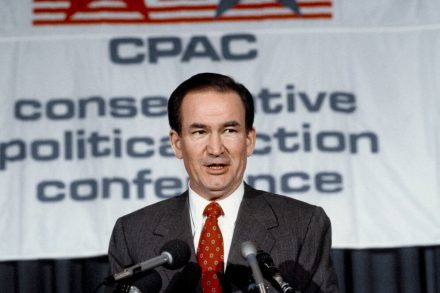
Pat Buchanan recently ended his syndicated column, essentially completing his retirement from public life. Yet it’s hard to think of any writer in his or her prime today whose ideas enjoy the currency that Buchanan’s now do. From trade and foreign policy to immigration and the “culture war” — a term that Buchanan introduced into popular politics — views that once set Buchanan apart from his fellow conservatives are now redefining the right. Buchanan was not the only conservative skeptic of free trade or foreign interventionism in the 1990s, but he was the only one that most newspaper-reading or cable news-watching voters knew about. At the zenith of American power and economic globalization, Buchanan defined the opposition to the spirit of the age.

pat buchanan

A new balance

It is already commonplace to say that coronavirus has brought the age of globalization to a shuddering halt. How silly it suddenly seems for production to be held up at a factory in Ohio for want of a 50-cent part normally imported from China. Months after the first COVID-19 deaths in America, we are still waiting for urgently needed Chinese medical supplies. Americans are going without pork or beef, but Chinese-owned US meat processing plants are exporting carcasses to China. Something seems to have gone wrong with almost everything. The global supply chain has us in domestic and strategic knots. As a result, the idea of national self-sufficiency, which had already been growing since the financial crisis of 2008, is suddenly in high fashion.

globalization

Land of empty

Coronavirus is so insidious that it is hitting America where it hurts — the stomach. We’ve seen huge lines of cars lining up for food banks since lockdown began, and now a growing number of reports suggest that the nation’s meat supply is breaking down, as outbreaks of COVID-19 affect the largely immigrant workers in pork and beef processing plants. Wendy’s, the fast food chain, is facing complaints from customers who say they can only order chicken — a ‘where’s the beef?’ meme has developed on social media. McDonald’s is putting its meat products on ‘controlled allocation’ to prevent shortages. Tyson Foods, one of the country’s largest meat producers, has said that 'the food supply chain is breaking'.

hamburger

How Bill Clinton junked America’s supremacy

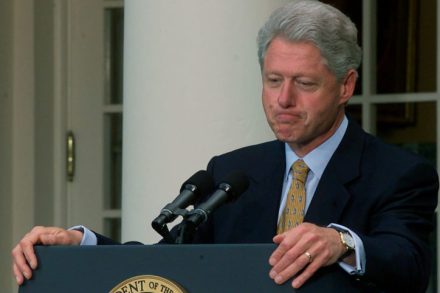
‘This is a good day for America,’ said President Bill Clinton on May 24, the Year of Our Lord 2000. ‘In 10 years from now we will look back on this day and be glad we did this.’ Clinton was talking about the House of Representatives’ vote to award normal trade relations to China. And he was right. By 2010, despite the crash of 2008, the knowledge class still largely considered the decision to support China’s entry into the World Trade Organization as a great boon. China’s rise had turbocharged globalization and made us all richer — never mind the stupefying sovereign debts. Labour unions had opposed it, but leaders and corporations were still enthralled by the gargantuan consumer markets.

President Bill Clinton speaks in the Rose Garden, May 24, 2000 in Washington, D.C. after the China trade vote in Congress.

Sovereignty rules

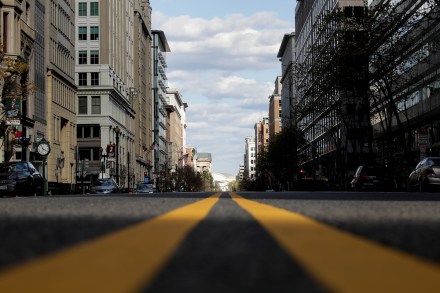
Washington, DC At the end of March, about two weeks into the coronavirus emergency, I looked out my window onto the street below and saw something that made me uneasy about the future of the country. There was a commotion down there. Two white teenagers were standing in the street with their hands up. A man — who looked and sounded like an East African immigrant — had stopped his car in the middle of the road and sprung out. I squinted to see what it was he was holding in front of him that made the kids look so alarmed. It was a pizza. The kids had ordered it. The car was marked with a Domino’s insignia. ‘Whoa, whoa, man!’ said one of the kids. ‘Take it easy!’ He was grotesquely corpulent.

sovereignty

The failure of globalization and the return of inflation

Most of today’s political debates are at heart about globalization. Terrorists, tree huggers, and Trumpists have their cultural complaints, but the great wave of Western populism is fueled by economic anger. Owing to the large amount of money that has been printed, financial asset prices have risen. But median incomes have stagnated. There is much truth in the claim that metropolitan elites have prospered, while the unvisited hinterlands have lost out, and much danger in the myth that all stakeholders benefit equally. Has globalization failed? On its economic merits, globalization can stand tall — not through increasing everyone’s income, though it has done this in many emerging economies, but by reducing everyone’s costs.

globalization