George osborne

The debate opens as Darling is vindicated and condemned

From our UK edition

As Fraser observed at the weekend, Alistair Darling has a point: it is not as bad as was feared. The new Office for Budget Responsibility agrees, reducing estimated public borrowing to £155bn 2010/11. Still, it’s hardly a picnic is it? And I wonder what response Darling will get if he presses Cameron and Osborne for an apology. His growth forecasts have been downgraded to 2.6 percent and the structural deficit is greater than he admitted to – Paul Mason reckons it’s about £5bn more than was forecast. Osborne’s hands are tied by these figures; his calculations will be based on them. There is, of course, the possibility that the OBR's predictions are no more accurate than the Treasury’s soothsayings.
Waiting on the OBR

From our UK edition

The Office for Budget Responsibility is expected to downgrade the previous government’s growth forecasts. Alistair Darling’s rosy prediction that the economy would grow by 3-3.5 percent in 2011 will be replaced by a conservative estimate of 2-2.5 percent, in line with other independent forecasters. Also, according to the Guardian, the OBR will ‘trim’ the Treasury’s breezy estimates of growth until 2014-15.   There is no guarantee that the OBR’s forecast will be flawless – and the Treasury Select Committee's scrutiny will have to be exhaustive. But George Osborne is bound to the OBR’s figures, rather than the Treasury being bound to a political agenda. Balance and responsibility will be restored to Budget decisions.

Will the coalition rue ring-fencing health?

From our UK edition

George Osborne has unveiled his plans for a comprehensive spending review. In addition to the pledge to broaden the base of consultation, the most significant announcement was that health spending “will increase in real terms in every year of this parliament”. The oft repeated objection to this pledge is that of the IFS. Spending in other departments will have to be cut by a savage 25 percent to pay for it. In view of Britain’s current commitments, could the defence budget sustain such a cut? David Cameron defines his politics with three letters: NHS. But think of the political damage caused by mass resignations over, say, the relationship between swingeing cuts and problems with defence procurement.

The previous government’s economic failure laid bare

From our UK edition

As Ben Brogan notes, there was a clean symmetry to David Cameron’s speech this morning: the crisis was Labour’s fault; therefore, Labour is to blame for the painful measures needed to restore stability. As Cameron put it: ‘I think people understand by now that the debt crisis is the legacy of the last government. But exactly the same applies to the action we will take to deal with it.’ Cameron made constant reference to the actions of the ‘previous government’. As a foretaste of what the Independent Office for Budget Responsibility will expose, Cameron alleged that Alistair Darling withheld estimates that Britain will be repaying £70bn per annum in debt interest by 2015.

D-Day (plus one)

From our UK edition

Cuts are here. The most important news of the weekend was the G20’s official backing for spending cuts. It was a significant volte face, and doubtless the sight of violent uprisings in Greece concentrated minds. Finally, George Osborne has been vindicated; but having convinced finance ministers, he must now carry the coalition and the country with him. The first thing to do is ignore Nick Clegg and his claim that cuts will not be savage. Cuts will re-configure government in Britain, the current invasive Leviathan will be dismantled; but the process will be painful in the short-term, it must be.

Cable, the free radical, dreams of a grand future

From our UK edition

What is Vince Cable up to? He is on manoeuvres, keeps making attempted power grabs from George Osborne. Barely a week passes without him rattling the cage to which Cameron and Clegg have confined him  - that is, the unwieldy and yet fairly powerless Department for Business, Innovation & Skills. For all its bulk, the department doesn’t really do anything. It has the universities brief, which is important, but it is certainly not an economics department as Cable was pretending last week. “It is a bit like the German economics ministry and the finance ministry,” he claimed. “Two departments, working in parallel.” As if.

Osborne’s successful first outing on the international stage

From our UK edition

George Osborne’s Asia trip has now been rounded off with a meeting of the G20 finance ministers in South Korea and he is now heading back to Britain and his Budget preparations. The trip must be marked up as a success for Osborne. In its communiqué, the meeting implicitly endorsed Osborne’s two major moves since becoming Chancellor, cuts this year and the setting up of the Office of Budgetary Responsibility:  ‘We welcome the recent announcements by some countries to reduce their deficits in 2010 and strengthen their fiscal frameworks and institutions’ No one can doubt that the Tories have comprehensively won the argument for in-year cuts.

What to look out for at PMQs

From our UK edition

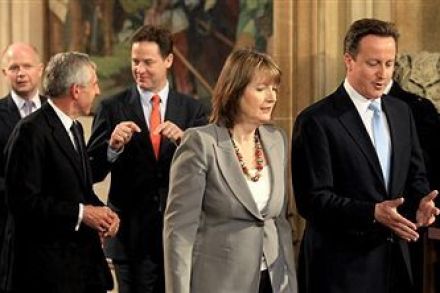
Today is the first PMQs of the new term. Given the Coalition, the whole thing will be a bit different from what we’re used to. The leader of the opposition will, as before, have six questions. But no other MP will have more than one question.   There’ll be a couple of little things I’ll be keeping a particularly close eye on. During the opening of the Queen Speech debate last week, the front bench was so crowded that Nick Clegg was not really visible on the TV. Instead, Cameron appeared to be flanked by two Tories. It’ll be interesting to see if this leads to a slightly different seating arrangement today. I’ll also be watching to see if Clegg whispers advice to Cameron during it.

To increase capital gains revenues cut rates, don’t increase them

From our UK edition

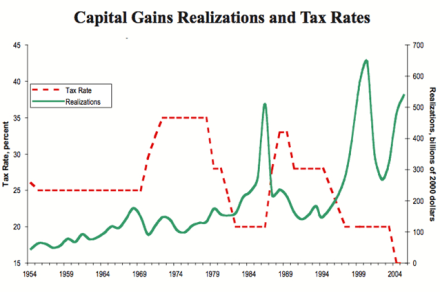
To address the deficit, George Osborne will probably have to raise taxes. This is a grim truth to which most people are reconciled. But raising taxes and raising revenue are two different things. If the Chancellor is serious about closing that deficit, then he would doubtless be interested in the idea that a Capital Gains Tax raise from 18 per cent to 50 per cent might be a chimera tax. That is to say, one which raises no money at all. Worse, in fact, the odds are that tax revenues will fall and the deficit will be made worse by this tax rise. The international evidence is absolutely clear. As sure as night follows day, tax revenues go down when CGT rates go up.

The long haul starts here

From our UK edition

Sunshine might have won the day but today was also the start of the age of austerity, as George Osborne and David Laws laid out £6.243bn of cuts. Despite the fact that they were cutting ‘wasteful’ and ‘low priority spending’, both men were keen to insulate themselves against the Labour attack that the coalition is cutting for ideological reason. Osborne said that ‘controlling spending is not an end it itself.’ While Laws stressed that the Coalition would ‘cut with care.’ Within its first fortnight in office, the government has found savings with commendable celerity. But the fact that the whole package was agreed on at 11.

Those coalition cuts in full

From our UK edition

Here, via the Guardian Data Blog, is what each department will be contributing to Osborne's £6.2 billion package of cuts this year: Department Contribution to cuts in 2010/11, £million % of department's overall 2008/09 spending Business, Innovation and Skills 836 54.60 Communities and Local Government 780 2.12 Devolved Administrations 704 1.09 Transport 683 4.

Osborne needs to make the moral case for cuts

From our UK edition

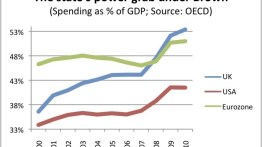
Gordon Brown may have been defeated, but you can hear his voice in the broadcast reports this morning about the £6 billion cuts which George Osborne will mention today. The BBC was still expressing this in terms of frontline service cuts – the equivalent of 150 schools, apparently. This was the root intellectual error which sent Britain on the path of fiscal ruin – the idea that extra spending magically means extra, better services. If that were true, Britain should have the best schools on the planet and healthiest population in the world, given that our spending over the last decade years increased, quite literally, faster than any other country over any other postwar decade*. Source: OECD George Osborne is not even reversing this.

The spending battle begins

From our UK edition

Mark the date, dear CoffeeHouser – for this the day when the spending cuts began.  George Osborne is set to give details on his £6.2 billion cuts package later today, but we already know the broad outlines of it all: £900 million from the business department budget, £500 million from chopping down some quangos, £150 million from cutting Whitehall recruitment, and so on.  One encouraging fact is that only £500 million of these cuts will be "recycled" back into the public sector. The rest will go towards getting the government's annual overspend down. But let's not pretend that this is anything other than a start.  With the deficit at £160 billion (not to mention total debt rising towards £1.

The axeman speaketh

From our UK edition

There's an entire gaggle of noteworthy interviews in the papers this morning, but let's start with David Laws in the FT. It's generally quite hard to draw substantive conclusions about the actual interviewee in political interviews, but I'm sure you wouldn't come away from this one thinking anything but that Laws is a good man to have in the Treasury right now. Here, anyway, are five observations about what he actually said:  1. Sharing the blame. If people in Tory circles feel that there's one major consolation to working with the Lib Dems, then it's that they can share the blame over spending cut.

Calling Osborne’s bluff

From our UK edition

I've just read through George Osborne's speech to the CBI annual dinner last night, and there's much in there about free markets and tax cuts that will encourage Tory supporters.  But one passsage seemed a little strange to me: "And on the subject of coalitions, let me be absolutely frank. As a member of the negotiating team, we did consider whether we could try to bluff our way into a minority government. But it was David Cameron’s bold vision and Nick Clegg’s great foresight which saw, before anyone else, that that option would be the greatest compromise of all. A weak, unstable government, risking defeat night after night in Parliament.

Is scorched earth politics now a thing of the past?

From our UK edition

Is the new government marching across scorched earth?  They certainly claim so, and now they seem to have the civil service backing them up.  Speaking to the Beeb this afternoon, Jonathan Baume, the leader of a civil service union, said that senior civil servants had written "letters of direction" to Labour ministers in concern at the spending decisions they took in the final months of their government.  As Baume put it: "It's not a decision that is taken very often to ask for such a letter of direction, which is why it is regarded something of a nuclear option. So when it happens it tends to be a big spending decision, where the civil service believes this is not the right thing to do." Good to know, even if only in retrospect.

Osborne’s inflationary problem

From our UK edition

Only a week into his new job, and George Osborne has already had to exchange letters with Mervyn King about inflation.  And here's why: the CPI index hit 3.7 percent in April, up from 3.4 percent in March.  Which is worrying enough when looked at in isolation – but when put alongside headline rates from other countries, it becomes damning.  In China, it's 2.8 percent.  In France, 1.9 percent.  In Germany, 1 percent.  In the Eurozone as a whole, 1.5 percent.  And in the US, 2.3 percent (for March, with the latest figures out tomorrow).  Indeed, thanks in part to quantitative easing and the removal of the VAT cut, inflation in the UK is now well ahead of almost any other major economy you could care to mention.

Working side by side

From our UK edition

George Osborne and David Laws’ press conference this morning gave some hints about the chances of the coalition making it. The Treasury is where, I suspect, this coalition will succeed or fail. If the two parties can keep it together on how to reduce the deficit and how fast to do it, then I expect that they’ll be able to deal with the other issues that are thrown at them. Encouragingly from this perspective, Osborne and Laws seemed comfortable sharing a platform; there were no attempts to score points off each other. It appeared to be a harmonious double-act. But Osborne didn’t refer as many questions to Laws as he did to Phillip Hammond, his trusted and super-able deputy in opposition, back in the day.

Osborne rolls his sleeves up

From our UK edition

Just in case you didn't see the front cover of the Guardian, let me tell you: it's a big day for George Osborne.  This, after all, is the day when he finally launches the Office for Budget Responsibility's audit of the public finances – zero hour for the age of austerity.  Accordingly, then, Osborne has given his first major newspaper interview since becoming Chancellor.  Here, from that, is a quartet of observations for you: Office for Budget Responsibility.  The more I hear about it, the more I like this Office for Budget Responsibility.  Sure, it's another quango of sorts.

Osborne’s Big Choice: how much of our debt to reveal

From our UK edition

The cover of today's Sunday Times spells out what we all suspected anyway: that the Labour government left behind acre upon acre of scorched earth for the Tories to contend with.  There's the £13 billion contract for tanker aircraft, the £1.2 billion "e-borders" IT project, a £420 million spend on schools, and so on – most of them put in place just before the election.  As James said earlier, Sir Alan Budd's audit of the public finances is likely to show that things are much worse than the last Budget dared admit. All this throws open the wider question of our debt position.  Even by Labour's measures, our national debt is likely to rise once all the hidden spending and exaggerated tax receipts are taken into account.