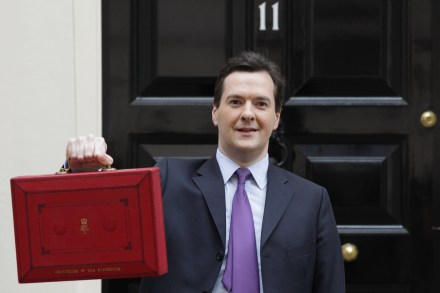
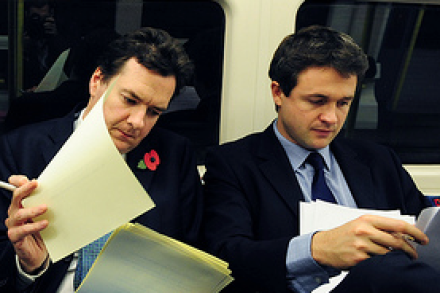
George osborne

All that matters now is growth

From our UK edition

With every Budget, the early Cameron emphasis on greenery and General Well Being not Gross Domestic Product seems a more distant memory. Today’s Budget showed that, to Osborne at least, growth now trumps these more abstract concerns.   So, we saw an announcement that the planning rules would come into force pretty much as planned from next Tuesday. This means that Osborne has simply overridden all the bureaucratic and legal objections from DCLG. Although, I understand that councils who already have a sufficiently pro-development local plan will have a year to adjust to the new rules.   Sunday trading rules, a classic bit of General Well Being paternalism, are also going on the scrap heap.
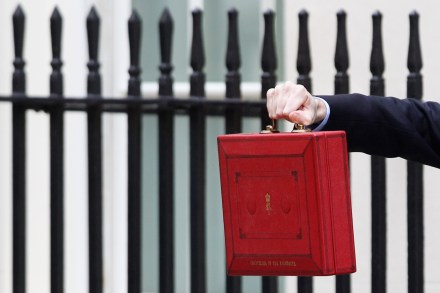
Behind Osborne’s 50p tax change

From our UK edition

How significant was this Budget? On an economic level, not very. There's no discernible impact on growth: all of the main forecasts have more or less stayed the same since the Autumn Statement. Borrowing is the tiniest bit lower, mainly thanks to a £23 billion accountancy trick with Royal Mail pensions. And even many of the policies announced today will barely rouse the Exchequer's attention. That cut in the top rate of income tax to 45p? It will mean only £100 million a year less in direct revenues. That stamp duty increase for properties worth over £2 million? It will net only £300 million a year. The overall effect is a fiscally neutral document, as expected. The fuss-to-impact ratio for Budget 2012 is pretty high.

Twelve points about the Budget

From our UK edition

There’s much to applaud in this budget, but as ever we in Coffee House are focusing on things jumping out from the small print. Here are a few things I’ve noticed so far. 1. Don’t mention QE. In his Pre-Budget Report, Osborne was candid about his economic policy: ‘fiscal conservatism, but monetary activism’. That is to say, fiddling about on the margins with taxes, while the Bank of England — 100 per cent owned by the Treasury — is midway through the largest QE experiment ever attempted in the developed world. It is impossible to understand Osborne’s economic policy, his Budget and those it affects without also considering the effects of QE — the inflation, the low interest rates and the game-changing implications.

A Budget by and for the coalition

From our UK edition

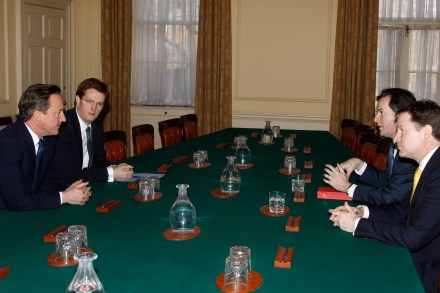
The coalition has found the second year of co-habitation more difficult than the first and it will find the coming year even more difficult given that House of Lords reform is on the agenda. But today’s Budget is a reminder of the political benefits of coalition. When George Osborne stands up today and announces, for instance, the reduction in the 50p rate he will do so with the support of two parties. Equally, a minority Tory government wouldn’t have been able to get more spending cuts to help finance a tax cut through parliament. It also seems that there should be measures in the Budget to please both Tory and Lib Dem backbenches.

A fistful of questions on Budget morning

From our UK edition

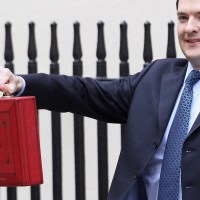
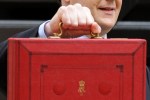
Thanks to Budget purdah, we're all in the dark about what will be in George Osborne's Red Book today. Oh, sorry, that's wrong, don't know what I was thinking. Truth is that, unless the Chancellor has some monumental surprises lined up, we've actually heard about much of the Budget in advance. We know, for instance, not just that he'll cut the top rate of tax from 50p to 45p, but also — courtesy of Andrew Grice in the Independent today — the internal political slog by which he reached that decision. Thanks to the proclivities of coalition government, this has to be one of the most pre-briefed Budgets ever. There are still, though, as James Plunkett demonstrated yesterday, some questions hovering over this Budget — and some of them around the 50p rate too.

More advance snippets from the Budget

From our UK edition

The big Budget news tonight is that the personal allowance will rise to £9,205. This is a larger increase than expected and, intriguingly, will be paid for — in part — by a couple of billion more of spending cuts. So, the Lib Dems see considerable progress on their main budget priority, raising the income tax threshold to £10,000, but this will be partially funded by something Tory MPs have been calling for, more spending cuts. It also appears that the coalition will further increase the pace of its corporation tax cuts as well as introducing a new higher rate of stamp duty for £2 million plus houses. There’ll also be a slew of anti-avoidance measures to accompany the reduction in the 50p rate.

Four tests for Osborne’s Budget


From our UK edition

With the Coalition taking pre-Budget briefing to new levels you’d be excused for thinking there’s little we don’t know about tomorrow’s statement. But here are four questions we can’t yet answer, and that will be crucial to assessing whether this is a Budget for low-to-middle earners as the Chancellor claims:
 1) Will the new increase in the personal allowance be restricted to basic rate taxpayers? When the Coalition raised the allowance by £1,000 back in April 2011 they cancelled out the benefits to those at the top by lowering the 40p tax threshold. The second time around — the £630 increase that kicks in this April — they didn’t.

Why Labour’s 50p tax wobble is dangerous for Ed Miliband

From our UK edition

Why did Gordon Brown wait until the last few weeks of Labour's thirteen-year reign to implement a 50p tax rate? Easy. Because it wasn't so much a fiscal policy as a fiendish trap, designed to cut into a Tory government's flesh. But now, it seems, the trap has snared another victim: Labour itself. The Telegraph's Daniel Knowles has already neatly summarised the politics arising from Sam Coates' report (£) that Labour will neither back the scrapping of the 50p rate nor promise to reinstate it either. But the basic point is worth repeating: if that's the approach that Labour chooses, then they'll be left in a complete mess. They can attack the coalition all they like for cutting taxes for high earners, but the answer will come back, ‘well, would you keep it?

Has Osborne learnt the right lessons from Adam Smith?

From our UK edition

According to Rachel Sylvester in The Times (£) today, George Osborne’s love of soaking the rich — from the non-dom levy to the tycoon tax – stems from the importance he puts on the ‘empathy’ described in Adam Smith’s Theory of Moral Sentiments. If so, he’d better start re-reading his Adam Smith. Certainly, the Chancellor is familiar with Smith’s other great book, The Wealth of Nations (1776). He wrote an introduction to a recent edition of it. That book is a passionate call for free trade and for open and competitive markets, and a stinging critique of the mutual back-scratching between businesspeople and politicians — what today we would call crony capitalism.

Tax transparency is a triumph for Osborne

From our UK edition

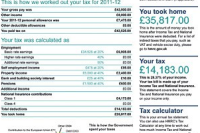
Transparency marches on, and what a joy it is. According to the newspapers today, George Osborne will tomorrow turn Ben Gummer MP's call for tax transparency into government policy. And so we will all get statements detailing just what our tax pounds are spent on. To use the example being bandied around this morning, a £50,000 earner will learn that they contribute £4,727 towards welfare payments. As James put it at the weekend, George Osborne tends to have both economic and political motives behind his actions — and the two are present, if almost indivisible, here. No doubt the Chancellor hopes that taxpayers, on seeing where their hard-earned ends up, will be keener for cuts in both spending and taxation.

Sundays should be about more than just economics

From our UK edition

The Chancellor didn't even bother to hide the thick end of the wedge as he inserted the thin end into the Sunday trading laws. He declared yesterday that restrictions on Sunday trading would be lifted for the duration of the Olympics and Paralympics on the basis that ‘It would be a great shame if the country had a “closed for business” sign on it.’ And he went on to remark, ‘maybe we will learn some lessons from it’. What might those be, do you suppose? That people, left to themselves, will shop all day, every day and should therefore be able to?

Support for scrapping the 50p rate grows, but why?

From our UK edition

Will Wednesday’s Budget herald the end of the 50p tax rate? It’s looking increasingly likely, with today’s Telegraph claiming that Osborne will replace it with a top rate of 45 per cent. Leaving the economic arguments aside, the consensus is that this will prove an unpopular move that could damage the Tories. Tim Montogmerie tweets that ‘if the post-Budget headlines are about 50p then Tories have a political problem’. The New Statesman's George Eaton writes that it ‘would do more to retoxify the Tory brand than any other measure’. But how dangerous a move is it? Certainly, scrapping the 50p rate doesn’t poll well. Yesterday’s YouGov poll found 60 per cent opposed and just 27 per cent in favour.

Downing St plans to boost construction

From our UK edition

In the last few months, there’s been a distinct change in the attitude of the Tories at the heart of government. They are now far more cognisant of just how difficult it is to drive change through the government machine. It is no longer just Steve Hilton and Michael Gove complaining about this, but Osborne and Cameron too. The Chancellor’s particular frustration at the moment is over the pace of planning reform. Osborne and his brains trust believe that simplifying the planning rules is one of the things that they could do to both give the economy a short term stimulus, by encouraging more construction, and improve its long term prospects. But the coalition is making slower progress on the matter than Osborne would like.

Osborne makes his appeal to Britain’s grafters

From our UK edition

‘A Budget for Working People’. That's the headline theme of this year's Budget, says our former editor Matt d'Ancona in the Sunday Telegraph today. And his words are borne out by George Osborne's interview with the Sun on Sunday. ‘We've got to help people into work, particularly young people,’ says the Chancellor, ‘We have to make this a competitive place in the world to set up in business and employ people.’ The measures being broadcast around this morning include a trial suspension of Sunday trading regulations, timed for during the Olypmic Games. At once, this is both an unsurprising and genuinely risky venture from Osborne.

The man behind the Budget

From our UK edition

In today’s Telegraph, I profile Rupert Harrison, chief economic adviser to George Osborne and the man who’ll do more than anything else (including his boss) to shape next week’s Budget. In the British political system, special advisers are given very little attention — even though the best of them are more influential than the average Cabinet member. The Treasury’s vast power, assembled by Brown, is still there. That can’t be said for Osborne: he spends half his time in Downing St, and is sufficiently detached from the Budget process that he felt able to take a couple of days’ holiday in America last week to jump in the motorcade and press some presidential flesh.

Osborne’s economic and political reasons for local pay rates

From our UK edition

George Osborne has just fired the first shot in the fight over the 2012 Budget. His decision to introduce local pay for the 160,000 civil servants coming off the public sector pay freeze is, as is often the case with Chancellor Osborne, both an economic and a political move. The economic case for local pay is straightforward. National pay rates mean that public sector workers are relatively underpaid in prosperous areas of the country and relatively overpaid in deprived areas. Pay that reflected local conditions would make for a more balanced economy, helping the private sector in those parts of the country where the public sector is currently dominant. But there’s also a lot of politics involved.

Balls lays into Brown — but why?

From our UK edition

Normally, pre-Budget interviews with shadow chancellors are dry and methodical. But the Times's interview with Ed Balls (£) today is the opposite: frenetic, relatively non-fiscal and utterly, utterly strange. Given that CoffeeHousers are probably waking up to brunch, I thought it might be a bit much for you to wade through his thoughts on food and on crying (‘OK. Crying. What do you want to know about crying?’). So I've pulled out some of the main political points from the interview here: 1) Laying into Brown. The quotation that gives the interview its headline is an eye-opener, coming as it does from Ed Balls. ‘Nobody is going to look back at any point in history,’ he says, ‘and say that Gordon Brown was a great Prime Minister.