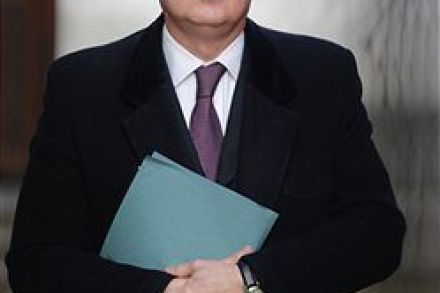
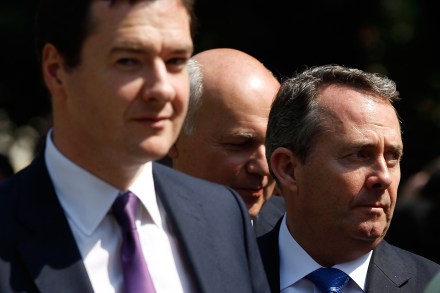
George osborne

The coalition rows back on the Budget’s VAT changes

From our UK edition

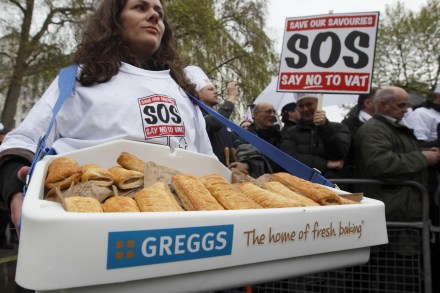
No government likes to u-turn, and particularly not on a Budget measure. So, tonight’s changes to the VAT regime proposed by the Budget for Cornish pasties and static caravans are embarrassing for the coalition. It is also worth noting that they have come after they have taken most of the political heat they were likely to take for the changes, including in the House of Commons where there were decent-sized rebellions on both issues. One of the lessons that I suspect that politicians, and particularly the coalition, will learn from this episode is: don’t try and deal with the anomalies in the VAT system. Voters, for obvious and understandable reasons, react particularly badly to taxes hitting products that were not taxed before.
The coalition’s new idea for more debt

From our UK edition

How best to help British business? More debt, of course — varieties of this answer come time and time again from this government. This time it's Lord Young proposing £2,500 loans for young people, copying a successful model of the Prince's Trust. The latter point should give reassurance, as the Trust has quite a striking success rate. But what would really help business grow is to abolish regulation on firms with 200 employees or fewer, to cut payroll tax — the 'jobs tax' as Cameron called it before he increased it — or cut corporation tax to the 15 per cent that (as Ben Brogan revealed) Steve Hilton proposed before he quit. You can't really get a substitute for this supply side reform.

Getting personal

From our UK edition

‘It’s getting personal this time.’ So says a UK Uncut type, in the video above, explaining why the group staged a protest outside Nick Clegg’s home in Putney today. The event passed off peacefully, apparently — but this brand of personalisation must still be worrying for those subjected to it. As Tim Montgomerie points out, ‘The Cleggs have young children and it can’t have been pleasant for them (if they were at home) or for local families.’ You wonder which politician, and which other local families, will be next.

Obama vs Balls

From our UK edition

What do Ed Balls and Mitt Romney have in common? They both want you to think that Barack Obama is spending government money like never before. For Mitt Romney, it’s an attack: he wants to make Obama a Big Government bogeyman who’s failing to tackle America’s deficit. ‘I will lead us out of this debt and spending inferno,’ the Republican nominee promises. For Ed Balls, it’s an example for Britain to follow: ‘I will lead us into this debt and spending inferno’, the shadow chancellor promises. Well, essentially. But the Obama camp is pushing back hard against such claims, highlighting a Wall Street Journal article yesterday titled ‘Obama spending binge never happened’.

Where will our politicians’ obsession with Hollande lead?

From our UK edition

Hollande fever strikes again in Nick Clegg’s interview with the FT this morning. ‘I personally massively welcome the arrival of Hollande on to the scene,’ he says, but it goes deeper than that. You see, the Deputy Prime Minister also places an emphasis on ‘growth’, as opposed to ‘austerity’, suggesting that the government might do more to get infrastructure projects up and running. When asked why they didn’t do this before, Clegg responds, ‘It’s for the obvious reason — because the economy is flatter than we anticipated two years ago.’ In some respects, this is unsurprising.

Europe is set to exacerbate the coalition’s internal tensions

From our UK edition

As James suggested yesterday, the publication of the Beecroft proposals this week could be a significant moment. If the coalition can carve a constructive agenda from them, then we might have a set of growth policies worthy of the name. But if it degrades into yet another internal squabble, then that chance may be missed. So, what’s it to be? It must be said, the tea leaves aren’t terribly encouraging this morning. Yesterday, we were told that David Cameron and George Osborne are minded to unravel the red tape that surrounds businesses when it comes to hiring and firing. But, today, one of their fellow ministers has spoken out against that sort of thinking. And guess which one it is. Yep, Vince Cable.

No time to tinker

From our UK edition

Next week, the Institute of Directors and the Taxpayers' Alliance will release what I humbly suggest will be the most powerful summary of the case for radical supply-side reform in a generation. The report of the 2020 Tax Commission runs to 417 pages, choc full of academic literature showing how big government chokes growth, and looking at what the optimal size of the state is. Broadly speaking, government spending is about half the size of economic output now and the optimal size is about a third. The recommendations are not being released until Monday, but it opens a very timely debate, which I preview in my Telegraph column. Here are my main points. 1. There is no recovery in sight.

Regional pay: a new coalition divide

From our UK edition

As if Lords reform, communications surveillance powers and same-sex marriage weren’t enough, it looks like there’s another issue that’ll cause a good deal of friction between Liberal Democrat and Conservative MPs: plans for regional public sector pay bargaining. It’s something George Osborne is understandably keen on — James laid out the political and economic reasons behind it just before the Budget — but now the Lib Dems are making clear that they don’t share the Chancellor’s enthusiasm. In the Q&A after his pupil premium speech on Monday, Nick Clegg said: ‘Nothing has been decided.

Cameron vents his euro frustration

From our UK edition

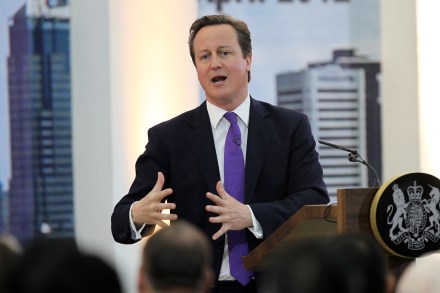
David Cameron’s speech today is a sign of his frustration with the eurozone. Numbers 10 and 11 are increasingly irritated by how eurozone leaders are refusing to accept the logic of their project. What Downing Street is keen to avoid is another wasted year as Angela Merkel gears up for her reelection campaign. So, intriguingly, we see Britain throwing her weight behind Hollande’s support for project bonds. Cameron also uses the speech to again back eurobonds, which Merkel is firmly opposed to as she knows that this would mean Germany effectively standing behind everyone else’s debt. I can’t see a resolution to this crisis coming anytime soon, though. The economics and the politics are, yet again, set against each other.

Cameron gets tough with the eurozone

From our UK edition

Today’s PMQs will be remembered for one thing, Cameron saying that the eurozone had to ‘make up or it is looking at a potential break-up’. This is a distinct hardening of the government’s line on the single currency. Cameron’s comment was particularly striking coming just days after George Osborne said that ‘open speculation’ about whether or not Greece would leave the euro was ‘doing real damage across the whole European economy’. However those close to Cameron are not resiling from the remark. Instead, I understand that we can expect more from the Prime Minister on this subject when he makes a speech on the economy tomorrow. The break-up of the euro would be extremely painful in the short-term.

Basel III and the EU’s strange desire not to compete

From our UK edition

Greece is the centre of European attention, but as George Osborne met with other EU finance ministers today there was another issue bubbling in the background — Basel III. This had been brewing for a while and is yet one of those matters that threatened to isolate Britain from the rest of the EU (though some would argue this is a good place to be). The Chancellor this morning appears to have agreed to the Basel III accord, which stipulates the amount and quality of capital that banks are required to keep. But this was after much haggling — and an Osborne outburst where he said signing on to the original banking capital rules would make him look ‘like an idiot’ — saw amendments being added.

How Britain is using spin to con the bond markets

From our UK edition

Austerity, austerity, austerity. The A-word is cropping up everywhere at the moment, whether in France or Greece or Germany. And the UK isn't immune from it either. If there is anything on which Britain’s political factions agree, it is the reality of fiscal austerity. Whether it's Ed Balls banging on about ‘too far and too fast’, or the coalition saying that their programme of painful austerity is essential if the UK is to defend its triple-A ‘safe haven’ status, this is something on which our political class has reached consensus.   But, as we at Tullett Prebon argued in a briefing paper yesterday (available here as a pdf), the tale of ‘big’ cuts in public spending is a bare-faced deception.

Coulson easily handles his Leveson test

From our UK edition

Andy Coulson’s evidence to the Leveson Inquiry was a reminder of why he rose so quickly. He never said more than he had to and never let his ego interfere with his judgment. It is a testament to his skill that we essentially learnt nothing new from his evidence this afternoon. But it should be remembered that Coulson wasn’t on that bad a wicket today. The Leveson Inquiry isn’t going to overlap with the criminal investigations going on and so there wasn’t much time spent on hacking or on payments to the police. Instead, the questions focused on his relations with politicians and Cameron and Osborne in particular. Helped by some leaden questioning from Robert Jay QC, Coulson got through this without too much difficulty.

Whatever they say, Lords reform will remain on politcians’ minds

From our UK edition

Have our politicos looked at last week’s turnout numbers, and thought ‘y’know, we might be a bit cut-off after all’? Reason I ask is because they’re all tripping over themselves today to downplay the significance of Lords reform, and focus the conversation on The Issues That Actually Matter. This, as James said earlier, is what George Osborne has been up to throughout the day. Ed Balls did likewise during an appearance on the Sunday Politics with Andrew Neil. And, most significantly, even Vince Cable echoed their sentiments in his interview on Sky’s Murnaghan Show.

Osborne brings it back to the economy

From our UK edition

It wasn’t, as expected, Nick Clegg on Marr this morning but George Osborne as the coalition attempted to move the argument back onto the economy. Osborne kept stressing that the government would focus on the things that ‘really matter’ to people; code for we’re not going to spend too long on Lords reform. Indeed, given that Nick Clegg has turned down a compromise on that, we now appear to be heading for — at most — a referendum on the subject. Osborne defended his deficit reduction programme, arguing that the lack of growth was a result of the Eurozone crisis and the oil price spike. But he did concede that a Tory government would be going far further on employment law reform than the coalition is.

Their drinks are still on us

From our UK edition

It has been a busy day for Commons committees, and I don’t just mean the education and media select committees either. The John Bercow-chaired House of Commons Commission has released a briefing note outlining some of its recent decisions relating to the running of the House. It covers three areas: ‘Mobile devices for members’ (aka, iPads for MPs); ‘Trees in Portcullis House’ (let’s keep ‘em, so long as we can make ‘em cheaper); and ‘Alcohol policy’ (more on which below). It’s the last of these that will probably get the most attention, not least because of Eric Joyce’s recent misadventures. So what does Team Bercow recommend?

The pensioners’ benefits battle

From our UK edition

During the last election campaign, David Cameron repeatedly promised to protect pensioner benefits. In one of the most heated moments in the Prime Ministerial debates, Cameron accused Labour of telling ‘lies’ when they said the Tories would cut things like the winter fuel allowance, the free TV license for the elderly and the like. For this reason, these benefits have, basically, been protected in government despite all the other cuts. But both the Liberal Democrats and Iain Duncan Smith have been arguing behind the scenes that these benefits shouldn’t be protected, that they are not an efficient use of money. It is in this context, that Iain Duncan Smith’s intervention should be seen.

IDS turns up the volume on welfare cuts

From our UK edition

Iain Duncan Smith is quietly spoken. His interview with today’s Times (£) is a case in point. The political elite are ‘distanced’ from the people, he says. The Leveson inquiry is there to ‘clean the house’. The job of government is to govern well, not be loved. The ‘omnishambles’ will pass because David Cameron has 'the capability to pull himself and us all through'. But, amid these placid notes, is a subito fortissimo. The welfare secretary sets himself against George Osborne’s wish that a further £10 billion in welfare cuts be found by 2016. He says: 'This is my discussion with him... My view is that it’s not [all going to come from welfare]...

Fox fires a shot across the aid budget’s bows

From our UK edition

As Pete says, Liam Fox’s piece this morning calling for more supply-side reform is broadly helpful to the Chancellor and has been written with his approval. Strikingly, the former defence secretary — who still has a constituency on the right of the party — goes out of his way to back one of the most contentious Osborne decisions, increasing the British contribution to the IMF. But there is one line in the article that carries with it not the air of helpful advice but menace: ‘It must be understood that further reductions in budgets for security, leaving overseas aid untouched, would be met with fury by most Conservatives.’ This is going to be one of the big battle lines for the next spending review, what happens to the defence budget?

Osborne’s turning point

From our UK edition

As Paul Goodman suggests, there is something significant about Liam Fox's article for the Daily Telegraph this morning. It's not that we haven't heard similar from the former Defence Secretary before — we have. It's more that his economic prescriptions are being made, we learn from the Sun, with the ‘explicit approval’ of his buddy George Osborne. And what are those prescriptions? Well, the main one is for further spending cuts, and Fox also waxes enthusastic about greater deregulation and about protecting the defence budget (at the expense of international aid). He also has some firm advice for the Lib Dems.