George osborne

Now is the perfect time for George Osborne to stop wasting money on HS2

From our UK edition

It's not just Ed Miliband who’s facing pressure over HS2. George Osborne’s famous political antennae must be twitching furiously by now  — does he really want to be the last man in England backing this? Alistair Darling’s case (£) reeks of cold logic: he has become the latest public figure to withdraw support for HS2 because the costs now outweigh the benefits. The facts changed; he changed his mind. This is what rational people do. Unless you’re ideologically wedded to the idea of HS2, then there’s now not much grounds for supporting it – as a glance at the latest the Institute for Economic Affairs report attests.
For the middle classes, things can only get worse

From our UK edition

In this week’s magazine Fraser Nelson and I look at the breaking of the English middle class, a subject so scary you’ll want to hold someone’s hand when reading it. The frightening thing is that in Britain, as in the United States, the middle class is not just squeezed but shrinking and sinking. Even before the Great Recession began, middle-class jobs in the law, media and accounting have been melting away, outsourced, unprofitable or obsolete, while salaries are falling behind prices. This is not a product of the credit crunch, and it will not be going away. Median hourly income in London is now below 2002 levels, real wages in Britain have not risen since 2005, and the median income has been static or in decline since 2004.

Is Ed Miliband a) hopeless, b) on course to become Prime Minister or c) both?

From our UK edition

I have never quite understood Ed Miliband's appeal. He always reminds me of Cuthbert Cringeworthy from The Bash Street Kids. I find it hard to imagine him becoming Prime Minister. Something just feels wrong about that. I'm not alone in wondering about this. Brian Wilson, the former energy minister, wrote yesterday that Miliband still has a kind of credibility problem. People just don't think he's quite ready for the top job. They may not be able to say exactly why they're unimpressed by Miliband; they just know they are. Not so fast my friend, responds John McTernan today. Ignore all the chattering and blethering about Labour's slide in the polls and focus on the core picture: Miliband is still likely to be leader of the largest party after the next election. Everything is fine.

Will George Osborne be able to push through HS2?

From our UK edition

As if many true blue parts of England didn't dislike the Chancellor enough, today's Financial Times adds to his misdemeanours renewed support for High Speed 2. Their splash (£) reports that despite fresh concerns from Treasury officials over the sums, George Osborne is still pushing ahead with the new line. According to the pink 'un, Osborne sees the project as 'an emblem of the coalition's commitment to spread growth more evenly across the country'. I'm sure many of his fellow Tories will be disappointed that he isn't backtracking instead. Osborne's rallying cry doesn't drown out the scary new figure that the FT has for the cost of HS2.

Interest rates set to stay low for the foreseeable future

From our UK edition

Mark Carney made his mark this morning. Moments ago, he opened his inflation report and issued his ‘forward guidance’, which is designed to make the markets aware of his long-term plans for interest rates. This is important because, although there are signs of life in the British economy (and Carney was cautious about them), inflation remains above the Bank of England’s target, the base interest rate remains rooted to the floor and unemployment remains high at around 8 per cent. There is also the question of Britain’s mounting debts, the answer to which will largely depend on how the bond markets react to this and other announcements. And then there is the prospect of further quantitative easing… So, what happened?

Yes, stay-at-home mothers have made a “lifestyle choice”

From our UK edition

Blimey, George Osborne has got something right! Astonishing scenes. Suppose the government thought it a good idea for us to eat more bananas and, recognising that bananas have become extremely expensive, offered those of us struggling to afford bananas a modest subsidy to make it easier to purchase bananas. We might reasonably object to this on the grounds that the government should not be in the business of subsidising bananas but it would be strange if those people with no desire to purchase bananas complained that the problem with the banana-subsidy is that it does not cover the purchase of apples. That, essentially, seems to be the complaint from "stay-at-home" mothers appalled by the Chancellor's attempt to make childcare for working parents marginally more affordable.

Tories must be wary of Ed Miliband’s cost of living gambit

From our UK edition

Fresh polling (£) from The Times and YouGov today says that the Tories still have much work to do to convince voters that they will directly benefit from an improving national economy. The good news for the Conservatives is that confidence in the economy is up. Nearly a third of those polled think that they will be ‘satisfied’ with the economy this time next year. This is a eleven-point jump from the last time the question was asked in June — and a steady trend upwards over the last year: But only 16 per cent think that their personal finances will get better over the next 12 months. On pay, 58 per cent of those working full-time and part time (more than eight hours a week) believe their pay will go up by less than inflation, or go down.

Winning the fracking argument

From our UK edition

Shale has been back on the front pages this week, with exploratory drilling at Balcombe in West Sussex and Lord Howell offending sensibilities north of the Watford Gap. The leading column in this week’s issue of the Spectator makes this point: ‘Lord Howell’s comments add grist to the arguments of those who complain that the government only supports fracking when it is well outside Conservative constituencies. This is an impression which the government needs to correct very quickly by supporting the case for fracking in Sussex — where this week celebrity protestors have joined locals to oppose an exploratory test bore for oil and gas (not yet involving fracking) — every bit as much as it supports fracking in the Labour heartlands of Lancashire.

The three places where the Tories want to hit Labour hardest

From our UK edition

In the last few months, the Tories have--quite deliberately—behaved like an aggressive opposition. They’ve sought to constantly attack Labour, trying to force them onto the back foot. Even with David Cameron and George Osborne away on holiday, the Tories are determined to keep doing this. On Wednesday, Grant Shapps will launch the Tories’ summer offensive against Labour. He, in the kind of language more commonly used to promote summer horror films than a political agenda, will invite voters ‘to imagine a world where Ed Balls and Ed Miliband end up back in Downing Street.’ This is all part of the Tories’ efforts to link Miliband to Gordon Brown and memories of the last Labour government.

The View from 22 — baby boomers vs. the jilted generation, an indecent housing proposal and the royal baby

From our UK edition

Are the baby boomers propping up the lazy 'jilted generation' while driving Britain's economic recovery? On this week's View from 22 podcast, Daily Mail columnist Melanie Philips debates The Guardian's Shiv Malik on the latest round of generational warfare, including on whether there is any need to blame one group for the country's economic woes. How big a factor is culture and immigration in the differing employment levels between generations? Are the younger generations simply dragging their heels, or do they genuinely face more difficult circumstances than Britain's post-war generation? Maurice Mcleod discusses with Fraser Nelson the Chancellor's generous offer for council tenants to purchase their properties at knock-down rates.

To infinity and beyond! George Osborne invests in space plane

From our UK edition

Hooray for George Osborne! I never imagined I’d ever write those words, but George has done his country a great service. He’s put £60 million behind one of the most inspiring British inventions of our age: Skylon, a space plane with a revolutionary new engine. When Skylon’s up and running, it'll be able to transport satellites – well, anything -- into orbit for a 20th of the current price, and go at a scorching 3,500 mph. It’ll be the envy of the world – which sounds like hyperbole, but isn’t. The Spectator championed Skylon four years ago, pointing out that the world is on the brink of a new space race, and that the UK could lead the way, if only our government only had the balls to back British invention.

Spending review – a response from a Labour marginal

From our UK edition

The Spending Review was a political device that the chancellor clearly hoped would get him through to the end of this parliament. But if the spin doesn’t match the realities of life, I don’t think the public will buy it. A big risk for both governing parties is that high increases in the cost of living define the next election. The Liberal Democrats cling to their £10k personal tax allowance as the policy that will get them through the general election in 2015, and the dry-run coming in next year’s local elections. 10k’s a natty round number that’s easy to remember, and I would be the first to admit that straight forward practical solutions that the public can understand are important in politics.

Spending Review: Has George Osborne’s caution condemned Britain to a lost decade?

From our UK edition

The Labour party used to joke that the Tories would act as their cleaners: win, take the political pain, abolish the deficit by 2015 and then hand over a balanced budget when they lost the election. George Osborne has, at the very least, put paid to that. His Spending Review this week made it clear how painfully little progress is being made. Whoever wins the next election could close every school, open every prison, cede Northern Ireland, close every embassy and sack every soldier, sailor and airman — and it would still not be enough to put the government back in the black. Britain is a terrifyingly long way from fiscal sanity. If the Chancellor had actually cut the government machine when voters expected him to, the pain would be almost over by now.

Beaten by a Byron Burger

From our UK edition

In the battle for the media’s attention Danny Alexander’s infrastructure statement is losing out rather badly to George Osborne’s choice of burger — a more easily digestible subject than the specifics of the government guarantee for a new nuclear power station. When he was asked about it on the Today Programme, Osborne seemed rather baffled by the amount of interest the tweet had generated. But what I was struck by was Osborne’s explanation for why he was on Twitter in the first place. He said that one of the challenges for politicians is that the public only ever see them when they’re on TV or in the Commons. He continued that ‘the point of Twitter is to try and say something about what you’re up to during the day.

Denial is a River in Scotland

From our UK edition

Aye, the old ones are the best. You might think that George Osborne's decision to  leave the Scottish block grant more-or-less untouched in yesterday's spending review would be a cause for chuffedness north of the border. You'd think wrong. Osborne announced a 1.9% reduction in real-terms funds made available to the Scottish government. Alex Salmond's ministry will have to make do with £25.7 billion. All hail the Barnett formula since Mr Osborne's decision to protect health spending ensures that the funds available to Scotland are similarly guaranteed, minimising the ability to cut the block grant even if that were deemed economically - or, rather, politically - wise.

George Osborne’s big idea

From our UK edition

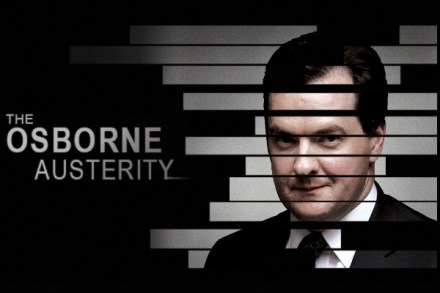
What are the Ashes? This question was put to former England cricket captain Ted Dexter, the guest of honour at the launch last night of the writer and broadcaster Simon Hughes’s latest book. Dexter replied that the Ashes is an idea; the terms of engagement that had united two sporting nations in rivalry for nearly 150 years. Few things in life are more durable than a simple idea. The idea of ‘austerity’ drives our political debate and yesterday's spending review has extended the life of the idea deep into the next parliament. It is a political concept rather than a purely economic issue.

Spending review 2013: Crossrail 2 is a clear win for Boris Johnson

From our UK edition

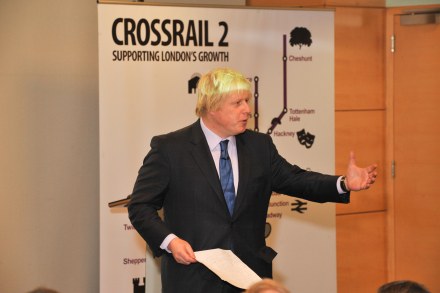
Boris Johnson's powers of persuasion have once again wooed George Osborne. In today's spending review, the Chancellor has put aside £2 million to investigate Crossrail 2 — a new underground line for London. The fact the Mayor was able to bag another win from Osborne — Crossrail 1 was protected from funding cuts in 2010 — is testament to the political power of both the Mayor and the capital. Boris doesn't even have re-election to think about this time. Crossrail 2 is key to Boris' London legacy.

Spending review: George Osborne finds a way to put welfare front and centre – again

From our UK edition

listen to ‘Spending review 2013: the Coffee House analysis’ on Audioboo The Liberal Democrats insisted that they wouldn’t accept any more welfare cuts. But George Osborne still found a way to put welfare at the centre of his statement today as he sought to put, what he calls, the ‘welfare party’ on the back foot.  It was a reminder that he remains a thoroughly political Chancellor. There were a series of tough conditionality measures. The most headline-grabbing of these was that the around 100,000 people who claim JSA but aren’t proficient in English will have to learn the language or lose their benefits. The state, though, will pay for their language lessons.

George Osborne meets his Waterloo

From our UK edition

The Chancellor of the Exchequer had the Tory backwoodsmen shaking their order papers and cheering during the spending review when he announced the following: ‘We’ll make sure the site of the Battle of Waterloo is restored in time for the 200th anniversary, to commemorate those who died there and to celebrate a great victory of coalition forces over a discredited former regime that had impoverished millions.’ While he was blustering, shadow chancellor Ed Balls missed the opportunity to point out that in Vanity Fair a feckless and profligate character called George Osborne dies at Waterloo. But Harriet Harman made no such mistake. Good to see that her education at St Paul’s has not gone to waste.