George osborne

The Tories are still anxious to reach out. And that’s a very good sign

From our UK edition

Post-election party conferences usually follow a standard pattern. The winning party slaps itself on the back while the losers fret about how to put together an election-winning coalition. But this year, there’s been no talk of compromise or coalition from Labour. They seem happy to be a protest party, unbothered that voters disagree with them on the economy, welfare and immigration. And the Tories, instead of relaxing or moving to the right, have obsessed anxiously about how to broaden their appeal, to make their majority permanent. This determination to look for new converts is a product of the election campaign. Weeks of looking at polls that indicated they were on course for defeat served as a near- death experience for the Tories.

David Cameron, take heed. This is the conference speech that you should learn from

From our UK edition

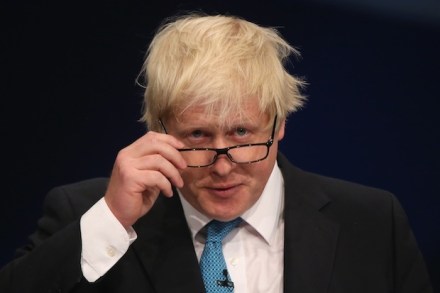
Maybe it was because of the contrast with Theresa May’s chilly, disingenuous monotone minutes before, but I really think Boris Johnson’s speech to the Conservative party here in Manchester was brilliant. It is a constant puzzle that senior politicians, who spend such ages worrying about how to communicate, do not learn how to make platform speeches. They make basic errors — failing to read autocues, misjudging the timing of applause. They also do not trouble to think about what makes a speech — its combination of light and shade, the sense of an audience of actual human beings both in and outside the hall.

George Osborne: Corbyn is not the cause of Labour’s problems

From our UK edition

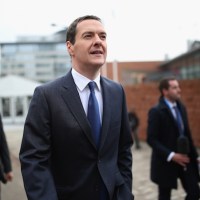
George Osborne was interviewed by Kath Viner, editor of The Guardian, this afternoon and offered some interesting thoughts on Jeremy Corbyn. The Tories have generally kept schtum about the rise of the new Labour leader, focusing instead on the message that he is a danger to Britain’s national/economic security. Echoing the thoughts of Labour’s Jon Cruddas, the Chancellor said Corbynmania is not about the man himself: ‘I don’t think it’s actually about personalities in this sense which is, you know, Jeremy Corbyn is not the cause of the Labour party’s problems, he is a symptom.

George Osborne takes a dig at Jeremy Corbyn at Tory conference

From our UK edition

Although Cabinet Ministers are said to be on strict instructions to refrain from insulting or mocking Jeremy Corbyn in their conference speeches, the Chancellor of the Exchequer couldn't resist taking a dig at the Labour leader on Monday night. As Corbyn was speaking to a packed crowd of protesters across town, Osborne found room in his speech at the Enterprise Forum Business Reception to make a joke at the expense of the Labour leader over his appearance at the fringe protest event.

Greg Clark’s softer approach to building more houses in a ‘Conservative way’

From our UK edition

The most striking thing about Greg Clark’s speech to Tory conference today was how different his rhetoric was on house building to George Osborne. Osborne likes to talk of confrontation, of standing up to small ‘c’ conservative voters who block development, and of winning a battle with the shires (see today’s Mail front page). But Clark tried to use more conciliatory language, speaking wistfully of the ‘joy’ of his own homes: ‘ Close your eyes and picture all the homes you’ve lived in – then what you see is the story of your life. For me it began with my mum and dad’s bungalow where I grew up. Then the thrill of walking into the first room of my own at university – with the shabby furniture and the musty smell.

How the Tories are trying to make their majority permanent

From our UK edition

This is the first conference since the election where the Tories won a majority and the first since Labour chose an unelectable leader. But, strikingly, George Osborne chose to use his speech to emphasise how the Tories must show the millions of working people who voted Labour in May that they ‘are on their side’. Osborne is a man seized of the opportunity presented to the Tories by Labour’s lurch to the left. He has spent the last few days picking off several of Labour’s best ideas. His aim to make sure that when—or, should I say if—the Labour party attempts to return to the centre ground of British politics, it will find the Tories already camped there.

The left’s hatred of ‘Tory scum’ is both stupid and self-defeating

From our UK edition

Plenty has been written about the hatred some on the left feel towards their ‘enemies’, something on display at the moment in Manchester, with journalists being called ‘Tory scum’ for covering a party conference. I’ve bored for Britain on the subject of political hatred of the left, but less has been written about how self-defeating it is. For example, one of the best things that could happen to the Tories is for the Labour faithful to convince themselves that Corbyn was defeated only because of a biased, Tory-dominated press. This means that, rather than brutally analysing their weaknesses after Corbyn goes, they’re more likely to retreat into their own comfort zone politically.

George Osborne’s local devolution revolution

From our UK edition

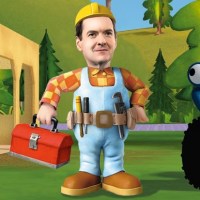
George Osborne is the man of the moment, the future Tory leadership contender who is riding high right now. So it was rather clever that instead of offering a showy speech to the Tory conference, the Chancellor announced a rather technical but big reform as his speech ‘rabbit’. His refrain throughout the address to conference was that ‘we are the builders’, and to underline that, he announced his National Infrastructure Commission which was trailed overnight. But he also announced reform to local government funding. This will see the abolition of the local government grant (it will be phased out), and in return councils will be able to keep all the rates they collect, with local authorities getting 100 per cent of their rates by 2020.

Full text: George Osborne’s 2015 Conservative conference speech

From our UK edition

Let me tell you how proud I am to stand before you the first Conservative Chancellor in a Conservative Government to address a Conservative Conference in eighteen years. If I’d told you twelve months ago that the Member of Parliament for Morley and Outwood was going to come onto this stage and speak in our economy debate you’d have called security. Andrea, your win capped off a night that no-one here will ever forget. Can you all remember where you were when that exit poll came through? I certainly can. I was just a few miles away from here, waiting to go to my count at the Macclesfield leisure centre. I was completely calm. No I wasn’t. I was completely nervous. Unable to sit down. Unable to stand still. I was pacing around.

George Osborne: ‘I’m trying to shake the inertia of this country’

From our UK edition

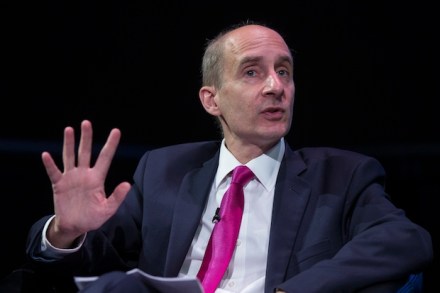
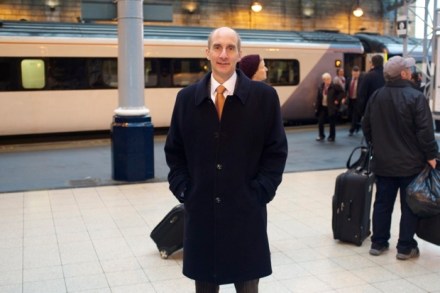
George Osborne is the man who wants to build and plan. On the Today programme, the Chancellor explained he was creating a National Infrastructure Commission, headed up by former Labour peer Andrew Adonis, because ‘Britain is pretty rubbish at making big decision on infrastructure’: ‘I’m trying to shake the inertia of this country and say we have got to plan and build for the future and I think the best way to do that is to have an independent body outside the party political fight, trying to build a national consensus, telling us in a calm and expert way what the country needs for its future and then I want to go ahead and building it and make sure we’re providing the jobs and security for working people not just in this generation but the next.

The Tories have Adonis – but have swallowed yet another flagship Labour policy

From our UK edition

Andrew Adonis has not defected to the Conservatives but, as he’ll know, it will look an awful lot like he has. As tomorrow’s newspapers reveal, Lord Adonis is to give up the Labour whip to become a crossbench peer in order to chair a new National Infrastructure Commission. To allow this announcement to be made by George Osborne, and at Tory conference, is quite something. It is, in effect, allowing the Chancellor to present his recruitment as Tory coup. So Osborne gets the drama, but at a cost. The idea of a National Infrastructure Commission is a Labour policy, championed by Ed Miliband  last year. Adonis was keen on all of this, and advocated about it in the House of Lords in January.

Major coup for Osborne as Lord Adonis resigns Labour whip to chair infrastructure commission

From our UK edition

A key theme of this Tory conference will be the party running its tanks all over Labour’s lawn while the party indulges in splendid in-fighting. And George Osborne’s speech tomorrow will contain another big tank rumbling over another part of the party’s lawn. He has persuaded Lord Adonis to resign the party whip in order to become a cross bench peer and chair an independent National Infrastructure Commission. Adonis has issued this statement: ‘Without big improvements to its transport and energy systems, Britain will grind to a halt. I am pleased to accept the Chancellor’s invitation to establish the National Infrastructure Commission as an independent body able to advise Government and Parliament on priorities.

Two issues will dominate Tory conference: who’ll succeed David Cameron and the EU referendum

From our UK edition

As the Tory tribe prepares to gather in Manchester, the chatter is about two things: who will succeed David Cameron and what will happen in the EU referendum. These two issues are, obviously, inextricably linked. If Britain votes Out in the EU referendum, a prospect which while still unlikely has become more likely in recent weeks, Cameron is unlikely to be succeeded by someone who campaigned for In—as Fraser points out in the Telegraph today. But, so far, none of the expected leadership candidates have indicated that they will campaign for Out. George Osborne is one of the lead figures in the renegotiation and has always been clear that he thinks that there is a deal to be done.

Will Nicky Morgan be the next Prime Minister?

From our UK edition

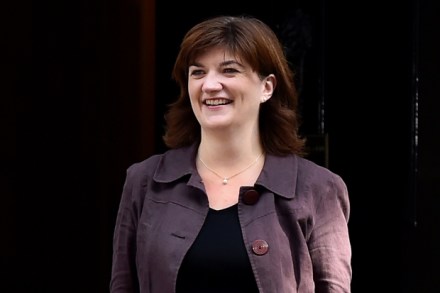
When David Cameron announced that he wouldn’t serve a third term, he made it inevitable that Westminster would spend much of his second term wondering about who would succeed him. Well, in the new Spectator, Nicky Morgan becomes the first Cabinet Minister to make clear that she is interested in standing when Cameron steps down. She says that ‘A lot of it will depend on family’ but makes clear that she believes there needs to be a female candidate in the race and hopes ‘that, in the not too distant future, there will be another female leader of a main Westminster political party’. What I was most struck about when interviewing Morgan was how, when I asked her what her pitch for the top would be, she didn’t shy away from the question.

Podcast: Boris, George, Nicky and the Tory leadership

From our UK edition

This podcast is sponsored by Berry Bros, The Spectator’s house red. Boris Johnson's leadership ambitions have been significantly harmed by David Cameron's general election victory — can the Mayor of London still succeed? On this week's View from 22 podcast, James Forsyth and Fraser Nelson discuss the latest Spectator cover feature on Boris' time in the wilderness and whether he can still be Tory leader. Does this mean George Osborne's is now the most likely candidate to be the next Prime Minister? And what about Nicky Morgan, who has hinted in the magazine this week she may run as Tory leader? What should we look out for at Tory conference?

Is it all over for Boris?

From our UK edition

[audioplayer src="http://rss.acast.com/viewfrom22/boris-nickyandthetoryleadership/media.mp3" title="Fraser Nelson and James Forsyth discuss who could be the next Tory leader" startat=38] Listen [/audioplayer]Five months ago, allies of Boris Johnson were ready to launch his bid to become leader of the Conservative party. The election was imminent and even David Cameron was fretting that the Tories were going to lose. A sympathetic pollster had prepared the numbers that made the post-defeat case for Boris: he extended the Tories’ reach, and a party that had failed to gain a majority for 23 years desperately needed a greater reach. There was a policy agenda ready to magnify this appeal, too: compassionate conservatism, based around adopting the Living Wage.

Why Yanis Varoufakis is right about George Osborne’s fauxsterity

From our UK edition

Not often that I’d be inclined to agree with Syriza, but Yanis Varoufakis had a point last night when he questioned the degree of austerity that has happened in Britain. The Conservatives talk a good game, he said, but George Osborne’s cuts pretty much stopped after year one. I’m going to give a compliment to George Osborne and the Tory government. It’s going to create some consternation in the Tory part. He hasn’t really practiced austerity, he has talked about austerity and it didn’t work. He killed of the nascent recovery after 2009 with the little bit of austerity he did, but he stopped it.” The below figures, drawn from Treasury data, rather back him up.

Portrait of the week | 24 September 2015

From our UK edition

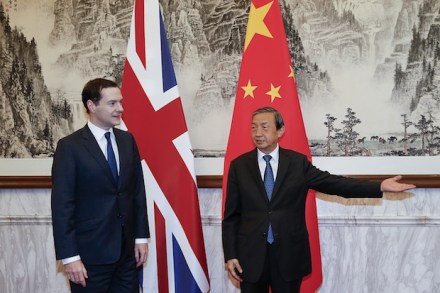
Home In a speech at the Shanghai stock exchange, George Osborne, the Chancellor of the Exchequer, announced a feasibility study into the trading of Chinese and British shares in both countries. At least half of all British banknotes in circulation are held overseas or used in the black market, a Bank of England report suggested. The political impasse in Northern Ireland continued. Sir David Willcocks, the director of choirs, died, aged 95. Brian Sewell, the art critic, died aged 84. Jackie Collins, the author of titillating blockbusters, died aged 77. An outbreak of highly drug-resistant gonorrhoea was detected in the north of England, from Oldham to Scunthorpe.

Podcast: the great British kowtow and do all right wingers have bad music taste

From our UK edition

Britain’s policy towards China appears to be quite simple: doing exactly what China wants. On this week’s View from 22 podcast, Jonathan Mirsky and Fraser Nelson discuss this week’s Spectator cover feature on George Osborne’s visit to China and our interview with the Dalai Lama. Why is the Chancellor so keen to please the Chinese government? Is David Cameron wrong to say he will never meet with the Dalai Lama again? And what does the Dalai Lama think of the Prime Minister’s position? Rod Liddle and James Delingpole also debate whether they have bad music tastes, following revelation that Delingpole enjoyed listening to Supertramp with the Prime Minister at university. Do all right-wingers inherently have bad music taste?