George orwell

America is socialist, dummy

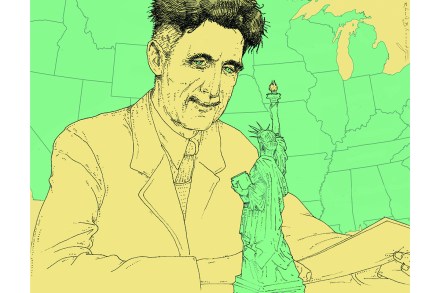
It’s widely agreed that Bernie Sanders fell short in the Democratic primary because he described himself as a socialist. As a movement, socialism has never had mass appeal in America. Even at its strongest, in 1912, it garnered fewer than one million votes for presidential candidate Eugene Debs, who was trounced by Woodrow Wilson. More often, Americans have used the word ‘socialism’ as a synonym for communism, to signify everything America doesn’t stand for. Pundits put Sanders’s failure down to his attempts to give the word a positive spin. On the other hand, a dispassionate glance at American history shows that Uncle Sam has already gone a long way down the road of democratic socialism.

socialist

Finding the Lost Girls

This article is in The Spectator’s February 2020 US edition. Subscribe here. Encapsulations of a particular art-world demographic nearly always fall wide of the mark. Just as there were plenty of people on hand in the 1950s to protest that the Angry Young Men were neither especially angry nor exclusively male, so countless chroniclers of interwar social life complained that the Bright Young People were neither bright nor young. But the critic Peter Quennell’s phrase ‘Lost Girls’ to describe the gang of female twenty-somethings who worked on the magazines and populated the parties of Blitz-era literary London carries an unmistakable tang of conviction.

lost girls

Wells farrago: gaslighting the Invisible Man

This article is in The Spectator’s February 2020 US edition. Subscribe here. ‘To many young people nowadays,’ H.G. Wells sighed in 1934, ‘I am just the author of The Invisible Man.’ He meant the movie, not the novel. George Bernard Shaw might have said something similar, only at greater length, had he lived to see the improvements by which Alan Jay Lerner turned Pygmalion into My Fair Lady. But would Wells recognize the latest variation on his 123-year-old character at all? This Invisible Man is not much interested in invisibility or men, or men who happen to become invisible. Elisabeth Moss is Cecilia Kass, a harassed woman trapped in an abusive relationship with a sociopathic tech bro.

wells

Nineteen Eighty-Four is not a guidebook for the present day

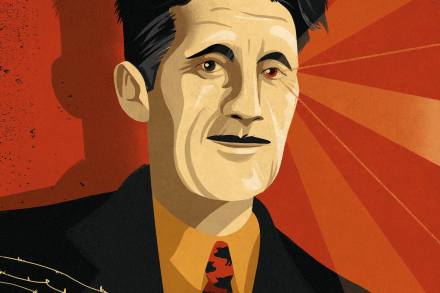
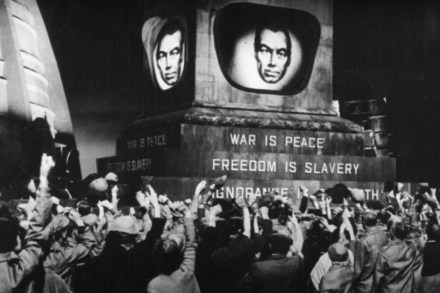
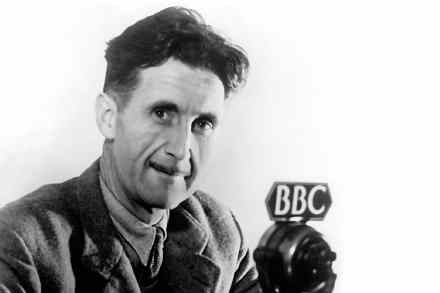
Is there a literary cliché more dull than saying of some old yellowing book that it is 'as relevant today as it was when it was written'? This month marks the 70th anniversary of George Orwell’s Nineteen Eighty-Four. Journalists on both sides of the Atlantic – to whom Orwell is a holy patron saint – have clacked out lengthy tributes (and entire whole books) to St Orwell’s most famous work. What, they ask, does Nineteen Eighty-Four mean today? Well my answer, for whatever that’s worth, is: nothing. Nineteen Eighty-Four has nothing new to say to us and we have almost nothing new to say about Nineteen Eighty-Four. Realistically, we have very little left to say about George Orwell too.

nineteen eighty-four

The problem with the new Animal Farm

Netflix have acquired the film rights to George Orwell’s totalitarian fable Animal Farm (1945). Napoleon, Snowball and all the other commies at Manor Farm are getting rebooted by British director and actor Andy Serkis. He has animal form, having played an ape in Planet of the Apes remake. The producers are promising to bring the novella to the screen with motion-capture technology, ‘in a thoroughly contemporary fashion.’ It’s too early to tell whether, given a plot-line involves a dictatorial pig’s insistence on building a giant wall, Serkis’s version will resist the obvious parallels with Trump’s America.

animal farm

Brave New World Revisited, revisited

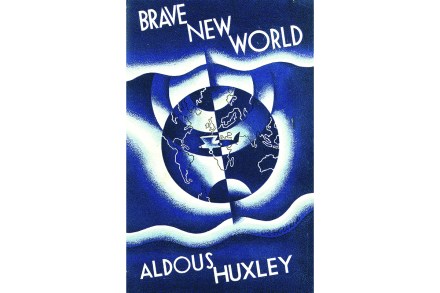
When the West’s Days of Reckoning came in 2016, we naturally turned to George Orwell, master of modern dystopia, to make sense of Trump, Brexit and the return of the far-right in Europe. We took to the streets — or rather Twitter — crying, ‘It’s just like 1984!’ Dystopia had made a comeback. We lapped up The Handmaid’s Tale, Black Mirror and Blade Runner 2049 with gleeful horror. Our concern shot Orwell’s novel to the top of Amazon’s chart. These are cautionary tales for dangerous times. Stories of science-fictional wastelands, malevolent totalitarian governments and vengeful AI that warn us of what we might become. Yet we often ignore Aldous Huxley’s Brave New World. This is curious.

aldous huxley brave new world