George orwell

‘LinkedIn speak’ is a disgrace

The past few years have seen a slew of devastating style assaults on the English language known as "LinkedIn speak." You know the type of word salad: "synergize" instead of "combine," "ideated" instead of "thought of," "holistic" instead of – well – looking at something as a whole. Alarmingly, there is now an app, Kagi Translate, that allows you to type any sentence and it will deliver it for you in this wretched patois. For instance, write "I went to the zoo," and Kagi gives you: "I had an incredible opportunity to observe high-performing teams in a diverse ecosystem and reflect on the importance of adaptability and strategic positioning." Go on, try it.

Linkedin

Life lessons from George Orwell

It was the British political journalist Jason Cowley, writing in London’s Sunday Times a month or two back, who posed a query calculated to strike terror into the heart of any self-respecting Orwell-fancier. Were we, Cowley wondered, with the air of one who tosses a Sèvres vase into the air to watch it descend into heap of fragments, approaching peak Orwell? Was the man in whose voluminous output so much of modern political and sociocultural malaise has been refracted losing his sheen? Some Orwellians – myself included – on hearing this would probably respond with a rather handy Latin phrase: si monumentem requiris, circumspice, which loosely translates as, “If you want evidence, buster, then take a look around.

Mamdani’s People’s Republic of New York

Proudly displayed in the window of my local Barnes and Noble are copies of a children’s book called Zohran Walks New York. It’s a graphic novel that shows our city’s new perma-grinning mayor meeting residents who are overwhelmingly happy to see him. A more instructive text for the children of Park Slope was tucked away in the corner of the basement: Animal Farm. I bought it for my 11-year-old daughter at the weekend. She’s into dystopian novels.  More people will become hooked on state benefits and more staff will be needed to shove piles of cash towards them I thought of Orwell’s allegory of the Russian revolution this week when our mayor threatened to increase property tax to pay for his huge $127 billion budget.

America’s free-speech war on the EU

If I were a bookie, I would be making odds now about when the European Union will finally unravel and die. Unless there is an imminent and drastic course correction, the blessed event cannot be far off.  I might need a Doomsday Clock akin to the one publicized by the Bulletin of the Atomic Scientists. Their clock hovers near midnight, which signifies nuclear Armageddon, the minute hand pushed closer or farther away from the blast depending on minatory world events. My clock would measure the EU’s proximity to implosion. Its recent decision to fine Elon Musk and his company X €120 million for “non-compliance with transparency obligations” has me nudging the minute hand closer to midnight. “Non-compliance with transparency obligations.” What do you reckon that means?

The pleasure in not knowing

A few years ago, the podcaster Lex Fridman published a list of books that he was hoping to read in the year ahead. It included works by George Orwell, Fyodor Dostoyevsky, Hermann Hesse and others. If he had published this in the world of print media he might have got back some encouraging noises. But because he put the list online – worse, on the platform then still known as Twitter – he received mostly mockery. “Who hasn’t read Animal Farm?” was the general tenor of the blowback, as though a man who had been a researcher at MIT was next to being a Neanderthal.

douglas knowing

The classroom panopticon

Is it ironic to give a prize for encouraging “open discussion and debate in the classroom” and “creating an environment where all perspectives can be heard” in the name of William F. Buckley Jr.? Although best known today as the founder of National Review and longtime host of Firing Line, Buckley first came to prominence in 1951 with the publication of his book God and Man at Yale, subtitled: The Superstitions of “Academic Freedom.ˮ Buckley’s secular and secularized Protestant critics might well have considered the firmly Catholic young man, twenty-five years old at the time the book appeared, an apologist for something they regarded as superstition. But Buckley did not mean the term as a compliment when he applied it to academic freedom.

classroom

Examining children’s literature and its enduring worth

My first reaction, on tipping this vast compendium — soaring toward 600 pages — out of its padded bag onto the kitchen table, was straightforward envy at the thought of anyone being paid what, you infer, was quite a reasonable sum of money to spend several years on the intoxicating trail of the children’s book. My second was intense curiosity over the procedural approach employed, which is to say that there are a variety of well-worn pathways into the heart of the genre; it would be fascinating to see which ones Leith, the literary editor of The Spectator in the UK, had chosen to follow. The first path, exemplified by Francis Spufford’s 2002 The Child that Books Built, involves writing a memoir that broadens out into a consideration of the form as a whole.

Leith

Apple downplays the value of human achievement

In January 1984, Blade Runner and Alien director Ridley Scott shot an Apple computer Super Bowl commercial mocking Orwell’s Nineteen Eighty-Four — and it changed the television advertising landscape forever. It featured a woman in a white tank top and bright red shorts destroying a monochrome screen with a sledgehammer. This week, Apple CEO Tim Cook promoted a new ad titled “Crush” that gave the exact opposite message and led to a furious backlash on social media. The ad begins with lights coming on in a factory setting with cultural items and artifacts stacked on top of each other, all gathered on a giant industrial press. Then the press begins to lower as a Sonny and Cher song plays.

1984 on Audible is a deliciously chilling immersion experience

Forty years on from the year in which it is set, and released on the date of Winston Smith’s first diary entry, George Orwell’s seminal dystopian novel Nineteen Eighty-Four (not 1984, despite how this most recent retelling has chosen to style the title) has received perhaps its highest-profile adaptation since Michael Radford’s film. Andrew Garfield plays the reluctantly rebellious Winston, and man-of-the-moment Andrew Scott is a smoothly vicious O’Brien. Cynthia Erivo makes for a suitably feisty Julia, and Tom Hardy reprises his Bane boom as Big Brother, although his contributions are wisely kept to a minimum.

george orwell nineteen eighty-four audible

In praise of George Gissing, the born exile

George Gissing died just over 120 years ago, marooned in the French Atlantic resort of Saint-Jean-Pied-de-Port and in circumstances that might have been plundered wholesale from one of his notoriously ground-down novels. H.G. Wells, present at the scene, was so affected by his friend’s deathbed ravings that he transferred them word for word into the mouth of Uncle Ponderevo as he lies dying in Tono-Bungay (1909). There are Orwellian shadings: like Gissing, Orwell died at forty-six of lung disease, and was profoundly influenced by his Victorian forebear. It was Anthony Powell who remarked of Orwell’s third novel, Keep the Aspidistra Flying (1936) that “the Gissing had to stop.

gissing

The 2024 regime referendum

The 2024 election will be a referendum on Joe Biden, but it’s also a referendum on a regime. This is how both sides see it. Liberal democracy itself is at stake according to progressives. For Trump supporters, the question at issue is legitimacy of the Deep State. These are different names for the same thing: a leadership caste and its ideology of government. In practice, liberal democracy means a democracy in which liberals never lose power.

regime

Why is George Orwell so difficult to pin down?

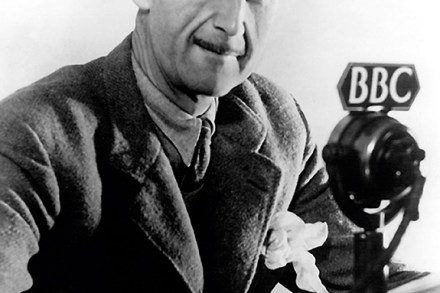
Outside Broadcasting House, the BBC’s main center in London, is an imposing, eight-foot-high statue of a man. He leans over slightly, as if to accost passersby, and holds a cigarette. A sign behind him declares, “If liberty means anything at all, it means the right to tell people what they do not want to hear.” The man is the author and critic George Orwell and the statue was intended as a permanent commemoration of his writings and values, as well as his short-lived stint at the BBC during World War Two.

orwell

How America influenced George Orwell

Some of the most tantalizing pieces of George Orwell’s journalism are the reviews written on the hoof, filed against deadlines, sent straight to the typewriter while World War Two raged above his head. One of them is a round-up of four reprinted dystopian novels supplied to the weekly magazine Time and Tide in July 1940, shortly after the fall of France. (Today, it’s rarely reissued and barely available outside the stout bindings of volume XII of Orwell: The Complete Works.) The four books are Jack London’s The Iron Heel (1908), H.G. Wells’s When the Sleeper Wakes (1910), Aldous Huxley’s Brave New World (1932) and Ernest Bramah’s The Secret of the League (1907).

orwell

When America makes Orwell look like an amateur

Under today's gathering dark clouds, a reread of Nineteen Eighty-Four shows how the otherwise prescient George Orwell was wrong to think people were going to have to be tortured into submission. Half of America (still psychologically locked down, vexed and vaxed) wouldn't have it any other way. The world of Nineteen Eighty-Four is grim in a way 2022 would understand. The people of Orwell's future want to be controlled. They have come to prefer it. Freedom from choice makes them feel safe. People accept being monitored, and their media being censored. They think of it all with a sense of the inevitable — the only way to stay safe if they think of it at all. The all-seeing telescreens in their homes and the snitches and spies embedded in their lives are for the better, really.

How science fiction novels read the future

The pandemic is not quite over, but we are getting used to its inconveniences. What disaster will be next? An antibiotic-resistant strain of the bubonic plague? Climate collapse? Coronal mass ejection? Will the next catastrophe be natural — perhaps a massive volcanic eruption, the likes of which we have not seen for more than two centuries, since Tambora in 1815? Or will it be a manmade calamity — nuclear war or a cyberattack? And might we inadvertently descend into a new form of AI-enabled totalitarianism in our efforts to ward off such calamities? To all these potential disasters it is impossible to attach more than made-up probabilities. So what can we do about them? The best answer would be that we should strive to imagine them.

science fiction

The doctor is mad

I have been writing a lot about the politically inspired perversion of language. The name “Orwell” crops up in any such discussion, as does the word “Newspeak,” that twisted mode of language that Orwell outlined in the appendix to Nineteen Eighty-Four. The goal of Newspeak, Orwell said, was to replace standard English with a sharply diminished patois whose linguistic poverty was its prime political advantage. By reducing the suppleness of language, the elites who controlled society hoped also to reduce dissent — not only the activity of dissent, but also the thoughts and emotions that guided it. This has been a perennial dream of budding totalitarians, from the French Revolution to the varieties of communist tyranny.

medical

Modern English

The English language as written today is often nearly incomprehensible on first reading, and as spoken almost unintelligible and unpleasant to the point where the civilized listener disengages himself in frustration and disgust from the speaker and his speech. The problem in the first instance is the readiness of people who know better to embrace demotic usage in semi-formal literary venues, such as respectable journalism; the second, the bizarre combination of pretension and illiteracy and its results, the jargon and barbarisms ubiquitous in the 21st century.

English

We’re all thought criminals now

I’m disappointed that Bari Weiss has resigned from the New York Times and not just because she was one of the few voices of reason on the paper. A while ago, I flew to New York at Bari’s request to be interviewed by her for a forthcoming profile of a group of maverick writers and intellectuals in what was billed as a follow-up to her famous piece on the ‘Intellectual Dark Web’ — a kind of Junior College branch. Among those to be featured were the African American essayist Coleman Hughes; the Australian editor-in-chief of Quillette, Claire Lehmann; and the Swedish columnist Paulina Neuding. We spent an enjoyable afternoon together at the Times building on Eighth Avenue, having our photographs taken and being wined and dined by Weiss in the boardroom.

bari weiss anti-semitism

Is this the end of history?

Midway through Hemingway’s The Sun Also Rises, there occurs this exchange between two characters: ‘“How did you go bankrupt?” Bill asked. “Two ways,” Mike said. “Gradually, then suddenly.”’ The process of civilizational bankruptcy takes a similar course. Casual, seemingly isolated attacks on the fabric of civilization feel at first like so many harmless insect bites. A speaker is shouted down. A statue is vandalized or removed. A college course once deemed essential is rebaptized as offensive: first it is pilloried, then it is canceled. People start quoting Tocqueville’s warning that in a democracy, as large inequalities dissolve, small inequalities are magnified, growing both rancid and rancorous.

end history

Society isn’t systemically racist. It is systemically woke

Structural, systemic, systematically — we’re hearing these words a lot at the moment. Racism isn’t individual. It is structural or systemic. So are poverty or injustice. People aren’t just oppressed or tortured; they are systematically oppressed or tortured. This is the language of Black Lives Matter and some of the noisier Democrats, and it’s telling. It comes from Marxist academia and the Black Power activism of the 1960s, and it evokes the radicalism of that time, which is generally now regarded as having been on ‘the right side’ of history. These words are also helpfully vague — nobody knows precisely what they mean — which means you can stress them without being contradicted.

systematically