Generation Z

Why Gen Z is troubled by Jesus

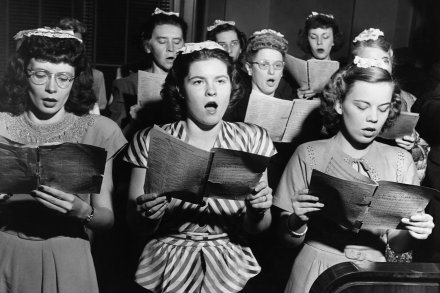
Many teenagers today find Christianity off-putting because Jesus seems too fond of "mansplaining." He appears to have a "God complex," while the Almighty is alienating on account of being "really violent and aggressive." These are the findings in the report Troubling Jesus, the third part of Youthscape’s "Translating God" project, based on a recent survey of British 14- to 17-year-olds. Drawing on five reading groups, in which teenagers reacted to passages of scripture traditionally understood as conveying "good news," Youthscape faced reactions "radically different" from what it says might have been expected. While Jesus was not only seen as a condescending male chauvinist and God the Father as a bully, many youths discerned other issues in the readings.

christianity gen z jesus

No sex please, we’re Gen Z

For many years now we have all been agonizing over the fertility crisis. Why aren’t the kids having kids? It’s become a sort of parlor game, the swapping of the various theories. Is it the cost of living? Microplastics? Eco-anxiety? Tight underwear, I heard the other day, and snorted with scorn even as I tipped my son’s stretch-cotton briefs into the bin. But now another, rather more fundamental explanation for the baby shortage has emerged. It’s not just that younger generations aren’t having babies – it turns out they aren’t really having sex at all. The Atlantic was first to properly examine this trend among young Americans, in a terrific piece which gave a name to the phenomenon: the Great Sex Recession.

Every unhappy generation is unhappy in its own way

The Kids Are All Right was a 2010 movie that attempted to reassure audiences that the teenage children of a lesbian couple are psychologically just fine. The movie is largely forgotten but the title has lingered, often as a springboard for observers who say that today’s kids are not, in fact, all right. The diagnoses of what ails the current generation of young folk are many and various. They are the products of infantilization, feminization, iPhones, cancel culture, digitalization, narcissism, social-justice intoxication and nihilism – among other maladies.

Zohran Mamdani’s politics of entitlement

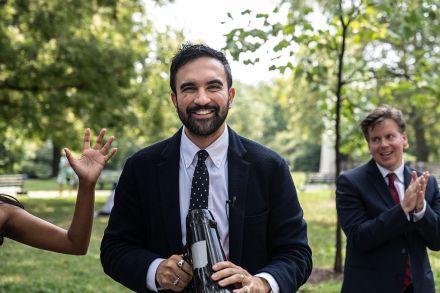
Zohran Mamdani’s presumptive victory will make history: if elected in November, he will become New York’s first Muslim and first Indian-American mayor. Powering his win in the Democratic primaries was a massive surge of young, urban, progressive voters changing the city’s political future. But beneath the energy and hope lies something more troubling: a generational embrace of a politics of entitlement, poised to undermine not only the city’s finances but also the values that have historically bound together American civic life. The city’s youth voting base turned out in force: voters aged 18–29 gave Mamdani the win.

Zohran Mamdani (Getty)

Why is American pride at an all-time low?

Lee Greenwood may be “Proud to be an American,” but the same can't be said for a growing number of his countrymen and women. Those who identify as “extremely” or “very” proud to be American has dropped from 87 percent in 2001 to 58 percent in 2025.  In 2001, Republicans, Independents and Democrats were all within six points of each other in their reported national pride. But now there's a 56-point divide between Republicans (92 percent) and Democrats (36 percent). Republicans stay patriotic regardless of the presidency, while Democrats have dropped 24 percent since Trump's inauguration this year. Beyond political affiliation, it seems the younger a generation is, the less American pride its members have.

4th of July preparations at the National Mall, DC (Getty)

Harry Sisson and trial by TikTok

This week, a story emerged about a dozen or so young women who each thought they were monogamously dating 22-year-old Democratic influencer Harry Sisson, albeit digitally. The 11 women, all around the same age as Sisson, claim that he had convinced each of them separately that they were the only woman on his “roster”; that they were the only women he was speaking to. He spoke to many of them for months at a time, with the conversations often being erotic in nature. Nudes were exchanged. But while each woman claims they believed to be the only person Sisson was doing this with, via social media, they have now come to learn that this wasn’t the case – he’d been flirting and sexting with several women at a time.

harry sisson

The Zoomer Zynergy that brought Trump back

Donald Trump has won the presidency for a second time — but the real surprise is the coalition of voters that put him there. Women showed up less for Kamala Harris than they did for Joe Biden, Trump’s white working-class base didn’t falter, and Arab Americans made their mark in Dearborn, Michigan. But the most notable gains for the GOP, however, were with Hispanic men and young men. With Hispanic men, according to CNN exit polls, the shift is remarkable: from +31 for Hillary Clinton, to +23 for Joe Biden, to +10 to Trump. Lots of credit is due to the burgeoning Spanish-speaking conservative media. With young men, the trend is even more eye-opening.

zoomers trump

Republicans are embracing the left’s victim culture over antisemitism

For years, Republicans have claimed that theirs is the party of free speech. They have correctly amplified instances of the intolerant left cracking down on conservative speech, particularly on campuses, often under the bogus guise of combating "hate speech," racism, sexism, homophobia, transphobia and other scourges they grossly exaggerate. Many of us on the right have mocked safe-space-craving Gen Z and millennial students and their expansive needs to feel “safe” by insulating them from speech that hurts their feelings. But now Republicans are conflating legitimate criticisms of Israel with antisemitism and essentially embracing the left’s victim culture in calling for safe spaces — if not by name — for pro-Israel Jews on college campuses.

israel

Why is Generation Z so undersexed?

There is a girl on TikTok, a bleached-blonde New York transplant who just passed a million followers, whose videos I cannot stop watching. The secret to her rise was “Get Ready with Me” storytimes in which she sat in front of the camera applying mascara and retelling — in painstaking detail — her lurid misadventures. Some highlights: throwing up on a guy’s bed after a wine-fueled hook-up and then realizing he had a girlfriend of two years, battling Montezuma’s revenge at a restaurant in Cabo, getting a UTI so bad she thought it was a kidney infection, inadvertently shipping a ton of “hot girl summer whore clothes” to a guy whose white sheets she bled all over after acquiring a polyp.

mystique

Against LOLflation

Between the deranged cancellations still roiling online life the Muskification of Twitter, and the undead nature of the Donald Trump-attention economy, there is no shortage of legitimate matters to depress someone like me who cohosts a podcast about internet bullshit. And yet for some reason, I’m fixated on an insignificant issue: LOLflation. The majority of you know what “LOL” stands for: “laughing out loud.” What it’s supposed to mean, when communicated via text or direct message or (less often) email, is: you just wrote something funny enough that I physically laughed. This is touching not just because it’s flattering to make someone laugh, but because it temporarily breaks the spell of the online world.

lolflation

Lessons for young daters from the Jonah Hill saga

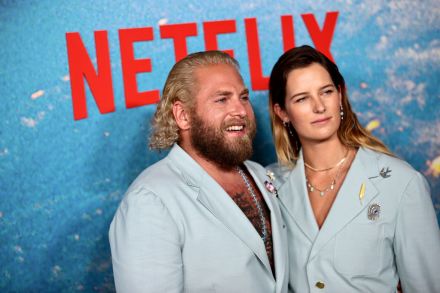
There was a viral tweet last year that read, “do married people watch gen z dating and feel like they caught the last chopper out of Nam?” The answer is a resounding yes. As bad as regular modern dating is, it’s that much worse for celebrities. In early June, actor Jonah Hill had a baby with his girlfriend Olivia Millar. About a month later, seemingly out of nowhere, his ex-girlfriend Sarah Brady posted screenshots of text messages from Hill from back when they were dating, accusing him of emotional abuse. Hill has moved on but twenty-six-year-old Brady has quite clearly been unwilling and unable to do so. The couple met when the actor slid into the direct messages of the surfer on Instagram, striking up a conversation.

jonah hill

TikTok’s revealing ‘bold glamor’ filter

Everybody wants to be beautiful, but very few people are. Think across the entirety of history. Empress Sisi, Cleopatra, Ginger Rogers, Jane Birkin. You could probably count the number of actually beautiful people on ten fingers. A lot of people are good-looking or fine. But beautiful is rare. Along with everything else that Generation Z feels entitled to — success, feeling heard, holding people responsible for their ancestral guilt — they also insist that we recognize their beauty (whether they have it or not). Their Instagrams are filled with beautifully taken photos, with beautifully poured lattes, on a beautifully curated grid. It doesn’t matter if they look like Shrek because it’s all done so damn beautifully.

tiktok bold glamor

The generation war and why millennials are drifting leftward

The war between the generations is on, and the battle lines have been drawn. The baby boomers don't like the millennials because they can't understand why the millennials won't just buy a house already. The millennials don't like the boomers because, as they've explained, a house no longer costs $75 with a couple coupons like it did back in 1972. And lately the millennials and Generation Z have been mixing it up as well, over such important issues as hair partings and emojis. So a fractured conflict, this one, a bit like Lebanon's civil war except with more awful Facebook posts. Yet if you're looking to really understand the social media-fueled rifts between the generations, then you have to start with the main combatants, the boomers and the millennials.

crime debate themes matt walsh

Young people should see climate change as a challenge

I’ve been fed two competing storylines for as long as I can remember. On one side, the world I’ve inherited is a tinderbox just waiting to erupt in flames. If I’m not the one engulfed, then surely my children or my grandchildren will be. And on the other side... crickets. The conversation around climate change has no spectrum. It’s just a bimodal screaming match luring young people into either skipping along into the sunset in blissful ignorance or slowly sliding into the fiery pits of hell in nihilistic resignation. Through young eyes, the dominant message from the right amounts to: your ecological inheritance is diddly-squat to us.

climate change

The final word on the millennial generation

More than anything else, the phrase “I’m still figuring it out” defines the millennial generation. Floating from passion to passion, job to job, lover to lover, possible spouse to possible dead end. In Joachim Trier’s The Worst Person in the World, Renate Reinsve plays Julie, a person that most of us would recognize from life, and certainly from the last ten years of media: approaching thirty; romantic and flighty to a fault (in the prologue, she drops out of medical school to become a philosopher and then a photographer); beginning to feel a void she doesn’t know how to fill.

worst

How the boomers robbed the young of all hope

"Young people do not degenerate; this occurs only after grown men have already become corrupt.” — Montesquieu, The Spirit of Laws, 1748. The great test of a generation is whether it leaves better prospects for its descendants. Yet by virtually every indication, the baby boomers, and even the Gen Xers, are leaving a heritage of economic carnage — as well as a growing social and cultural dissipation that could shape our future and the fate of democratic self-rule, and not for the better. This legacy comes not from outside forces, but the investment bankers, tech oligarchs and their partners in the clerisy who have weakened their national economies and undermined the chances of upward mobility for most young people.

young

Crypto casino

When I was in high school, I worked at an ice rink in the winter and a swimming pool in the summer. My friends toiled at Target and gofered at golf courses, making minimum wage and spending it on gas and low-rise jeans from Abercrombie: it was 2008, after all. These days, gas may still cost $4 per gallon, but now the jeans are high-waisted and the teens are more ambitious. My youngest brother Ted is 18. He spent the summer before his first year in college working in a cheese shop, sweeping floors and straining ricotta: a classic summer job, tedious and stress-free. Yet some of his friends are taking a different route. Ted’s buddy Tom just cashed out $3,000 in bitcoin winnings to buy a weeklong Airbnb in Ocean City, Maryland for all his friends.

crypto

The worst of Instagram activism

What do veganism, fashion, and architecture all have in common? According to Gen Z, they’re all racist.America’s teens and twenty-somethings have taken up the mantle of civil rights by reposting informative guides to Critical Race Theory on their Instagram Stories. Cockburn’s nieces were kind enough to send him a few links.You might think that these posts inform the zoomers about topics like fatherlessness, abortion, the welfare state and other serious issues that disproportionately face the African American community. However, these guides are almost entirely composed of far-left talking points, creating a social media echo chamber of unabated cultural Marxism and cringe.

instagram