Gender

Who’s afraid of Judith Butler?

Gay icon Judy Garland. Folk queen Judy Collins. Now, we have the lesbian saint Judith Butler (as of 2020, they/them saint Judith Butler.) Once resigned to recognition on college campuses for their unreadable 1990 tome Gender Trouble, which posited that gender is a performance, the queer theorist and Berkeley professor took off as a mainstream hero in the past decade. Tumblr kids reposted quotes from their lengthy, poorly written academic work. New York magazine declared Butler a “pop celebrity.” In March, Farrar, Straus and Giroux published Butler’s first commercial book, Who’s Afraid of Gender? Its prolonged roll-out aims to credit Butler for “birthing” the nonbinary and trans identities of the twenty-first century. It’s as much a publicity stunt as a book.
butler

Kihnu, Estonia’s imaginary isle of women

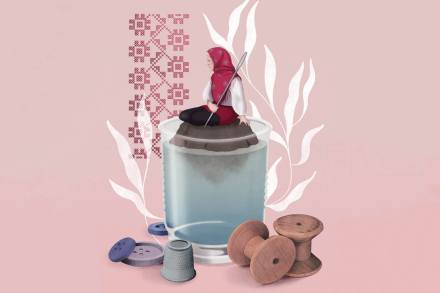
Who could resist the opportunity to visit a women’s island? Four years ago, I read an article in the New York Times travel section about an Estonian island called Kihnu, which the Times dubbed an “Isle of Women.” Its subhead asked “What would life be like without men?” and I wanted to find out, making a mental note to visit this peculiar island — “run by women” — someday, and my opportunity came last summer as part of a trip with my wife, Jen, and our teenage sons to Finland and the Baltic countries. But Kihnu, we discovered, isn’t a women’s island, or anything close to it. Before our trip, I reread the Times piece plus similar ones before combing YouTube for Kihnu videos.

kihnu

The inequality of sex

From our UK edition

As we all shroud ourselves in grief at being unable to watch Russell Brand any more on terrestrial television stations, a few thoughts occur. The first and most obvious is (once again) the presumption of guilt on the part of the entertainment industry, a business entirely devoid of morals and managed largely by coked-up hypocrites. Obviously, for most human beings our repulsion at the immediacy with which Brand has been cancelled by these dreadful people is challenged by our collective detestation of the man himself – yet another of those ‘comedians’ who never ever said anything funny and whose shtick was simply to reflect the zeitgeist of the age by showing off. But still.

The roots of J.K. Rowling’s contrarianism

Like his creator J.K. Rowling, Harry Potter says unspeakable things. He teases his cousin Dudley, the prince of his aunt’s suburban kingdom. He calls the Dark Lord Voldemort by his name. He even speaks to snakes. In other words, if Potter were a real person, he’d likely write a Substack, present a podcast and empathize with his creator’s recent public controversies. You are probably familiar with Rowling’s protests against trans activists’ demands to use women’s restrooms.

Rowling

Why ladies really should leave their man at home

A handsome male is now an accessory. Even the not-so-handsome ones: women dress them up, choose their haircuts, and put them in silly little outfits that compliment ours for the silly little events we fill our evenings with. Like a gender reveal party. Honestly, whose idea was that? They should be held accountable. Some time over the last twenty years, we have decided that a man is no longer someone we choose to have around. He's an extension of ourselves. He doesn’t agree with you on literally everything? Sounds like a narcissist. He forgot your half-a-year-aversary? Honey, he’s gaslighting you. Or maybe his mercury is in retrograde or he has a different love language. At least you know he’s not screwing the neighbor. Men don’t do that anymore.

man

Stop misgendering my dog

From our UK edition

It happens a couple of times a week: in parks, usually; sometimes outside shops, on Tube trains or in pubs. ‘What kind of dog is he?’ they’ll ask. I answer: ‘Bearded collie crossed with a greyhound which comes out looking like a deerhound but is actually a lurcher.’ But this is pointedly preceded by: ‘She’s a…’ I don’t like to be rude when strangers are being interested and congenial, but I feel compelled to quietly make the point that the dog they’re expressing interest in is not a he but a she.  News emerged this month that God might be becoming gender neutral.

In defense of catcalling

Nothing says "it’s going to be a fine day" like a catcall. A short line at the coffee shop, great. No pushing and shoving to get on the subway, wonderful. But hearing that whistle when walking past a group of builders up on the scaffolding really makes me smile like nothing else in my morning routine. If I’m lucky, I even get a “looking good, darling.” It’s an act that me and my nameless builder friend have perfected. I blush, he gives me a cheeky smile, we both get on with our day. Yet in London, this morning staple of mine is about to be made punishable by up to two years in prison. Bye bye, builder friend. Late last year, the British government launched their war on ogling.

downtown philadelphia

Will the Scottish trans row go to court?

From our UK edition

15 min listen

Westminster and Holyrood are going head to head on Scotland's newly passed Gender Recognition Bill. Last night, the UK government blocked the legislation from Edinburgh, citing that the powers it gives – requiring those identifying as a different gender to only live in that gender for three months, and reducing the age of self-identification to 16 – would contravene the UK's Equality Act. In the end, it may be the courts that decide. Cindy Yu talks to Katy Balls and Kate Andrews. Produced by Cindy Yu.

Are Holyrood and Westminster heading for another Supreme Court showdown?

From our UK edition

The UK government’s threat to block Nicola Sturgeon’s Gender Recognition Reform Bill took many by surprise. The powers, under Section 35 of the Scotland Act, have never been used before. The assumption from some observers, this one included, was that this was a negotiating tactic ahead of inter-governmental discussions on the Bill’s implementation and cross-border issues that might arise. That assumption appears to be wrong. I understand that raising the spectre of Section 35 is not a negotiating tactic: ministers are seriously contemplating it and legal advice is being sought. Among ministers’ concerns are questions over passports, driving licences and public safety.

Scotland’s Gender Recognition Reform Bill is an open goal for unionists

From our UK edition

Having just squandered a quarter of a million pounds on her fruitless Supreme Court independence challenge, Nicola Sturgeon’s government could be headed back to Little George Street sooner than they might have expected. If the UK government deems the hugely controversial Gender Recognition Reform Bill unlawful, a Section 35 order blocking the legislation from going to royal assent could be invoked by Scottish Secretary Alastair Jack. This would oblige Sturgeon’s government to take the matter to court. Is this what the First Minister wants? Many have been perplexed at her stubbornness in pursuing this contentious legislation, warts and all. (She wouldn’t even countenance a few common-sense safeguarding amendments, such as not allowing sex-offenders to change sex.

What Sturgeon’s Gender Recognition Act could mean for England

From our UK edition

One of the fundamental flaws in the Scottish devolution settlement set up by Labour and radically expanded by the Tories is the ability for policy divergence in Scotland to impact on the rest of the UK. The Gender Recognition Reform Bill, on the cusp of being passed by the Scottish parliament, might prove an object lesson. The Bill overhauls the process by which a person obtains a gender recognition certificate (GRC). This is the document which recognises an applicant’s gender identity in place of their biological sex. For example, a male who identifies as female and acquires a GRC becomes female in the eyes of the law.  The Bill being pushed through Holyrood by Nicola Sturgeon’s government makes this process easier, faster and open to more people.

The myth of the career woman

From our UK edition

The image of the single, childless ‘career woman’ is drawn so sharply in our minds, so deeply ingrained in culture and overused in media, it obfuscates the real story. Contrary to popular belief, most working women are not putting their careers ahead of love, marriage and motherhood. Never mind that there are no ‘career men’ – no one accuses a single, childless man of prioritising career over love and family just because he’s single and can pay the rent. But women are made to wear this label – though I have yet to meet a woman who has declined a date with a guy she’s interested in because she’d rather be on a Zoom call.

Rhapsodic banalities: I, Joan, at the Globe, reviewed

From our UK edition

‘Trans people are sacred. We are divine.’ The first line of I, Joan at the Globe establishes the tone of the play as a public rally for non-binary folk. The writer, Charlie Josephine, seems wary of bringing divinity into the story too much, and he gives Joan a get-out clause to appease the agnostics. ‘Setting aside religiosity we’ll settle for more of a street god, a god for the queers and drunks… a god for the godless.’ What can ‘a god for the godless’ mean? No idea. Joan throws in a few more hipster platitudes about ‘elevating our humanity, finding the unity hidden inside community, remembering our collective connectivity fuels courageous creativity [sic]’.

Why shouldn’t men date younger women?

From our UK edition

Toyboys are back, apparently. Over the past few months there has been a flurry of middle-aged women crowing about the joy of dating younger men. One author in her mid-forties extolled the virtues of having not one but three lovers half her age. In a piece explaining that ‘younger men are having a cultural moment’, a thirty-something writer described a first date apologising for his scruffy appearance because he’d ‘cycled straight from school’. These women claim it’s liberating, empowering, confidence-boosting and a lot of fun, and even brag about younger men being far better in bed than their older counterparts. And presumably all of this works both ways – so why are we less understanding when men choose younger partners?

The rise of the ‘Denis dad’

From our UK edition

Pity the ad man of 2022. Jokes about men and women and the differences between them are so very tempting, but can easily get a brand into trouble. Until not so long ago, the safest way to poke fun at family dynamics was through the figure of the incompetent dad. A 2012 American ad for Huggies nappies challenged five dads to ‘the toughest test imaginable’: looking after their babies solo. It must have seemed like a good idea at the time, given that the useless dad appears in almost every sitcom of the past half century. But Huggies was forced to pull the campaign after complaints from insulted fathers and, ten years on, my guess is that no other brand would attempt anything similar.

The trouble with Tavistock

"In July, Britain’s National Health Service announced a major revamp of its gender identity services for young people. The famed Tavistock clinic — officially named the Gender Identity Development Service, operated by the Tavistock and Portman Trust and a flashpoint for the country’s debate about gender, trans issues and hormone treatments — would be shuttered. As the New York Times reported, it would be replaced by “a more distributed and comprehensive network of medical care for adolescents seeking hormones and other gender treatments.” This outcome was strongly hinted at in the interim report of the Cass Review, an ongoing investigation into gender identity services for children, headed by the accomplished pediatrics expert Hilary Cass.

jessica yaniv tavistock
barber

The scissor sisters

I needed a quick cut and shave, my usual guy was closed, and the shop down the road was a tinge more masculine, or so I thought, than the other joints nearby. It was still one of those Brooklyn neo-barbers, complete with tatted-up staff, dark walls, steel accents with live edge countertops, trailing golden pothos and old-timey photographs of men sporting dramatic mustaches. On the Brooklyn scale of pretension, it ranked low compared to the rest, where you’ll find a bundle of demure waifs stationed in leather aprons as they balance brass clippers with outstretched pinkies, like martini glasses, delivering fades with delicate upward flicks of the wrist — that’ll be $150. “She’s running a little late,” the owner said of the barber to whom I’d been assigned. She?

Demi Lovato’s pronoun-based self-deception

Recently, Demi Lovato has been feeling more feminine. The singer and actress a few days ago told “Spout Podcast” host Tamara Dhiaan that when it comes to pronouns, she’s “adopted she/her again.” Lovato, who came out as nonbinary in 2021, explained her decision: “I’m such a fluid person.” “Fluid” would be one word to describe Lovato, whose Instagram profile since April has read “They/them/she/her.” Cue the confusion from even woke media, though podcaster Dhiaan followed up the interview with this very helpful clarifying tweet: “For the record: Demi Lovato did NOT say she is abandoning they/them as her pronouns, she simply said she is adding she/her.” The Washington Post also chimed in to help make sense of this very important celebrity announcement.

Good riddance to the Tavistock

From our UK edition

Most push notifications that pop up on my tablet concern impending catastrophe. But last week, one newsflash made my day. Glory hallelujah, the NHS is closing the Tavistock. A clatter of tattletales have warned since 2005 that the UK’s only clinic for minors confused about which sex they are – having been encouraged to be confused by British media and their own teachers – was fast-tracking children into often irreversible treatments in the service of ideologically driven ‘gender affirmation’. At last the Cass report has determined that the clinic’s practices are unsafe. The Tavistock will close by the spring, which by my calculation is seven months too late – if not ten years.

When did we give up on the truth?

From our UK edition

During that rather strange summer of 2020 I used the phrase ‘the gentle armed robber George Floyd’ in several articles for various publications, but the phrase was often taken out. I had thought it a mild corrective to the seeming beatification of a man who, while having been wrongly killed, was not, to my mind, quite worthy of the retrospective adoration being poured upon him. Nope, there would be no corrective – not about George. Indeed in that summer of lockdowns, hand sanitiser and existential angst it was pretty much impossible to challenge the programme of Black Lives Matter, full stop.