Gangs

Roadblocks prevent Trump from deporting millions of illegal immigrants

“You don’t have to go home, but you can’t stay here.” So goes the bartenders’ refrain to customers at closing time. The Trump administration is issuing that same call to millions of illegal immigrants, beginning with the most violent (and those caught staying with them). You can’t stay here. It’s a wildly popular stance, but it is running into predictable problems. The first is that rounding up the millions here illegally is costly, time-consuming and sometimes dangerous. That problem was vastly increased by Joe Biden’s deliberate decision to open the southern border, allow millions of people to cross it illegally and then lie to the public and Congress about what his administration was doing.


Immigration

Behind the Venezuelan migrant crime wave

Jose Antonio Ibarra, a twenty-six-year-old Venezuelan illegal immigrant, was charged in connection with the gruesome murder of Laken Riley, a nursing student at the University of Georgia last week. Another Venezuelan, thirty-two-year-old Renzo Mendoza, was arrested last week on two felony charges for sexually assaulting an underage child in Virginia.  These cases, along with a series of others connected to Venezuelan migrants, have become central to the debate on immigration policy. Tuesday morning, for instance, Republican members of the House Judiciary Committee sent a letter to the Department of Homeland Security asking for more information about Ibarra.

tren de aragua venezuela

Why Haiti’s problems are America’s problems

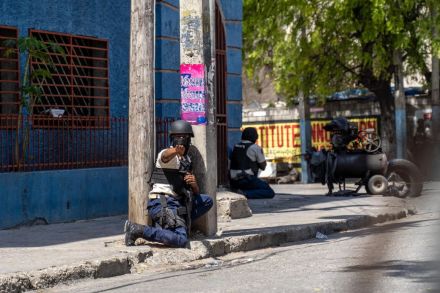
Haiti tends to not get much attention in the American press, but it should. The country has descended into a state of near-anarchy, with gangs ruling the streets and the government more or less nonfunctional. There has not been an election since 2016, and both the legislative and executive branches of government have no elected officials in office. The country has been ruled by an unelected prime minister, Ariel Henry, since the July 2021 assassination of President Jovenel Moïse. Elections are tentatively planned for this year, but the timeline is not yet set. The crisis in Haiti is a problem for the whole region, including the United States.

How Syria became another narco-state

There is a drug war brewing in the Middle East, and Syria is at its center. The country has been destroyed by its eleven-year civil war, and in the ruins of what was once a prosperous country, an entirely different economy now takes shape. It’s an economy of poverty and privation, where food and energy prices are perpetually high, and supplies of basic commodities are uncertain. The regime of Bashar al-Assad, now unlikely to be overthrown, has become the Middle East’s biggest moocher — a rent-seeking entity that begs for “reconstruction” funds from nearby monarchies to keep its own corrupt machinery in operation. Wartime brings its own economic calculations.

The Ryan Gattis guide to Lynwood

In 2015, after a 10-year hiatus that followed his debut, the novelist Ryan Gattis published a masterpiece. All Involved is a compulsive, symphonic novel set during the Los Angeles riots of 1992, telling the stories of gang members, a firefighter, a nurse and a graffiti artist, among others, as they try to navigate six notorious, brutal days in LA. This month, Gattis returns to this milieu with The System. Much of the novel is set in troubled, entrepreneurial Lynwood, South Central Los Angeles, where Gattis has spent many hundreds of hours on painstaking research.

ryan gattis lynwood