G20

How can we trust China with our nuclear power when we can’t trust it not to spy on our government?

From our UK edition

In her decision as to whether to go ahead with the Chinese-backed Hinkley C nuclear power station – postponed from July apparently because of security concerns – Theresa May will find no better guidance than the advice which has been given to her and her aides while attending the G20 summit in Hangzhou this week. They have reportedly been advised to not to take their mobile phones, and to use temporary replacements while in China. They have also been given temporary email accounts which can be deleted upon return, and to avoid using public charging points for laptops and iPads.

Portrait of the week | 3 March 2016

From our UK edition

Home An official analysis by the Cabinet Office said that if Britain left the EU it would lead to a ‘decade of uncertainty’. Opponents of Britain remaining in the EU called the report a ‘dodgy dossier’. George Osborne, the Chancellor of the Exchequer, said that the economy would suffer a ‘profound economic shock’ if Britain left, echoing a communiqué of the G20 which referred to ‘the shock of a potential UK exit’. Boris Johnson revised his suggestion that a vote to leave could bring about a better deal from Brussels; ‘Out is out,’ he told the Times. Sir Jeremy Heywood, the Cabinet Secretary, declared that ministers opposing government policy on the referendum should not be shown government papers on the matter.

Portrait of the week | 20 November 2014

From our UK edition

Home David Cameron, the Prime Minister, said: ‘Red warning lights are once again flashing on the dashboard of the global economy.’ He then offered £650 million to a ‘green climate fund’. In a speech in Singapore, Mark Carney, the Governor of the Bank of England, said that fines for banks over rigging foreign exchange rates showed that ‘it is simply untenable now to argue that the problem is one of a few bad apples. The issue is with the barrels in which they are stored.’ Official figures showed that the number of British Army reservists has been boosted by a recruitment drive in the past year from 19,290 to 19,310. Friends of the Earth went to law to secure the future on the river Otter of a family of beavers living wild there.

Cameron wants to stop talking about ‘the crisis of our time’ as quickly as he can

From our UK edition

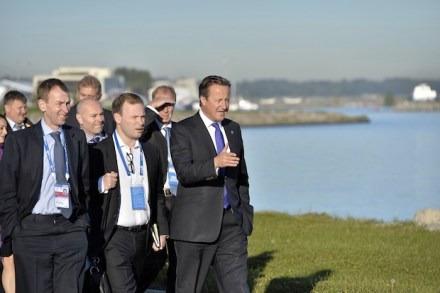
David Cameron’s statement to the Commons on the G20 wasn’t as lyrical as his response to Russia’s ‘small island jibe’. But it was a reminder of the needle that now exists between Cameron and Miliband. In previous times, these statements—which are far less tense affairs than PMQs—have seen a bit of badinage between the two front benches. But that has now gone. The statement was dominated by Syria, which Cameron called the ‘refugee crisis of our time’. When Cameron talks about his defeat in the Commons on Syria, he speaks very quickly, with no pauses between the words. It’s as if he wants to get talking about it over as quickly as possible.

David Cameron: We can’t let Russia dictate other countries’ foreign policy

From our UK edition

As well as having another extended Hugh Grant moment about how great Britain is (excluding David Beckham's feet, but including One Direction), David Cameron got his chance to hit back at Russia's intransigence on Syria this afternoon as the G20 summit drew to a close. Nodding to the lengthy declaration issued by the leaders - which fails to mention Syria or Assad - the Prime Minister emphasised that 'this summit was never going to reach an agreement on what action is needed on Syria'. When Barack Obama spoke later, he said the discussions had reached unanimity that 'chemical weapons were used in Syria, there was a unanimous view that the norm against using chemical weapons has to be maintained', but that only the majority had agreed that Assad was responsible.

Small island will need to talk big on Syrian aid

From our UK edition

Even though Vladimir Putin slotted Syria into the G20 agenda last night, no-one seriously thought that this meant the world leaders would come to a proper agreement on what to do about the conflict. In the last few minutes, David Cameron has told journalists covering the summit that 'divisions are too great' for a deal, and that Russia wants further evidence that the Assad regime was behind the terrible attack in August. George Osborne was on the Today programme earlier discussing the summit. He said: 'We've set out what we think is the right response, obviously President Obama has set out what he wants to do and there is a disagreement around the table, I don't think there's any secret about that.

G20 summit gets small-minded with ‘small island’ gibe

From our UK edition

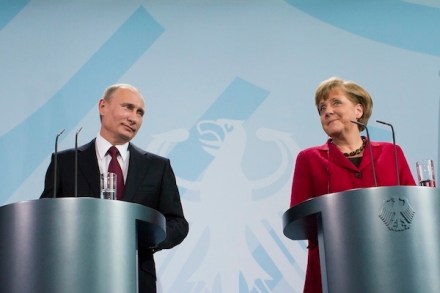
What a nice host Vladimir Putin is. Shortly after world leaders gathered in his country for the G20 summit in St Petersburg, a briefing from the President's official spokesman that Britain is 'just a small island no-one pays any attention to' made its way into the media. Nothing like rubbing the nose of one of your guests in the dirt as politicians in this country work out where Britain now stands in the world after rejecting intervention in Syria (more on this in James's column this week).

Argentina’s G-20 membership should be revoked

From our UK edition

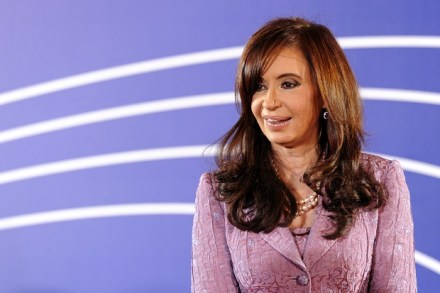
When Argentina appears in British public discourse, it is normally in relation to one of the two ‘f’s – football or the Falklands. The behaviour of President Cristina Kirchner’s regime towards the islanders is nothing short of disgraceful, and it is very encouraging to see the British government supporting the islanders in the strongest terms. The Falklands, for obvious reasons, are top of our agenda when it comes to discussion of Argentina, but this issue should not blind us from other major problems affecting this country as a result of Cristina Kirchner’s belligerence. Kirchner makes no secret of her refusal to play by the same rules as everyone else.

Cameron plays his part in an eventful G20

From our UK edition

And there we were thinking that the G20 would be another insipid talking shop. In fact there was intrigue, animus and even a modicum of progress on the crucial question of the moment: how to cure the Eurozone. In a major shift in policy, Germany has agreed to use European bailout funds to buy Italian and Spanish bonds in the hope of reducing yields to a sustainable level. It was felt that if the cost of debt financing was not reduced, then Spain and Italy might slip into the abyss.  £600 billion will be made available from the two EU bailout mechanisms, the EFSF and the ESM.

The pernicious myth of powerlessness

From our UK edition

‘Corruption,’ wrote Edward Gibbon in his peerless Decline and Fall of the Roman Empire, is ‘the most infallible symptom of constitutional liberty.’ I was reminded of this phrase when thinking about the Eurozone crisis. Commentators present a dichotomy between the discipline of northern Europe and the frivolity of southern Europe, which is characterised by bureaucratic, judicial and political corruption. Brussels has already imposed technocratic governments on Italy and Greece, and seeks to force Teutonic virtues on those economies. Constitutional liberty is to be limited in the hope of eradicating corruption (both in a literal and figurative sense) in southern Europe.

Do we really need the upcoming G20?

From our UK edition

We’re all familiar with the eurozone boom-bust news cycle by now. First, there are reports of more European banks in trouble, then news of governments seeking bailouts, closely followed by speculation over the future of the euro. Then, as if to crown it all, there will be news that global political leaders and finance ministers are about to hop on planes to attend one G-Digit meeting or another. This time, as it happens, it’s the G20, in about a fortnight’s time, in Mexico.   With Spain in deep financial crisis, German banks downgraded by Moody’s, the US economy apparently stuck in a rut and the Chinese growth engine sputtering, are such international summits more, or less, necessary than ever?

Cameron leaves Cannes with an IMF headache

From our UK edition

https://www.youtube.com/watch?v=Qm6yP-5RGK8 The Cannes summit leaves the world no further forward on its quest for some kind of solution to the Eurozone crisis. Strikingly, the Germans still won't agree — despite huge diplomatic pressure — to the ECB fulfilling the traditional emergency function of a central bank and acting as lender of last resort. This is a blow when you consider that Cameron thought there was a real possibility Merkel would budge on this after last week's European Council meeting. It also provides Cameron with a domestic political headache. For if the ECB won't act, the IMF will have to take more of the strain — and increasing Britain's contributions to the IMF in the current political climate is not going to be easy.

Reuters: Papandreou to resign on Friday

From our UK edition

Reuters is reporting tonight that the Greek Prime Minister has agreed to resign on Friday. The news agency says that at a meeting Cabinet colleagues told George Papandreou that he had to resign for the good of the Socialist party and he agreed. It quotes one source saying, "He agreed to step down. It was very civilised, with no acrimony." Now, after Thursday’s experience, I suspect we’re all taking reports about what will, or will not, happen in Greece with a pinch of salt. But it does seem that the referendum is off, stymied in part by Merkel and Sarkozy, who have ridden roughshod over the idea of non-interference in another nation’s affairs. That is, I suppose, par for the course for the European project.

What will Osborne’s offer to the IMF amount to?

From our UK edition

George Osborne's allies may be filtering across government, but what of the man himself? He was at a meeting of G20 finance ministers in Paris yesterday, and trying to maintain a difficult balance over the imploding eurozone. In part, our Chancellor was firm about Europe's troubles — the area, he said, "remains the epicentre of the world's current economic problems," and he urged its leaders to come up with something "quite impressive" at next weekend's European Council meeting. But he also tried to sound understanding — the UK, he suggested, would consider shuffling more cash into the IMF's bailout account. The offer of more funding for the IMF was arresting — but it's uncertain what it will come to, or whether it will come to anything at all.

Why we need a rate rise

From our UK edition

Now that today’s inflation figures are up, to a predictable and predicted 4.0 percent on CPI and 5.2 percent on RPI, we can expect the usual response. Nothing from the government (even though the declining standard of living will eclipse cuts as the no.1 problem of 2011); plenty of shocked news stories; and, then, the round of commentators saying that Mervyn King should “hold his nerve,” and not increase the absurdly low base rates of 0.5 percent. Inflation is temporary, he says, and should be okay again this time next year (that’s what he said about the start of 2011). The Spectator does not have much company in finding fault with King and calling for a rate rise. So here’s my case: 1.

Much more than a networking event

From our UK edition

What's the point of Davos? This is a question seldom addressed in the reports filed from the five-day "World Economic Forum" which ended on Sunday. Many speeches are made, many issues debated, but it is not a place where decisions are taken. It is not a G20. Manifestos are not launched there. It exists to serve a very particular function: every year for a short period of time it becomes the temporary capital of the globalised world. Top business and political leaders, distinguished academics and journalists - all committed to improving the state of the world - flock there to meet each other, swap ideas and then go home. This year, I went along for my first visit - and I promised to file my own report for CoffeeHouse on what I made of it.

The rise of China and India, by numbers

From our UK edition

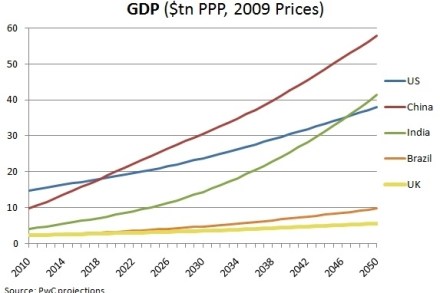
We're used to seeing growth forecasts for the next few years, but here's an altogether rarer beast: forecasts stretching all the way to 2050. They were released by PricewaterhouseCoopers last night, and I thought CoffeeHousers might appreciate seeing them in graph form. Naturally, slap health warnings aplenty across this – economists barely know what will happen this year, let alone decades hence – but some of the trends are still pretty striking. Here's a round-up: 1. This first graph suggests that – allowing for the relative values of different currencies – China’s GDP will top the US’s around 2020. India's does likewise just before the 2050 endpoint:   2.

From The Annals of the Gord

From our UK edition

This snippet from Anthony Seldon and Guy Lodge’s latest book merits repeating: ‘As Barack Obama waited in a cavernous building in London, he suddenly noticed Gordon Brown stomping towards him down a corridor, with a flurry of aides in his wake. Unfortunately — probably because he has a glass eye as the result of a rugby injury — the Prime Minister didn’t see the President. To the surprise of Obama and his entourage, the British premier was doing a passable impression of an erupting volcano. He was clearly furious about something his aides had or hadn’t done. It was hardly the behaviour anyone would expect of a G20 summit host, and the American President watched with growing disbelief.

The new Cold War?

From our UK edition

In his recent cover story for The Spectator, the Financial Times' Gideon Rachman talked about how, in the United States, China was beginning to take on the appearance of a new Cold War-style foe. Many Americans accuse China of stealing US jobs, of keeping the its currency undervalued, of exporting deflation by selling its products abroad at unfair prices, and of failing to meet its commitments to the World Trade Organisation. Two months ago, a poll from WSJ/CNBC showed that the majority of Tea Party activists oppose free trade – seeing China as the sole beneficiary of a free trade policy. But it is not only the Tea Party that is goading for a US-Chinese clash.

Playing with fire | 11 November 2010

From our UK edition

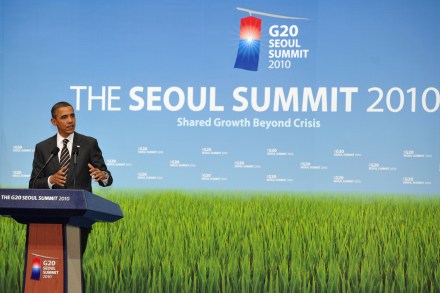
As the G20 summit begins in Seoul, the emphasis in much of the papers is on the economic hostility between America and China. The FT's Gideon Rachman wrote a cover piece on this matter for The Spectator two weeks ago, which we've reprinted here for the benefit of CoffeeHousers: In a couple of weeks’ time, David Cameron and George Osborne will arrive in China and witness at first hand an economic boom that is shaking the world. The British duo will doubtless receive a polite and outwardly respectful reception. But, as I discovered on a visit to Shanghai last week, Chinese diplomats and academics have noted the deep cuts in British spending — and they are drawing the obvious conclusions about the relative fortunes of the two nations.